Going down to the water, dark, late, night-water, smoothing
Under the moon, plate of light swaying on a mirror, witness
To the weatherchange, coatless-cold or shoulder-bare heat,
The year by year change I witness down by the water.
Not only the change of my face growing old by the water,
But all its meanings and its story dug lines in the water.
I stand under the clear, blank sky, clean slate, waiting
To be written on the skin; any hand or any writing,
Any word or any sound will do; any cloudless clear
And ink black thrill breathed leaves me wanting more.
Imagine, the body in the water sways with the moon,
A harder me, more there, more real, fingers holding tightly
Onto any skin, pressing till it breaks, and bone scratches bone.
The oldest whispers, his hand in the water, smoothing
The side of the younger me’s face. “What do we do now?
What do you want? What can I do for you, here, in this place?”
Author: Stephen J. Williams
-
Body in the water
-
‘The Mystic Writing-Pad’
In a book the lights
of day and love
gave me, life
writes itself easily on
the clear line of commerce:
someone falls
as simple as gravity,
another climbs
into strange, blue
emptiness.Between its lines,
the mind’s silence, fires
light night’s empty dome,
and all my whisperers come
to warm their hands
and snigger.We do not know
whether darkness there
or here, a sky
of mind or night,
protects us …Only, the sun rises
when that sky
has washed us
of our daily fear;
and real, then,
in a lion’s mouth
we wake, the air
is clean and ripe
for breaking with
the smell of oranges
and burning bread.The title and the poem refer to S. Freud’s ‘A note upon the mystic writing pad’ (1925). This poem was originally published in Fine Line, 1988.
-
Self-criticism
(1983, ‘The Breach’)
Hide and seek is the game
we play, alternating
parts, clinging to walls
just beyond reach.
Who can live with me?
he says, mocking.
Come out. Come out.
Scar says hands on head,
to your knees. Scar says
shout, then says die.
Scar gives the lie to
harmless thoughts,
then settles down
in the dark house,
corrupt little animal
gnawing at the heart
and baring teeth
that cut up memory.
Sleeping and dreaming
he’s more alive,
feeds on each hurting
image, gorged and lying
safe beyond the breach.(13 February 1988)
Mostly there is just this
emptiness, beingignorant of truths
that might make us happy.Dreams peopled by strangers
I’ve become familiar with,tonight, the stranger is a lover
rejecting me and accepting me.“I’m afraid of you”, he says
as we begin the slow rock.“And I am afraid of you.”
(3 July 1987)
The pink cyclamen is doing well today.
I won’t water it
so let it come to grief
in some small way.The fern though,
which always struggles,
is a bit brown and prickly;
showing what a lot of life it’s had
and how much care I gave.(13 March 1989)
When he is leaving and opens his arms around me
I know there is one place I will be small and human,
Breakable, weak, most unlike my other self.Lips should be the most telling part. Kissing the rough,
imperfect surfaces to speak another language,
I learn how smart a silence is. And also, howlove will turn my head off like a light,
leave me stupid, thick and clouded honey.
It’s just as well I’m dumb with love —If I thought of danger or of pain, calculated futures
or the interest gained, I would be alone.(23 February 1990)
Ask, as if to extract admission,
or hoping to discover I am empty,What do you believe?
and I say, “There is nothing
to be claimed today not wrong tomorrow.”I laugh my loud, ungraceful laugh,
rub two words together, making lightfor a blind and slippery god who, for all
I know, may also lose his way …“My god is the worm
whose kingdom comes to everyone.”(1984, ‘The King of Hate’)
Years the beast spends
dining on his own flesh,
inexhaustible passions
coming from who knows where
beyond the breach.
My arms outstretched
find a way through
glowing darkness back
to where the hate began
a life of forgetting,
bandaged head, a mask.
Come in. Come in.
He says, this dark house
is larger than love,
your heart unwired
will warm to knowledge
of superb pain,
will grow to fill
its infinite rooms.
He crowns me king
of beasts, winds me
in red fields and war,
promises all the void
will sing my name;
if only I would stay.(29 December 1989)
I’ll go urgently to slay some small enemy,
grind them to dust in my teeth;words wanting to make summer cold
and, in this eye, a look that sours milk.Having my own way, the mood
would make love stoop and the world red.It is madness. I admit it. I am mad.
—But you, who could be enemy, be gratefulthere are means to make me sweet.
Do not submit. I love strength.Only point my head to the thing which is —
whatever it is: the cup’s flaw; your or myown human ways. —And watch me melt.
My mad, sweet violence is completely modern.(18 March 1990)
Everything dies in my backyard.
The effort of planting is wasted
on stone and sand.Dear J., here is the thing
I have learned about M. Merleau-Ponty’s
the sayable and the unsayable … 1Everything said was meant.
I tear it up with the roots
to show you I am dead.Though that unsayable part
grows, next week
I will bring flowers.Don’t ask
Where are they from?
I will buy or steal them.(A Prayer, 8 April 1990, Palm Sunday)
I pray to speak as musicians
pray; those whom I trust, more than writers,
since they may speak without need to tell.
With this desire, without end of longing
for that sound to fill me, I am contrite,
and offer my imperfect contrition
to the hope I shall not end in Hell.O Lord, whose music made me,
I beg you, do not leave me soundless
where I am, believing nothing, and my mouth
numb with lies. I am in pain.
Say only — to this silent, shapeless
form of life I have, you might give remedy.
With that uncertain knife I could untie my tongue.(8 April 1990, excerpt of a letter)
“… always at each other’s throats — and who has reacted to that in a similar way. I am shocked to find a person, my exact opposite in the choice of object, whose desires and the energy which drives them appear to be organised in exactly the same way as mine. The attraction — ‘curiosity’ would have been a better word — seems to go both ways. There are all sorts of questions which follow from this, like ‘Why am I not on Cogentine?’ I started ‘writing’ when ––––––’s illness started to become apparent (we are approximately the same age, he a little older).
“There are these short sentences which keep coming out of me now, saying ‘I am mad,’ ‘I am dead’ or ‘I am in pain.’ When I write them down, in the middle of short poems (they have always been somewhere physically in the middle of the poems, neither at the start nor at the end), I start to cry. More curious: I have just noticed that each time I came to write them, I put them in italics, as though they were the names of books on which the poems were commentary.”(18 December 1990)
I am two men.
My head is a rock
in shining sand.And the sun,
which is going down,
leaves the sky the same coloras the ocean is. This rock
—giant, lichen smooth,
dark, as it always was—is fixed, one eye up,
the other closed in sand.
I am half free, half blind.My seeing eye rolls up
to see the day is gone.
Stars light the way.And the sea’s black waves
pour in my sleep,
and wash the earth and me.…
I’ve forgotten how the story goes. Wait a moment. It will come to me … we wake, the air is clean and ripe for breaking with the smell of oranges and burning bread. He interrupts me to complain that the dream I have been re-telling was cribbed from a poem called ‘Jerome’ — “And a man’s soul thankful for it knows not what, The air is washed, and smells of boiling coffee, And the sun lights it” — a poem called ‘Jerome’ by Randall Jarrell, and also that the writing he has seen — he has only seen it in bits and pieces — betrays a lack of that imagination which would press the facts of the life I wish to describe into a form able to be comprehended, tasted (he talks about writing as though it were a feast, something a person sits down to, to press into the mouth, which satisfies a hunger; and this, even if it is true, is what I object to), tasted and digested. There is no point in arguing. I have not cribbed. I have merely shown how I have dreamt another writer’s dream. One morning Randall Jarrell rose from his bed, after dreaming, after lying half awake, half dreaming, and his flesh was young, and his soul thankful for his body’s sleep, and there was the smell of boiling coffee. “Now you are talking to me of desire and love, and all that sadness which follows on the heels of wanting, and I tell you that a story, such as the story you want, cannot express the truth about these things. Desire is shapeless, painful, empty. —And love, love is the feeling which fills emptiness.” Naevolus, as I shall call him – not even knowing at this stage who he is or where he has come from — because he reminds me of that discarded gigolo with whom Juvenal spoke, wants, now, just at the moment it cannot be given, the story of love, in which everyone lives happily ever after, in which death itself is dead and life is the slave of fiction, forgetting how life ends. The slave who ploughs his master’s field has less trouble than the one who ploughs him! In all those fables of love, morality and hope (“‘Look, father, what we’ve brought home!’ cried the children, and they heaped the witch’s treasure onto the table so that pearls and precious stones spilled in all directions. From that day onwards all their troubles were over and they lived happily together for many years.” “They followed the piper down the road, never once looking back at the town of Hamelin. With him they danced over the hills and far away, to a new land where people were kind and generous and always kept their promises.” “Cinderella, who was as good as she was beautiful, found husbands for her sisters too, who were wealthy and kinder than they had any right to expect.”), in those fables which are the hope life is, their lie grinds screechingly to its end in a child’s sleepy head.
…
(27 October 1991, Memoir of My Nervous Illness)
We hate the thing we fear, the thing we know may be true and may have a certain affinity with ourselves, for each man hates himself. The most interesting, most fertile qualities in every man are those he hates in himself and in others, for hatred includes every other feeling — love, envy, ignorance, mystery, the urge to know and to possess. It is hate that causes suffering. To overcome hatred is to take a step towards self-knowledge, self-mastery, self-justification and consequently towards an end to suffering.
—Cesare Pavese
i
It is always night here. I wait for blessings
Which, to me, being a black creature—all unconscious,
Never seen, ungrateful, hungry, parentless
And discontented — shine like someone else’s sun,
Pin-pricks in the dome.
To this darker self,
The lighter one, with which I live, is alien.
“In the beginning of everything, he begged
To enter, talked and talked like a salesman,
Wanting to know all my secrets. I gave up
And let the bastard in. … Now, he grubs around
In all my dirt, builds verses in the cellar,
And walks the wall between our rooms.
He will not let me sleep.”II
My head, a crawling nest of insect thoughts, accuses,
Rehearses, is bursting to release its teeming sound.
I no longer know whether I am sane or mad. My hatred
Is an ecstasy, showing me I am alive; that will surely
Kill me unless I free it from my mouth and speak.I know what must be said, the truth which has pressed
Its thumb into my eye and made me submit; it is simple
Enough, and I will say it … And I also know what cannot be
Said, the same truth, ineffable and shadow, of my self
Which falls behind me, a trail of words as long as a life.The world is full of proud men weeping at the sky,
Who will not learn that longing never dies.
I am one.iii
“To be loved is better than freedom.
You are mine. I am yours”, we sing.All lovers, loving done, lie together in their being, mouths stretched
In the O of its silence and fatigue. An extinguishing quiet comes
To rest on this skin where they went to say they were not vagrants
And without meaning. —It was a fire in their being that lit the tree.
They sleep in the ashes of their act.
The dream they have, of wretched
Animals, longing to possess, the quantities, the bartering and sums
Of love—counted out in disappearing fragments—,
Which whispers as they sleep, and wakes with them, is jealousy.iv
I woke from a dream at three o’clock, my body thick with oxygen.
My ancestors, white-bearded and huge, wrapped in seal-skin,
Whispered their language at my suit and hat …
I glimpse myself,
And know what comedy the world has run to.
“Enough”, I said, fearing to know more.
Today I was the owner of my face.
I shaved and took it out, let the sun light it, made it speak.
I will not be an open wound.
I will become nothing.v
My chronicle is a contest
Between self-hatred and understanding.
I believed—“It is best not to have a head, best not to have those things
That come with it. There’s beauty to see, I admit,
But also, as Tolstoi said, the spectacular absence of meaning.
And there’s music, that promissory note whose sum
Is never paid. I don’t want it. Cut off my ears.
And the dumbest of my senses—this nose. If only
To tell me how rotten flesh is, who needs it? Not I.
Spite my face and cut it off, too. A brain might be something
To keep, don’t you think? —It is the home of memory.
Tear down the whole house.
The world has been shaved
By a drunken barber. It comes, stumbling toward us,
Bloodied and awful.
It is best not to have a head,
Best not to live with pain. Beauty, music, senses, brain,
Come to nothing. This is what I know today. And at my work
With whiskey and razor, I cut at the past of things,
The muscled and unloosenable fact of remembering,
As if to cut would make me free.”Now, you—those of you
Who still have heads—look at what the headless world has come to.…
(28 February 1992, Advice to Myself)
Teachers, in their classroom mode,
Will point the way down any road.
Before you go, remember this:
That getting lost is half the bliss.
—But take a compass and a map,
The way ahead is full of traps;
And pack some warm and woolly socks,
The future is an oblong box.Poems in this series were published in Cargo, Number 7, 1989, and Perseverance Poets’ Collection 1991-92, 1992
- Maurice Merleau-Ponty’s book is called The Visible and the Invisible. ↩
-
Flowers for the dead
Ask me why I write so many poems about the dead
And I tell you it is because there are so many of them.
Ask me why these poems must be written and I tell you
It is because other poems are wrong and must be corrected.What is wrong about these other poems? you want to know.
I heard one say, “My friend, who is dead now, sat with me
All afternoon and there was nothing to say, and when I was leaving
He stopped to take a flower from his tree and gave it to me.”I heard another say, “Don’t be sad—This is only as This is,
Things growing and things dying in their cycle, all
In their own time and in their own way dying. The dead
Are dead and gone. Life goes on. So, go.”The purpose of a poem is to say what is—with the force
Of a hammer. When it comes down, this hammer, the poem
That comes with it, about that dead lover or that dead father,
Should strike you in the throat and make you speechless.So, when someone has died, do not take flowers with you.
When it is your turn to write about the dead do not write
About flowers, or afternoons in the sun, or cycles, or God.
Tell it as it was. Get out your hammer and drive the nail in.For example, the poem of a father says, “He preferred
Pain to morphine, hiding pills the doctor gave because pain
Told him he was still alive. He died in a hospital bed.
His cleaning woman was standing beside him.Yes. That’s right. The cleaning woman. Fearing love more
Than death, Dad would not let the family know
He was human and in need of love. We read about it
In the classified columns of the daily newspaper.”For example, the poem of a lover says, “I thought—
Who the fuck is this man with bones sticking up under
The skin of his back, who looks jagged and cold as a lizard?
When you said you were hungry and I made dinner,I knew you were going to throw up, and you did
—In my lap. Thanks. Let’s make a deal. I forgive you
For looking at me with those weightless, jealous eyes, if
You forgive me for hoping you would die more quickly.”When someone has died, do not take flowers with you.
Make poems in the teeth of your grinding jaw and bursting head.
The dead don’t need flowers or poems about flowers.
The dead leave pain behind them so we know we are still alive.Originally published in Overland, Number 120, 1990 and then in Family Ties: Australian poems of the family, edited by Jennifer Strauss. Melbourne: Oxford, 1998
-
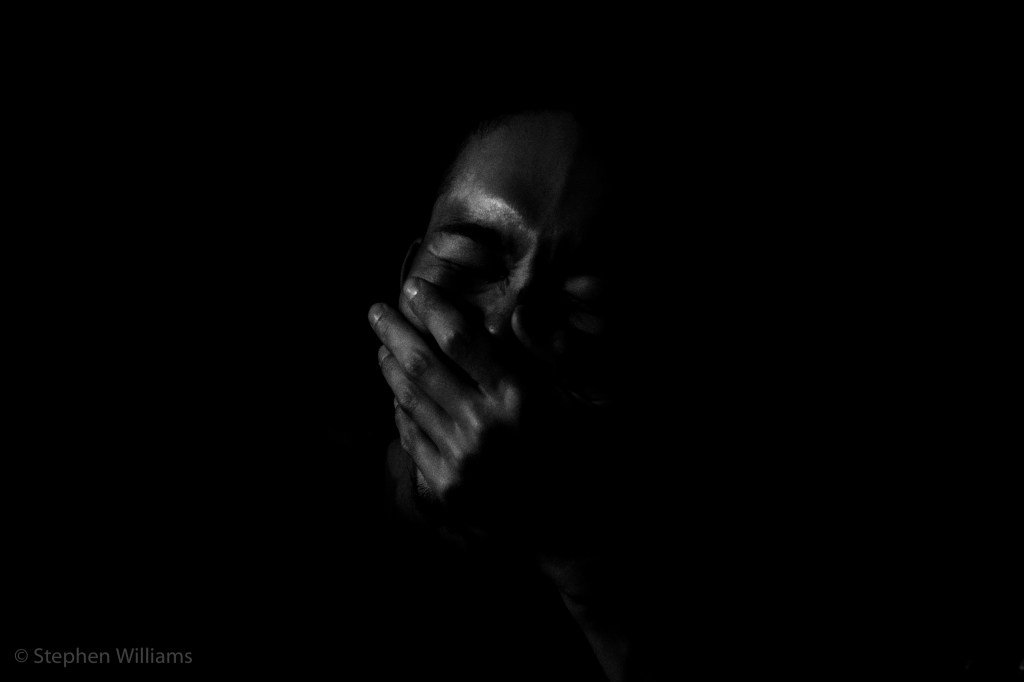
The black king
The house has been quiet for more than a year. Parties, not wild but happy, used to distract the whole block, and several of the neighbors did not shy from joining in a celebration they knew nothing about or did not quite understand. The man in this house was an open neighbor. He did not have a history, nor did he seem to create any that could be seen from the street. Amiable and talkative when he stopped at a fence to say hello, and often seen carrying a face that was all smile, he was to some people eminently approachable, and to others plainly weird.
But women liked him. They liked him perhaps because he was conscious of not letting his eyes drop to their breasts and hips, or perhaps because, when he spoke, ordinary words would reveal an emotion.
The house was different. Unchanging. Weather and years had no effect on it. So, when he disappeared inside it, he was no longer a neighbor but a secret.
I don’t want to imply that the house was severe or gloomy. It was nothing like that. When he arrived, I think it was eight years ago, he stripped the ugly paint off it, planted evergreens front and back, and put startling pink azaleas in pots under the sills of the front window. On tables beside windows which faced the other street-the house is at a corner-he grew obconicas mainly, friendly flowers that I don’t like because when they are perfect they look artificial. From either street it was possible to see the rooms. They were sparsely furnished but painted in warm colors, and each of them differently. The picture of the house had been completed eight years ago and it never changed. A house should be a process, accumulating life. Parts of the garden should die, others flourish. Paintings, photos, tables and chairs, should move. Neglect should inspire unfitness of its looks, at least occasionally. And then, probably, there should be more than visitors. A family should scar it, graze the skin. A little mending and changing is good for a house. In this house, though, there was none of that. The house seemed inconsistent with the man. It had the rigidity of a silence intended to end argument and change. A picture of stability which could be happiness.
Through most of this time I never spoke to him. That was not willful. The opportunity never arose; though it could also be said I never made one. When we first met I was one of the team whose work would be to care for him during the last few months of his life.
“I’ve seen you”, he said and eyebrows lifted to form an irony.
“Yes, I live close by.”
“It must be strange. Is it allowed?”
“We talked it over. I don’t think there will be any problems.”
“If I’d known I could have invited you up for a meal”, he said, in that manner that was to become familiar, talking as though there were no more chances to do or to plan. For a moment I stumbled on the thought of objecting vigorously.
“You still can.”
He laughed, surprised to find he talked about himself in the past tense. “Yes, of course, though you may have to cook if I feel like shit.”
“I’m not that bad a cook, really. You may be disappointed.”
In the first half of the last year the house was noticeably closed. Window shutters locked a month at a stretch, the canary yellow car disappeared, and the grass, what small area of it there is, grew too long. He was in hospital while the burglars moved in.
I am told that when he was in hospital he was a different man completely. The place reminded him of his dependence on other people and the truth of his illness. Why would a perfectly able and competent person be in hospital? He hardened against the forms of help and incessant prodding and testing which are natural (or at least unavoidable) in hospitals, so that it seemed to the staff he was normally unfriendly, plaintive, and terse. They were glad to get rid of him when it was decided he could stay at home, or, rather, that there was nothing more that they could do for him.
In his house he could be difficult, too, but here at least there was time for him to explain what he wanted and didn’t want, and the team considered it part of its work to make these adjustments—within reason.
With some people the problem is an excessive willingness to be helped; these people want servants who will turn dying into a style of luxury. —That’s what I’m told.
In the first weeks he would allow us little more than to drive him to appointments with his doctors, for tests at the hospital, or to visit relatives. He was uncomfortable driving when he discovered his vision could suddenly blur. For a long while he relied on friends, those who were not afraid to visit or, rather, to wait through the long silences or bouts of crying that could erupt at almost any moment. If it was not plain fear that kept some away, the uncertainty of dealing with certain death restrained the rest from visiting. It was to provide relief for those people who had helped most that we were here.
Elizabeth was the first of us to notice his passion for chess. Among the books in his library was a section devoted to the game, and in the living room an old cabinet contained at least a dozen sets of men and boards.
“Everyone says that. Without fail, it is always the first thing you hear.”
“No, really, I think I know the rules, but I’m sure I’m no good at it”, Liz replied. “I like board games, though.”
“I like them less now.”
“What do you mean?”
“For some reason people always advise a new opponent they are really no good at the game”, he said, setting up the black pieces on his side of the board. “They think of it as an intellectual game. The mind goes on the line.”
“No reason for you to worry, if you’re good at it.”
“I suppose not”, he said with some anger.
“Well, we can just play. You don’t have to talk about it”, Liz said.
In the middle-game he started to talk again, looking at the board. “If I castle, plant a knight in front of this position, and play safely, the defence works itself out. I wouldn’t need to force a win. Draws can be very satisfying. It’s not at all like life; there’s too much art in it.”
“Competitive, too”, Liz offered, struggling with his cryptic messages.
“With you, unfair competition.”
“I’m easy!”
“All of you together, it’s unfair.”
We learned not to be so rigid in our scheduling and we let him arrange us around him, realising that eagerness to help could destroy the will. It was unfair.
But this, like everything in the last few months, also changed. At first, he wouldn’t allow us to do the laundry. He persisted with this ban longer than anything else, for reasons that must have been quite irrational because he didn’t mind at all that we did the ironing. In the meantime, we restored the house when he wasn’t looking, repaired the garden, and potted plants. The picture of the house got better as he deteriorated.
He never forgot about the washing completely. His body would not allow him to forget. During long periods of diarrhoea he lost weight into his bedclothes and trousers; and when the problem wasn’t diarrhoea he would be throwing up every meal. We became adept with buckets and towels. That was easy enough. It was much harder to cope with his embarrassment and sense of degradation. When he felt this most acutely it wasn’t strange he wouldn’t talk to us, answering with shrugs, grimaces, and nods, instead of words. Moods fluctuated with his body, though, and when he felt better, he talked more.
Twice he asked to speak to meetings of volunteers and it was during these meetings we heard what he thought about us.
“I hate every one of the people, every one of those volunteers who come into my house”, he said. “I hate seeing my clothes neatly pressed. I hate having the bed made for me. I hate hearing questions like ‘Would you like a cup of tea?’ ‘Do you think you will be able to have some dinner tonight?’ ‘Would you like to see your mother tomorrow?’ So I swear and curse. I think that if I hate everything that is happening to me enough, if I am angry enough, it will all go away. Stupid. What’s amazing is that these people decide they are not going to give up on me. Anger makes me feel better. It keeps me going.”
At the start of summer his mother arranged a birthday party, gathering all the reluctant, complaining family at the house. She wanted us to be there, too.
It seemed to me the more light came into the house the worse he looked, the easier it was to see those purple blotches which had appeared on his face. —No, not really the light. It was seeing more of his family made me realise how divisive and frightening illness could be. Mother watched everyone keenly, afraid that at any moment someone would let a taboo word loose like a bullet in the air. Sister hugged him too quickly, and careful not to let her lips touch his face. Elder brother’s wife and child had conveniently found other duties with a mother-in-law. All this healthy prejudice and fear made him look ill.
I winced with embarrassment whenever someone took up their duty to make conversation.
His cousin, Tom, arrived like a change of weather, strode into the living room with a large, brown-papered parcel, and larger smile, planted himself on the sofa, and kissed the thin, sick man on the lips-leaving some of his smile there.
“Sorry about the paper.”
“Oh, god, not another one.”
“Who did you say was the chess player?”
“John. Over there”, he said, looking at me.
“Good. I’ll beat him first then.”
“Not if I have anything to do with it”, I said, accepting the challenge.
The brown paper tore open, revealing a new chess board and heavy, wood box.
“That’s the last thing he needs”, the elder brother moaned.
“Yeah, I know, aren’t they wonderful?” Tom replied, opening the box and taking out two of the pieces. “Come on, we’ll set them up on the table in there.”
Tom and I played chess, on the table with the obconicas. Brothers and sister talked, I thought too eagerly, with Liz and Mary, the two women on the team. Perhaps they thought if the conversation with the women lapsed they would have to speak with the men. With the women they could simply be grateful, but the men were another matter. They would have to ask, “Why are you doing this?” or “What are you really doing this for?” Tom, though, felt no need to avoid any of us.
“He told me you live near here.”
“Yep. Just down the street a bit.”
“You didn’t know him before?”
“No. We’d never met.”
“Well, he likes you. I mean he likes you more than the others. Not that he isn’t grateful to all of you, but he likes you the most.”
“I don’t understand that at all.”
“He says you say what you think and you wouldn’t let him win at this”, Tom said, nodding at the board.
“I don’t beat him anyway.”
“You will, though… You know he uses the game to keep watch on himself.”
“No?”
“He doesn’t care about the Kaposi’s and the rest of it. Well, that’s not right: he does care. He just doesn’t want to go off his head as well. He couldn’t stand that. He’s afraid he won’t be able to think.”
“Oh, I see.”
“He’s got a nickname for you.”
“Does he?”
“Yeh.”
“Are you going to tell me?”
“Guess.”
“I’ve no idea.”
“The black king. That’s what he calls you. Silly, isn’t it?”
“I hope so.”
“Well, you’re not doing too well today. I’m going to win, I think.”
“It does look bad for me.”
“So why are you doing this?”
“Helping, here?” I asked, to make sure I would answer the right question.
“Of course.”
“Lots of reasons. Just to help, for a start. Then, so he will know he’s not alone, I suppose.”
“What about you, though? What do you get out of it? And if you say ‘satisfaction’ I’ll hit you.”
“No … To tell the truth I don’t know yet.”
From its first days everyone thought that summer would be particularly hot and mulled over hot synonyms like an incantation. Scorch, blaze, and the rest.
A week after the birthday party another heat began. Mary telephoned one morning and waited at the gate for me as I ran down the street. We may have committed some indiscretion, or maybe one of the family had trusted a neighbor. It was just as likely that gossip and guessing had, for once, converged on the truth and spread like fire to the surrounding houses. On the footpath a great slash of red paint spilt from a can underlined the four letters of my neighbor’s new name, written with a thick, bold brush. I was astonished and Mary was crying. “That’s not all”, she said.
“What else!? What else could the bastards do?”
She took one hand from her face to point at the letterbox which was filthy with excreta.
“Does he know?”
“He can see from the window, John.”
“Please, you go inside, Mary. I’ll get rid of this.”
For a moment I thought of cleaning it, but really I wanted to kill, and might have except there was no one to lay my hands on. I settled for a sledgehammer, taking a swing at the box to knock it off the fence in one blow. There was nothing to do about the paint. Hosing down turned the red slash into a red blur, but the word was already dry and could not be moved. It stood screaming on the footpath for days and was never removed entirely.
There were more important things to worry about. Our friend joked about the shit. “You know, you are too quick to condemn my neighbors. It could have been a very agile dog, or that big cat a couple of doors down.” Or he joked about my sledgehammer. “I’m lucky I still have a house the way you people behave!” I think it was resignation that released this humor on us, turning everything terrible into laughter. Weeks of humid, breathless heat, which I enjoyed, suffocated him. “It’s all right”, he said, “this heat now and no hell later will suit me fine.” He flatly refused to return to hospital. No one there would understand his new jokes.
He died the night of the promised change, just to show that life really can imitate the weather. Tom tells me that Liz made all the calls when it was clear he would not last. Tom knocked on my door and said I’d better come. He didn’t need to say why. I knew it would be like that.
Large, cool drops of rain crashed on my glasses and shirt as we ran down the street. The house, which had been sealed tight against the heat all day, was uncomfortably still and warm. As soon as he entered, Tom cried out, “Oh, for god’s sake, open the bloody windows!” It was dark, too, and I stood, sweating, in the shadows of the hall that led to the bedroom. Now, I thought, if only the doctor and nurse will not come. I wished for them not to come so there would be no more injections and orders, no more parody of medicine. I stood outside his door and wished he would die. Liz went from window to window, almost in a panic, as though opening them would save him. I hoped and wished and knew that nothing would.
“Richard, it’s me—Tom. Do you want anything? Johnno’s here. Do you want to see him?”
Tom put out his arm to call me into the room. It was Tom calling, though, not the man in the bed. Except that his ribs moved under the single, light sheet, he was dead already, and I doubt he could hear Tom spluttering about a game and that the black king was here.
I sat behind Tom on Richard’s bed. I put my arms around Tom’s arms and chest to stop his fidgeting and prodding. While he sobbed, I closed my eyes and wished again.
Then, while the house cooled, before the others came, there were no more questions, only answers.
Originally published in Outrage, September 1988, and then in Imaging AIDS, Artists Against AIDS Exhibition, 1989, and Fruit: An Anthology of Australian Gay Writing, edited by Gary Dunne, 1994
-
A tall unmarried house-buyer
Between the ages of 17 and 21 he was devout, and considered taking holy orders. Before that were several years of recreational drugs, “Grass mainly”, and afterwards, the steep decline of devotion into the present. He says there is a theory in psychology that the image of ourselves is moulded slowly by the way in which other people treat us and react to us; and also that he always thinks of himself as ordinary. But he looks down on everyone, talks slowly, because no one can look him straight in the eye. Taking no notice of his family, except to telephone every now and then to keep in touch, he is a little surprised and frightened that his lover finds them so disagreeable. The step-father sells sun-glasses. The mother is a social worker. The step-father can spend hours giving instruction in the new technology of his product and the vagaries of the sales market; there is no division between the life of his work and his private life. During business hours mother discusses the horrible details of a child’s abuse, knowing that the world is painful and dirty and, for some people, without hope, and after hours switches on a Pentecostal fervour in which she imagines her son surrounded by religious ornament. She writes a letter saying what she would like for her birthday: “a cassette recording of you reading the book of Isaiah.” The son refuses, with a knowing laugh his mother cannot hear. “They’re all weird.” “You’re the only normal one, are you?” “Yep.” There are very few people he does not like, finding something likeable in all of his fellow workers except one. His politics and hobbies are social. Hard-working member of the local branch of a democratic and socialist party, he brews beer at home. Examples of it turn up at parties, restaurants, the homes of friends, anywhere it is acceptable to be seen with a bottle, and sometimes places where it is not. Hobby, politics, and the local cricket team, define him as a social being. Three thousand miles from his parents’ home, even further from most of what he remembers, he has fitted comfortably into an unknown city, as if no place would be alien so long as there were people in it. Distance and change should have made him wary. He remains unmarried, but lives with a small and quirky woman. In their bedroom is a framed reproduction of a painting by Bonard. It shows a girl inelegantly lumped, face down, in a messy bed, sleeping. The painter must have known her very well, and must have loved her, less in the way some artists love each last painting than how, for others, there could be no limit of attention, or paint, lavished on unguarded poses. The girl isn’t always tired, but she does enjoy her sleep. They will buy a house, a study of desuetude, the only kind they can afford; and take the bed with them, and re-paint it.
-
Man in loft
(Bach, Emerson, Shakespeare, Schopenhauer, Mirabeau, Foucault)
“I have been taught to identify the mad, and to say ‘This person is mad and should be avoided,’ or ‘That person is not like us. He must be mad’; though the lesson I have learned, in fact, is that people we wish to avoid are, consequently, mad, or that people who do not choose to be, or cannot be, like us, are mad.” “You have to be schizophrenic to understand what it is like”, he says. “If I were to describe what goes on in my head you’d think it was crazy. When I am thinking it, it is very real.” In our first conversation he tells me “I love music. Classical Music. And pornography. That’s all. Just classical music and pornography.” Inside his flat there are clothes on the floor, along with a lot of dirt. It is not possible to wash yourself clean in the bathroom, though the bath itself is clean. “I clean the bath. The bath is clean,” he says. He plays the guitar, and then the mandolin, and then the banjo, and I notice there is a violin in a case on the floor of the living room. —But he does not get to the violin: suddenly there is no more music and it is time for pornography. “You’ll like this”, he says, as if by affirmation it would be true. A woman whose breasts are clearly too large for her costume gazes through a window. He goes to the record collection and asks, “What would you prefer—Shakespeare or, I know, yes, this will be great, Emerson.” He shakes with excitement. He takes out the spoken word recording of Ralph Waldo Emerson’s poems. The woman who was gazing through the window is lying on a sofa, masturbating. “Thy trivial harp will never please Or fill my craving ear; Its chords should ring as blows the breeze.” Yes, Ralph—of course. There is an invisible world. He introduces me to a friend, also schizophrenic, but one who, unlike him, refuses to take his medication. John was a mathematician, and is still brilliant. Now he is Jesus. We sit in a café with Jesus, and I ask “What makes God laugh?”—immediately having to mask my wonder at hearing a precise and reasonable answer. There is a more perfect world than the one in which we live. Inevitably, he will refer the woman he wants to love, by way of introduction to the disciplined and misogynist world of Arthur Schopenhauer, to a bifurcation of that world into the mundane and the transcendent. In the commonplace part he is only one of many. By a choice which appears to be not entirely conscious he keeps the windows of his flat covered day and night, day after day, and always. Lonely, only early in the afternoons, when he is tired of practising a difficult piece by Bach, he says to himself, “Now, what shall I do with my penis?” and, in the absence of the woman whom he loves, it is time for pornography. The exceptional part meets the ordinary and, here, anything is possible. He takes the opportunity to improve Shakespeare. Once, in the asylum, he had read that “Such civil war is in my love and hate That I an accessary needs must be To that sweet thief which sourly robs from me.” Years later, in the afternoon, in a nausea induced by less than two milligrams of Cogentine, he remembers “As a necessity my needs must be To that sweet thief which hourly robs me.” Which is taking what from whom? Desire steals a part of everyone. There are moments I feel he is about to say, “The world is my idea”, and he would, as he did the moment the windows were closed and covered, look up at the sky, thinking to fly there, panic, look around him for something to hold on to; or he will, looking down at his feet, believe the world to be just a ball which will stop turning if he stops walking. “You should read Jean Paul’s Selina to see how a mind of the first order tries to deal with what he comes to think nonsensical in a false concept which he does not want to relinquish because he has set his heart upon it, although he is continually troubled by absurdities he cannot stomach.” He decides “I cannot love anyone” but has set his heart upon it. One woman tells him, “You sound like a text book. You think too much.” These words come out of the mouths of people who love their own oppression, who have become insensible after having administered to their bodies a sufficient amount of pleasure (tennis once a week, nightly television, cheap but effective wine, a modicum of Faith). You cannot utter such words to a man who has lived in another world, where infamous excesses are committed upon the very person of the prisoner; … vices which the propriety of modern times does not permit us to name. In a word, you cannot say something so stupid to a man who has been mad with Desire. The next time his psychiatrist asks “How are you feeling today?” he gives my reply: “I shall instruct my madness to be proud, For psychiatrists are proud and make their clients stoop.” A small, typed sign is stuck to the door of his flat; it says, “Psychoanalysis: device allowing pigeon to enter but not leave loft.”
Originally published in Overland, no. 120, 1990.
 Stephen J. Williams