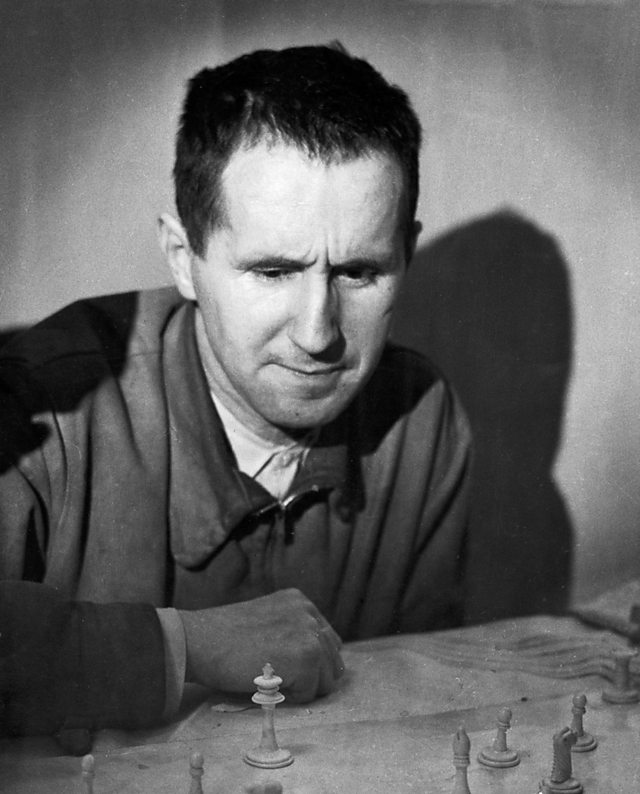
Author: Stephen J. Williams

  • Turkish delights of the 1970s: movies of Metin Erksan

    First ghost scene from Grigori Kozintsev’s Hamlet.

    Metin Erksan (1929–2012) was no slouch. His movies were entered into major international competitions and sometimes won them. When Turkish cinema was having its heyday, in the 1950s and 1960s, Erksan was there. In the 1970s, though, he started making movies aimed at commercial success—or so the story goes—and on a couple of occasions at least, this seemed to involve taking well-known masterpieces of cinema and giving them a Turkish (and possibly Islamist) makeover for Turkish-speaking audiences.

    Metin Erksan's 'Şeytan'
    Metin Erksan’s ‘Şeytan’

    The Yeşilçam (‘green pine’) period of Turkish cinema had entered its decline as Erksan was hitting his stride in the mid- to late 1960s. Making almost a shot-for-shot remake of ‘The Exorcist’ for Turkish cinema audiences must have seemed like a good idea. Erksan did it on a small budget and without much in the way of special effects. The makeover attempts to reproduce many effects of art direction, set design and music, but not very successfully. He gives it his best shot. In fact, he just steals the music. Erksan’s version, called ‘Şeytan’, was in Turkish cinemas at nearly the same time as Friedkin’s original. What was the point?

    Though the video is marked ‘Private’, you may be able to watch it on YouTube.

    ‘Şeytan’ (1974) removes all visual and narrative trace of Catholic heresy from William P. Blatty’s story. There are no Catholic priests in ‘Şeytan’, no cassocks, no seminaries and no desecrated statues of the Virgin Mary. When the possessed teenage girl is hovering above her own bed it is not “the power of Christ” that compels her to get back between the sheets, but an all-powerful Allah. So, at one level, Erksan was presenting Turks with a ‘Halal version’ of Blatty’s screenplay.

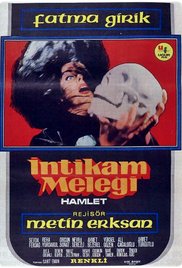
    In the years following ‘Şeytan’, Erksan made five Turkish short stories into television features. Then, in 1977, he made a Turkish version of Shakespeare’s Hamlet, and he based it on the great, Soviet, cinema version of the play made by Grigori Kozintsev in 1964. This Soviet version was itself built upon a translation by Boris Pasternak and featured original music by Dimitri Shostakovich.

    This time Erksan went further than making a Turkish Hamlet on the cheap. He added an unexpected extra element to the mix: he made Hamlet a woman. Highly-regarded Turkish actress, Fatma Girik, played the “Avenging Angel” of the title. “Hamlet” was the subtitle used on the posters, though the movie is usually listed as “Kadin Hamlet” or ‘Woman Hamlet’. Again, Erksan stole whatever was useful, chopping up Shostakovich’s score ruthlessly to make it fit his scenes, and echoing elements of the set and art direction. The effects fall short of Erksan’s aspirations: the ghost in ‘Kadin Hamlet’ looks less like King Hamlet than a somnambulant Bela Lugosi.

    ‘Kadin Hamlet’ was shown at the Filmex movie festival and was accepted into competition at the 10th Moscow International Film Festival (1977). At Filmex it was shown during the festival’s 50-hour movie marathon and greeted with hilarity. There’s no record of whether the jury was laughing in Moscow where, I imagine, there may have been serious discussion about the nature of cinematic homage, the political turmoil in Turkey, and the credit given to Shostakovich but not to Kozintsev.

    Should we be laughing? I did. I’m not ashamed. But I wondered, also, whether there was something missing from this reaction, and if a cult of incompetence has grown up around certain movies—and ways of making movies—that makes it easier to laugh at them than to see what they were trying to show us. Erksan’s Hamlet stays in the background of her mother’s wedding, and she is dressed in a modern 1970s white suit. There is disco music in the background as the film’s first exchange takes place. Erksan appears to be making serious claims on behalf of his audience, including that Turkey’s decades-long reforms in favor of modernity, and equality for women, were not going away. Erksan smartly turns the duel between Hamlet and Laertes into a shooting-match with rifles in a forest.

    Within a few years, the political situation in Turkey even more chaotic, other film-makers began cobbling together less respectful and less competent rip-offs of Hollywood hits. ‘Dünyayı Kurtaran Adam’ (1982), known as the Turkish Star Wars, is the most notorious example. It’s awful, and awfully funny.

    Turkey was not the only country performing this kind of cultural appropriation. There is a Japanese version of Star Wars, called ‘Message from Space’ (1978) and an Italian Star Wars called ‘Star Odyssey’ (1979).

    See also:

    How Iran’s ‘filmfarsi’ remains the biggest secret in cinema history (Guardian)

  • People like us

    The numbers are important: it has been twenty years,
    more than twenty years. Still, he is always home at six, exactly.
    I have prepared the table, and the vegetables. Something
    has been cooking all afternoon that we will finish together

    later, but before that he throws his arms around my shoulders
    and kisses me on the neck. We have a drink and talk.
    Like all companions we have a secret language, and a world
    within the outward world where characters, known only there

    sub-plots, imaginings, laughter, have private lives and meaning.
    Then, when it is time to eat, we go to the kitchen and agree
    on how to serve. Did you know that in the Bible it says
    be subject to each other? It means, I think, he is first, always.

    It means, he thinks, I am always first. We assess the wine.
    He is better at this than I am. At this, and many other things.
    I am better at the jokes, I think, but we share a taste for the absurd.
    Everything and everyone is discussed. No one has the final word.

    Then there is a handful of hauntingly beautiful scenes, a girl
    in a red coat, a crumbling beach house, the installation
    of the finished bell, to be recounted later in a dream, music
    and poetry piling up in a great heap of life.

    For us there is nothing ever new under the sun.
    In the place beyond the city where we escape
    debates and news—where it is useless to mention
    politics because there are no roads or pathways

    and there is no right or wrong—people like us, lie down
    in the grass, and for a minute there we lose ourselves
    the sky too quiet to talk about, and we can be nothing
    actually nothing, nothing at all, if not together, not as one.

  • Serge Gainsbourg’s empathy

    Do popular songs aim low? According to the French wikipedia, Serge Gainsbourg’s ‘Le Poinçonneur des Lilas’ was a hit in 1959. It is a poem about a ‘ticket puncher’ in Mairie des Lilas (a railway station in Paris) who talks very quickly about punching holes in tickets all day and about someone making a final hole for him, where he won’t have to listen to talk about holes any more.

    Serge Gainsbourg photographed by Claude Truong Ngoc, 1981.
    Serge Gainsbourg photographed by Claude Truong Ngoc, 1981.

    (The original music video—with English subtitles—is also on YouTube, but the audio track is not clear.) “The main road,” which the persona of the poem says he hopes to leave, is actually, in the French lyric, “la grand’route” or ‘the great highway’—surely a reference to the road we all take to the grave.

    The song is a poetic and political act of empathy, and of a kind that has become rare in the sanitised marketplace of popular songs. And it is the poetry that saves it from being only political ideology and lifts it into the realm of art.

    Gainsbourg died in 1991, having established himself as one of the world’s most influential popular composers and performers.

  • ABCs

    After bitter conservatives decry
    every fact gratuitously
    —How in juridical knots
    lazy minds neverendingly opine!—prolix
    questions raise suspicions, then,
    unflaggingly vociferous wranglings,
    xenogamous yawns, zeteticism.

  • [There lies Peter Clutterbuck now]

    There lies Peter Clutterbuck now
    still fourteen, on Phillip Island
    where he was sent, and where he died
    in 1935 parentless and poor
    to the Newhaven Homes for Problem Boys.
    His sister could not move him from this grave
    since with him is another child
    named Victor Hardy, still eleven.

    The Argus 29 August 1935 page 8
    The Argus 29 August 1935, page 8.

    The grave of P Clutterbuck and V Hardy is in Cowes Cemetery, Phillip Island.
  • [Years ago, when I was reading]

    Years ago, when I was reading the philosophical works of Schopenhauer
    I heard a sudden eruption of laughter on the street.
    I looked up to see what the cause of this laughter was.
    Across the road, an old man
    extraordinarily obese, was heaving his immense body
    along the footpath. He used a cane to help balance himself as he walked
    and to relieve the strain on his back
    caused by the great bag of fat hanging from his stomach.
    It required considerable effort for him to walk only a short distance.
    I felt revulsion at the sight of this man.
    There were feelings of pity, too.
    I knew immediately
    there are no counter-motives to humiliation.
    We live by climbing over each other
    struggle to keep our heads
    above despair
    and try not to think of harm that’s done.
    I lowered the book and listened to the sounds of birds
    a howling dog, a small child in the street
    asking something of her parents —
    every voice repeating the inner nature of the world
    and I knew what trouble and pain was
    still to come.

    Published in Pink Cover Zine, No. 3, November 2018.
  • Bertolt Brecht and the Tea Party

    Bertolt Brecht and the Tea Party

    One of Brecht’s very famous poems is ‘Years ago when I,’ written in the 1930s, and published in English by Methuen in the 1976 collection Bertolt Brecht: Poems 1913–1956. It opens with the lines:

    Years ago when I was studying the ways of the Chicago Wheat Exchange
    I suddenly grasped how they managed the whole world’s wheat there
    And yet I did not grasp it either and lowered the book
    I knew at once: you’ve run
    Into bad trouble.

    Brecht makes a harsh moral judgement of the men of the exchange: “These people, I saw, lived by the harm / Which they did, not by the good.”

    Bertolt Brecht: Poems 1913-1956
    Bertolt Brecht: Poems 1913-1956

    The place he referred to in this poem was, insofar as I have been able to determine, the Chicago Board of Trade, established in 1848. In 2007 the Board of Trade in Chicago merged with the Mercantile Exchange to form the CME Group.

    In 2009, Rick Santelli, an editor of a business news network in the USA, famously delivered an extraordinary ‘rant,’ from the floor of the Chicago Mercantile Exchange, in which he accused the Barack Obama administration of “promoting bad behavior” through its attempts to avoid foreclosures on the mortgages of nine million homeowners with the ‘Homeowners Affordability and Stability Plan.’ He said that people who had obtained bad mortgages were “losers” and that the foreclosed properties should be available for purchase by people who “carry the water” rather than “drink the water.” He mentioned the possibility of a Chicago Tea Party. Out of this confused nonsense the modern Tea Party movement was born.