Category: Asides

… departures, digressions.

  • “Resistance is futile”

    —how the public service defends the indefensible

    Text:

    Stephen J. Williams
    keyed.subnet.0s@icloud.com

    Secretariat
    Members of the Not-for-profit Stewardship Group
    nfpstewardshipgroup@ato.gov.au
    and
    Pete Robjent
    Director, Not-for-profit Unit, The Treasury
    charitiesconsultation@treasury.gov.au

    Ref: MC26-004062

    re: Administrative circumvention and
    the subversion of regulatory integrity

    Mr Robjent

    Thank you for your correspondence of 27 March 2026. Your response, however, serves as a deeply troubling admission that the Australian Government has chosen to prioritise political patronage over the impartial application of the law.

    Your central premise—that ‘prior ineligibility is the precondition’ for a specific listing—is a logical absurdity. It suggests that the findings of the Australian Charities and Not-for-profits Commission (ACNC), the Administrative Appeals Tribunal, and the Full Federal Court are merely optional hurdles that the executive may ignore at its discretion. If an organisation is found to be a ‘political lobby group’ rather than a ‘benevolent institution’ by every relevant judicial and regulatory body in the country, it is because that organisation does not warrant a taxpayer-funded subsidy. To treat this failure as a ‘precondition’ for a special legislative carve-out is to openly mock the rule of law.

    If there were any possibility I might get a detailed explanation about this matter, I would ask you to explain the following points of failure in the logic of your reply:

    Your department’s public guidelines state that specific listing is reserved for ‘exceptional circumstances.’ Given that Equality Australia’s own representatives have stated that there is ‘nothing unique or exceptional’ about their listing, by what objective metrics did the Treasury determine they met this threshold? In the absence of such metrics, the decision appears to be a clear case of ideological bias.

    Your department’s internal Explanatory Materials for the Deductible Gift Recipient (DGR) reforms admit that the specific listing regime ‘lacks compliance infrastructure’ and has ‘a low level of regulatory oversight.’ Why has the government chosen to move a controversial advocacy group, already accused of ‘channelling’ donations through Thorne Harbour Health to bypass tax rules, into a category that is shielded from the ACNC’s routine audits?

    The Full Federal Court ruled unanimously in 2024 that Equality Australia’s advocacy is ‘too far removed’ from traditional concepts of benevolence. By overriding this finding, is the Treasury now establishing a new policy where ‘political lobbying’ is considered a ‘community benefit’ equivalent to the direct relief of poverty or sickness? If so, when can other political lobby groups expect their specific listings?

    DGR status is a public subsidy funded by all Australian taxpayers. The Treasury has facilitated a financial advantage for an organisation that actively campaigns against the legal protections of religious schools. This is a departure from the principle of state neutrality and represents the government ‘picking a winner’ in a contested social debate. (Further, and perhaps more important, the specific advocacy of Equality Australia includes support for medical treatments for minors that are currently being restricted in other jurisdictions. Critics have highlighted the closure of the Tavistock child gender clinic in the United Kingdom following the Cass Report as evidence that the treatments promoted by Equality Australia are a matter of intense medical and public debate. By subsidising an organisation that campaigns for these treatments at a time of global reassessment, the Australian Government is effectively taking a side in a global medical controversy using taxpayer funds. Your letter provides no evidence that the potential for ‘public harm’ or the ‘medical uncertainty’ of these treatments was considered during the DGR assessment process.)

    The listing of Equality Australia within an ‘omnibus’ bill regarding superannuation and wine taxes was a transparent attempt to stifle debate and avoid the scrutiny that a standalone measure would attract. Does the Treasury consider it ‘good lawmaking’ to bundle controversial political payouts with uncontroversial industry support measures?

    Your suggestion that concerns regarding conduct be raised with the ACNC is a vacuous deflection. The ACNC has already spoken ( https://archive.is/gpW5Y ) on this organisation’s fundamental nature and was ignored. The issue at hand is not Equality Australia’s conduct, but the Treasury’s decision to reward a legal failure with a legislative gift.

    I look forward to a response that addresses these systemic failures in logic and integrity rather than one that relies on bureaucratic scripts.

    Respectfully,
    Stephen J. Williams

    cc. Members of the Not-for-profit Stewardship Group

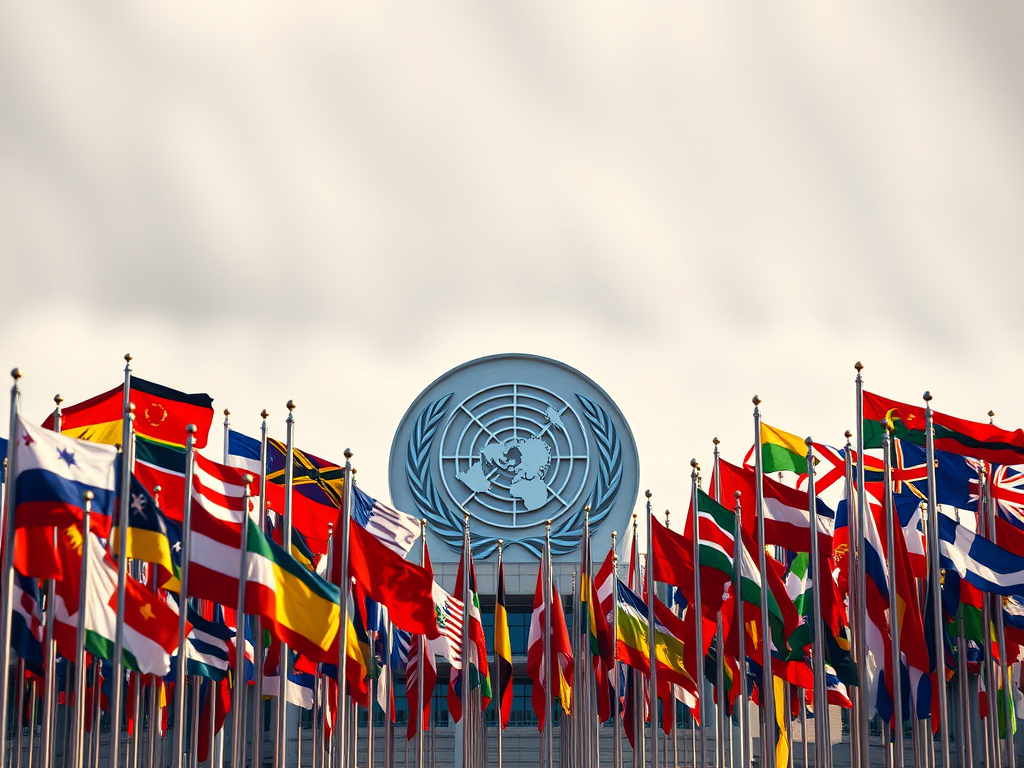
  • The 193 member states

    The 193 member states

    As the United Nations prepares to pontificate on how democracies defend themselves, it might be useful to remember that across the United Nations’ 193 member states, a substantial proportion are not democratic. According to the 2025 V-Dem report, about 90 states qualify as autocracies, either “electoral autocracies” or “closed autocracies.” Freedom House’s Freedom in the World 2025 survey classifies 59 countries as “Not Free,” meaning citizens lack basic political rights and civil liberties. The Economist Intelligence Unit’s Democracy Index 2024 offers a similar perspective, designating 59 of the 167 states it surveys as authoritarian. Although methodologies differ, these datasets all indicate that roughly one-third to nearly half of UN members fall outside democratic governance.

    A handful of states are unambiguous theocracies. Iran and Afghanistan are clear examples, while Saudi Arabia is often described as a theocratic monarchy. Military juntas are rarer but currently in power in about eight UN members, including Myanmar, Mali, Burkina Faso, Niger, Guinea, Chad, Sudan, and Gabon.

    Sources

    V-Dem 2025 report: https://v-dem.net/documents/54/v-dem_dr_2025_lowres_v1.pdf

    Freedom House 2025: https://freedomhouse.org/…/FITW_World2025digitalN.pdf

    EIU Democracy Index 2024: https://www.eiu.com/n/democracy-index-2024/

  • 20th anniversary of the publication of Joyce Lee’s collected works

    This year is the twentieth anniversary of my publication of Joyce Lee’s It is nearly dark when I come to the Indian Ocean, her collected works 1965–2003. Lee died in 2007.

    Joyce Lee [photograph, 1993]
    Joyce Lee [photograph, 1993] by Stephen J. Williams

    I was and still am proud that this life’s work of another writer continues to be available — with the help of the National Library of Australia’s TROVE.

    —Stephen J. Williams

  • This happened …

    This happened …

    Late in 2019, the Australian prime minister (marketing guru and shitty-pants Scott Morrison, ‘Sco-Mo’ to you) and his theatre assistants removed the federal administration’s arts appendix. One moment the word ‘Arts’ appeared somewhere in the names of government departments, and the next it had gone. Snip! And he chucked it in the bin. 

    Well, not exactly… ‘Arts’ was removed from a department’s name. To compensate, the yarts (as they are called in Australia) got an office. The Office of the Arts: <https://www.arts.gov.au/>. Never have the arts and government been so closely aligned than in this uniform resource locator.  

    There were articles in newspapers, outrage on the arts websites, and a long rash of angry emojis at the end of comments on Facebook.  

    The conservative government in Australia, returned at the May 2019 election by a slender margin, had decided a feature of the victory after-party would be to show the country’s angry, artistic child the door. “Your mother and I are tired of you! Always with your hand out, and never a word of thanks! Get a job!” And then, the ‘clap’ of the fly-screen door and a barely audible ‘clack’ of its tiny snib that seemed to say, “And don’t come back.”  

    Making art is a patient, lonely business. Making any progress seems to require years of practice and a bit of luck. Guidebooks and internet articles about being an artist, full of advice and clichés, pile up very quickly. Be yourself. Tell your truth. Talent is important, endurance essential. In the age of Instagram, sexy drawings and a bubble-butt are handy, but not essential (or so they say). Governments are not needed, but academic sinecures, supervising doctorates in novel-writing or discussions of queer theory, good if you can get them. When universities are financially sous vide, as they will be emerging from the 2020–forever pandemic, place bets at long odds that the arts will be favored for rehabilitation.  

    Governments, truth be told, don’t want to help. The governing classes are too busy ‘governing,’ which might as well mean lying, or fudging, or crying crocodile tears, or making a killing on the stock market, or taking a holiday in Hawai’i. To be the governor is to be the winner, the one who calls the shots, to be ‘the decider.’ From their high station in life these decider-governors have a role in narrating our social experience. They have a role we give them in legislating to tell us what is and is not important. (Have you noticed how very often our prime minister tells us what is important, and how very important is the very thing he is now saying?) It’s been a long time since governors of any stripe have shown us how the arts and sciences are important. Business, the economy, the stock market, and jobs are important. Wages growth, arts, and science, women, not so much.  

    UNFURL, my arts publishing project, was a reaction to artists’ reactions to government biases against the arts. Who needs government money anyway? I thought. It turns out, lots of people working in the arts need audiences, and it’s not easy to find and maintain audiences without government assistance. And, even within my narrow range of interests—writing and visual arts—the connections between arts activity and funding are deep. Poetry is not the malnourished tenant of the attic it was in Australia in the mid-1980s. The long lists of books for review and the number of official insignia on web pages are two possible measures of this.  

    Logo, company name

Description automatically generated

    At the same time, long-established literary magazines have had their funding cut. There is money for the arts, so long as it is going to places where the expenditure can be seen to be spent. Government wants the internet to sing “Hey, big spender!” while it cuts funding to Meanjin and others. It may be partly Meanjin’s fault: it has had nearly thirty years to figure out how to get its great store of content online for prospective subscribers to access, while the failure to do so begins to look like obstinacy.  

    UNFURL asked writers and artists to promote their own work to their own social media contacts while doing the same for other artists and writers: it’s a tool for artists to find new audiences and readers. UNFURL /1 started with a couple of writers I knew, Davide Angelo and James Walton, and a writer whom Angelo recommended, Anne CaseySusan Wald, also published in the first UNFURL, was a painter whose work I liked and who had an exhibition planned for early 2020. I wanted to establish a process that could lead to unexpected choices. I would try not to make selections. I wanted artists to select or recommend other artists; and I wanted those artists to choose for themselves what they wanted to show with as little mediation as possible, encouraging people to show and to publish work they liked, and that might not have been selected (or grouped together) by an editor or curator.  

    Government wants the internet to sing “Hey, big spender!” while it cuts funding to Meanjin and others. It may be partly Meanjin’s fault: it has had nearly thirty years to figure out how to get its great store of content online for prospective subscribers to access, while the failure to do so begins to look like obstinacy.

    It is more efficient to work on all one’s secret agendas simultaneously, so I should also admit my concern that belle-lettrist aesthetics (including the idea that poetry is language’s semantics incubator) and faux-modernist experimentation have combined to make poetry mostly irrelevant and a branch of marketing. —One only has to look at the writing being selected by the selectors to see that something is wrong with the practice of selection. As much as possible, I think, best to leave artists to make their own choices; and if there are mistakes, then, we’ll know who to blame. 

    And then, in March 2020 … then was the actual end of the world-as-we-knew-it. Those crazy ‘preppers’ I’ve made fun of started to look like visionaries. “Where the fuck is my bolthole, goddammit!?” and “How big is your bolthole, my friend!?” could have been common questions in some circles. People who could afford it, and had somewhere to go, did leave town. Gen-Xers lost their hospitality jobs, decided that they couldn’t afford their share house rent, and moved back ‘home.’ Artistes no longer had audiences. Artiste-enablers, stagehands, administrators and carpenters, were also out of work.  COVID-19 put the arts and sciences back in the news. 

    The intersectional tragedy of pandemic and conservative political hostility to the lefty arts seemed to many like another opportunity to turn indifference into punishment. It was hard to disagree with pundits who have been cataloging this punishment.   

    UNFURL, possibly because of all this, has done quite well. By the time UNFURL /5 was released, writers and artists could expect to reach about two thousand readers within a couple of weeks of publication. (Each new UNFURL number provided a little boost to the previous issues, so that all the issues now clock up numbers in the thousands.) Eighty per cent of readers were in Australia, and most of the rest in the USA, Canada, UK and Ireland. The male:female ratio of readers was almost 50:50. The largest age group of readers was 18–35 years. (Though if everyone is ten years younger on the internet, maybe that’s 28–45.)  

    It’s difficult to read poetry on small-screen devices, so I did not expect UNFURL to be read on phones. The visual arts component of UNFURL is quite effective on phones and tablets, however. It seems likely that readers interested in the writing in UNFURL resorted to their desktops and printers. Sixty to seventy percent of downloads of UNFURL were to mobile and tablet devices.  

    I learned that women writers (poets) had a ‘stronger’ following among women readers than men had among readers of any kind. It was very apparent, with Gina Mercer, for example, that a very significant number of readers returned more often, subscribed more often, and were women.  

    I learned that women writers (poets) had a ‘stronger’ following among women readers than men had among readers of any kind. It was very apparent, with Gina Mercer, for example, that a very significant number of readers returned more often, subscribed more often, and were women.  

    I learned that social media isn’t the be-all and end-all of connecting with an audience. Old-fashioned email also works really well. Some artists and writers had no significant social media presence but used email effectively to communicate with friends and contacts.  

    I also learned that visual artists were, generally speaking, more enthusiastic and positive about using social media, and even better at basic stuff like answering messages. Visual artists be like Molly Bloom; writers be like Prince of Denmark.  

    I found that both writers and artists did things in UNFURL other publications might not permit (requiring, as they mostly do, first publication rights). Philip Salom published groupings of new and old poems. Alex Skovron published poems, prose, paintings, and drawings. Steven Warburton published a series of pictures about how one canvas evolved over several years. Robyn Rowland published poems and their translations into Turkish for her readers in Turkey. Ron Miller published a brief survey of his life’s work in space art.  

    All that and more to come.  

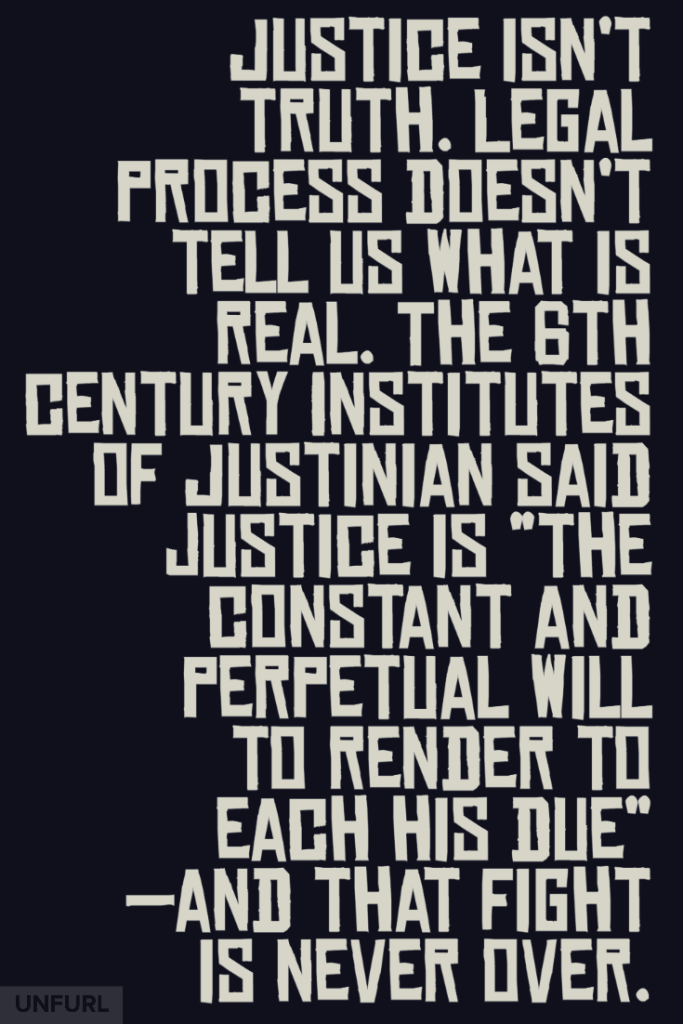
  • To render to each his due

    I hate to hear smart people talk bullshit in public. So I made this…

  • Scientific progress you can make while you sleep …

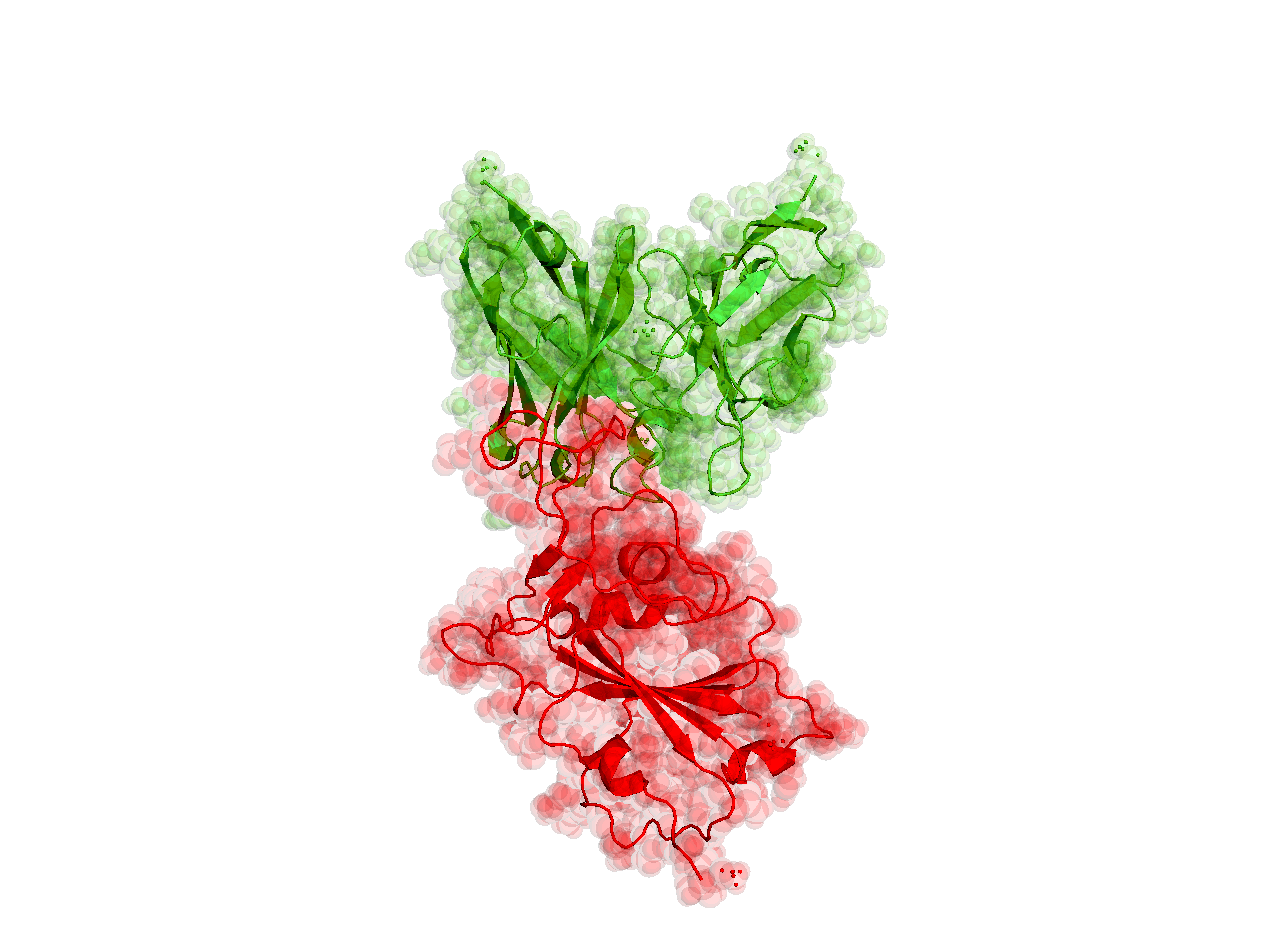
    Folding@home is a distributed computing project that originated in Stanford University. It aims to get 1 million people involved in donating computer power to model the folding of proteins that are implicated in diseases such as breast cancer and Alzheimer’s, and several contagious diseases, now including COVID-19.

    There are currently about 110k participants.

    Make your computer get off its arse and save the world while you sleep.

    Installing the program is easy.

    Start folding proteins at home.

    COVID-19 update on the Folding@home site

  • Swedish Academy’s new protocols for laureate selection

    The Nobel Committee for Literature has announced new procedures for determining laureates in the field of literature.

    Current Nobel committee members Per Wästberg, Anders Olsson, Kristina Lugn, and Horace Engdahl, and associate members Sara Danius and Katarina Frostenson, have spoken at length about their dissatisfaction with the selection process. “Det är en jävla cirkus,” Wästberg said. “På något sätt blev hela jävla galen och vi hamnade med en jävla musiker. Hur hände det? jag vet inte.”

    Determined that past errors and controversies would not be repeated, Danius and Frostenson have suggested that there should be a new protocol for nominations: “Vi kommer att få människor att kämpa i sina underkläder och under de hårda förhållandena. Det kommer att bli kallt. Verkligen väldigt kallt. Och det kommer att bli lera – enorma mängder mycket våt, slarvig lera.”

    Once nominations have been received through the new process, a new protocol for selection will be equally rigorous. “Vi ska göra det på den gamla vägen. Naturligtvis kan vi inte avslöja för mycket, men det kommer att involvera äppelkakor, våfflor och pannkakor. Och risgrynsgröt, förstås,” Kristina Lugn said.

    The Nobel Committee receives over one hundred official nominations each year for the literature prize. The nominees are usually pretty good writers, yet somehow the Nobel Committee manages to come up with a decision.

    “Några av dessa tekniker används för närvarande i mongolsk och australisk litteratur, och deras genomförande här kommer att leda Nobelprisen till nittonde århundradet,” Horace Engdahl added.

    The ancient techniques of Mongolian and Australian poets promote new respect for literature.
    The ancient techniques of Mongolian and Australian poets promote new respect for literature.