Category: Comment

Blog posts, commentary, reviews.

  • Welcome to sex education

    Welcome to sex education

    The controversy over a book and its purpose

    “What do you suppose is the use of a child without any meaning?”

    —Lewis Caroll, ‘Queen Alice’ in Through the Looking Glass

    I hear myself speak, and the proximity of the sound appears to guarantee the contiguity of the words to thought.… It is pure auto-affection, and we therefore tend to treat it, our voice, as our most intimate version of ourselves — or as ourselves completely.

    —Peter Salmon, An Event, Perhaps

    In 2023, in Australia, Hardie Grant Children’s Publishing released Welcome to Sex by Dr Melissa Kang and Yumi Stynes, part of a series of books aimed at young teens dealing with issues like consent, ‘your period’ and ‘your boobs’. There was controversy, of course, because the book is explicit and covers a lot of territory, including issues that many parents (and pundits) think should not be mentioned to minors. The supermarket chain Woolworths, a major distributor of magazines and books, withdrew Welcome to Sex from its shelves but continued to sell the book online. In interviews, Yumi Stynes revealed she had received death threats, and she offered the opinion that Woolworths’ compromise was a vote of confidence in the book and a reaction to its duty to keep its employees safe. “Police have arrested a man who allegedly threatened author Yumi Stynes, the co-author of an educational book aimed at helping teenagers understand sex and sexuality that was recently removed from shelves at Big W after staff members were abused,” The Guardian reported.

    Welcome to Sex stakes a claim, which Stynes asserts in public very forcefully, about its usefulness, citing the delay in sexual activity of young people, and reduction of possible harms, as proof. Note, though, as only one indicator among many, that adolescent birth rates have been declining between 2000 and 2024, almost everywhere in the world—and it is not because sex education books for 11–15-year-olds are required reading.

    The controversy was widely reported, often focussing on one aspect of the content: the book contains information and advice about anal sex. This may have been the easiest, most easily understood complaint about the content that journalists could find. Pointing their attention and cameras at a page containing the word ‘anal’, surely there could be no need for further verification that the Hardie Grant people were asking for trouble, maybe even hoping for it, since bad publicity can be great for the sales of books that are good, bad, and mediocre. Anal sex is the poster child of transgression.

    There’s a section of the book on myths, and a section on “more myths,” as well as pregnancy, feelings, flirting, fingering, scissoring, awkward moments, and “expanding your vocabulary”—something no young person, and every parent, should be afraid of. Reports of the outrage about the book focus on the reaction of adults. I did not find any complaints from children of any age; the book is written for 11–15-year-olds. It’s possible that no one looked for such complaints, or bothered to ask. News framed the complaints as parental concern, usually without verification of the parental status of the complainants.

    Then, late in 2024, to make matters worse or better, depending on from which side of the controversy you are looking at it, Creative Australia (a quasi-autonomous government authority) announced that Welcome to Sex had been shortlisted for the Australian prime minister’s literary award in the category of young adult literature. It didn’t win. In the public relations and reputations game, though, it is enough to be shortlisted to claim a new dot point in one’s résumé. The unnamed judges’ report for the award said of Welcome to Sex

    A fearless, frank and important resource for young people, Welcome to Sex is meticulously researched and comprehensive in its representation of sex and sexual experience. The text is very inclusive in its language and the content can be read by all young adults regardless of sexual orientation, identity, gender or culture.
    Kang and Stynes’s combined voice is warm, friendly and approachable—brooking no awkward silences in what can be a difficult conversation between young people and adults. Young people are themselves represented in the text, through letters and other contributions, alongside adults and sexual educators, adding extra layers and thoroughness to the book.
    High production values from publisher Hardie Grant and wonderful illustrations from Jenny Latham complete an informative, entertaining, and potentially life-saving book that should find a place in every home (even ones that don’t contain a teenager).

    Is this judgement or boosterism? There is no published evidence the judges read the book at all, or read it closely, or actually considered the accuracy and comprehensiveness of the text.

    Googling for reviews of Welcome to Sex earlier in 2024 it was very noticeable that almost all of the internet ‘reviews’ of the book were not reviews at all, but merely regurgitations of Hardie Grant promotional material. —Of course. That is how the internet works. You throw stuff in, and you get stuff out.

    “What became clear to my research team, which included professors Alan McKee and Kath Albury, was that the main thing young people wanted to know more about was not ‘plumbing and diseases’ but how to communicate,” said Catherine Lumby, who “is a professor of media and communications at the University of Sydney, [and] was interviewed about her research for Melissa Kang and Yumi Styne’s book …. ” Lumby’s opinion of the book—it’s “brilliant and accessible”—is quoted by Hardie Grant on its website, without mentioning she provided research for it, according to her own report. I do not suppose, nor should anyone, it can be just by chance that McKee and Albury are also professors of communication and media studies. Professor McKee makes an appearance in Welcome to Sex early on, on the page that attempts to define ‘sex’, possibly signalling that the book will emphasise language more than biology.

    What do we need ‘sex education’ books for, anyway? In the form of a small sculpture of female fertility or in the making of a bone phallus, people have transmitted their knowledge and feelings about sex since humans began to make and learn. For the ancients it was enough to put up raunchy pictures in bathhouses. Children survive childhood and puberty to understand the impulses of their own bodies without the help of books. ‘Yes, but unharmed?’ I imagine Stynes reply, and she would be right to ask.

    The appearance of ‘sex education’, sometime in the nineteenth century, was not a response to a need for information about what sex is, how it is done, or how to make baby humans. Sex education is, has always been, surplus to minimum requirements of the thing it purports to teach. Sex education might be a kindness to children. When children stopped being ‘little adults’ that could be exploited, it became necessary to imagine them as vessels of future adults that would make a future world. And then, in the last century, sex education developed its second dimension as social engineering to prevent disease and the burden, personal and social, of unwanted pregnancies. Sex education now does all that, and a whole lot more in the realm of violence, consent, and social relations. Almost everywhere in the last century and a half there have been debates, fights, and changing policies, about what and how to teach children about sex. Neither Catholics (in France) nor communists (in the USSR) could settle amongst themselves what sex education should do or say. In wartime, most pundits agreed, soldiers need to be warned against syphilis. Later, everyone needed information about how to have sex without exposing themselves to HIV-AIDS, even though there was no agreement about what constituted ‘sex’, and who needed protection from whom, or what.

    Sex education now does all that, and a whole lot more in the realm of violence, consent, and social relations. Almost everywhere in the last century and a half there have been debates, fights, and changing policies, about what and how to teach children about sex.

    Just how little do we think children know? Are they not, normally, mentally, super-absorbent creatures? Don’t they, by the time they are adolescents, reach some conclusion about the hypocrisy of their adult minders? A child growing up in Pompeii was no more or less enveloped in a sexualised and gender-stereotyped society than a child today. Every child grows up learning by heart its guardians’ clichés.

    ‘Sex education’ requires us to ask, among many questions: Who are the teachers, and by what authority do they teach? These are such slippery questions, most journalists did not bother to ask Dr Kang and Ms Stynes who they were, by what authority they wrote, what qualifications they have or what qualifications are necessary or desirable.  Instead, the current of outrage flowed freely from the idea the authors had presumed to supplant the educational bond between parent and child. —Though some parents, we all know, would have been happy to slyly leave on a reachable bookshelf a book with some colorful drawings, or else leave a little person to randomly soak up reality by cultural osmosis.

    Hardie Grant, and the authors themselves, have therefore crafted a presentation highlighting authority and trust. Dr Kang is a doctor, a real general practitioner, with actual patients. Ms Stynes is an award-winning truth-teller and podcaster (with the Australian Broadcasting Corporation). They are women. (—It feels dangerous to make such a claim, considering what is about the be revealed.) And they have children of their own. Briefly: they are the kind of experts you should feel happy to leave your children with, while you make a cuppa and check email. Their expertise is their experience, and their practice: they have been at it for years, and so must know what they are talking about. Dr Kang said, in an ABC News video published on Facebook:

    ‘Dolly Doctor’ [an advice column in Dolly magazine] finished at the end of 2016. It was pretty abrupt. We know that teenagers now turn to the internet when they have those kinds of questions. I guess what I think might have been lost is that sense of a personal relationship. It was a way to hear the voices of young girls that was absolutely unique and now I really, really, really do miss it.

    What I love about working with adolescents as an adult is even though it’s filled with angst, conflict and arguments with parents, for example, it’s such a gorgeous stage of life. I don’t know that I’d go back to it myself if I had the opportunity, but it’s still something that, you know, we’ve all gone through and learnt about ourselves from, and I just love witnessing that over and over again.

    Kang’s palpable concern and care for young people is moving. I have much the same ‘read’ on Stynes.

    But there is the question of what we do not know, deemed private, not explicitly deemed irrelevant, but placed by the publishers and authors in the ‘none of your business’ column. Some of the questions might be whoppers (in hard-hitting, journalistic terms), and very rude: Are your children ‘yours’ or adopted? Are you lesbian? Are you married? To men? Readers of ‘entertainment news’ might have gathered Stynes was one party to a dispute over separation from an ex-husband. I include the questions here because Welcome to Sex hints at this kind of challenge to, or question about, its authority. Stynes says, of herself …

    Welcome to Sex, p.74. “It's not uncommon for people's sexual identity to change over time. Even though I write these books, I don't feel any need to announce my sexual identity to the world. It's my business. Yumi”
    “It’s not uncommon for people’s sexual identity to change over time. Even though I write these books, I don’t feel any need to announce my sexual identity to the world. It’s my business. Yumi” [Welcome to Sex, p.74]

    This sexual identity disclaimer is juxtaposed (Could it really be by chance? —And if it is, it is very careless!) with the image of the non-binary pride flag. In the following pages Kang and Stynes make clear what surely cannot be clear: that ‘sexual identity’ and ‘sexual orientation’ are so close to being the same thing, there can be no point trying to distinguish between them.

    Sexual identity labels
    Your sexual identity is about how you define yourself sexually. It’s usually about the gender of the people you feel sexually or romantically attracted to. Those attractions can change over time, or they might stay constant. There’s no right or wrong — you’re you! … GAY: I’m sexually and/or romantically attracted to people of the same gender as me. This label is used more commonly by males who are attracted to other males, but it is sometimes used by people of all genders.… LESBIAN: I’m female and sexually and/or romantically attracted to other females.[Welcome to Sex, pp. 75–76]

    The authors and the legion of communications professors appear not to have come to an agreement about the relevance of ‘sexual orientation’, or maybe consider that language passé. It is at this point the text’s inaccuracies and fudgings begin to pile up. The definition of ‘gay’ emphasises it is a term applying commonly to “males” attracted to other “males”, but calls this an attraction between people “of the same gender”. The definition of ‘lesbian’ does not mention gender at all.

    The linguistic enigma of the verbal phrase “identify as” is everywhere, placing (our poor, helpless) adolescents always at one remove from the reality of ‘is’. A boy is not a young male person. No: a boy is a young person who identifies as male, who ‘thinks’ or ‘feels’ he is male.

    Is it honest to suppress the fundamental importance of ‘sexual orientation’? Or is that the way you might talk about sexual orientation (about being heterosexual, gay, lesbian or bisexual) if you wanted to give it status not greater than ‘asexual’ and ‘aromantic’?  In a section on aromantic versus asexual, children are told that “Being asexual means a person doesn’t experience sexual attraction towards any people. An asexual person might, or might not, feel romantic love towards others. Some people are aromantic AND asexual while others might be one or the other.” [Welcome to Sex, p. 78]

    This misemphasis is at work and play throughout Welcome to Sex. Sex is, Welcome to Sex tells us, “doing anything with your body that feels sexy. […] The most useful definition of sex is what sex means to you.”

    Defining sex is beautifully complicated. Sex is anything as long as the people taking part in it think it is sex. It excludes violence, and it includes pleasure. Professor Alan Mckee [Welcome to Sex, p. 8]

    The professor omits the complicated and nuanced part. Welcome to Sex does not leave biology out of the text, but it carefully strategises diminishing its importance in the calculations children will be asked to make. The unspoken and not-totally-bad rule of the book is: first, check your feelings.

    “Gender is how we define ourselves as being female, male, neither, both or something else.” That is one way to think about gender; but can it be correct? Being female is not an act of definition. It is not, in any sense, about language. ‘Being female’ is not something adolescents do to themselves or find ‘in’ themselves. In the list of sexual identity labels ‘female’ is not defined at all, but there is a definition of “cis-female.”

    The linguistic enigma of the verbal phrase “identify as” is everywhere, placing (our poor, helpless) adolescents always at one remove from the reality of ‘is’. A boy is not a young male person. No: a boy is a young person who identifies as male, who ‘thinks’ or ‘feels’ he is male.

    Transhub—let’s call it the ‘official’ definer of things trans in Australia—says gender is:

    • Who you know yourself to be. This may be called gender identity, or simply gender. (e.g. Man/woman/non-binary/male/female),
    • A role or set of roles a person has or is expected to perform in their society or culture. (e.g. mother, father, sibling, parent, spouse, wife, husband),
    • The way a person expresses their gender to themselves or to others. (e.g. through masculinity, femininity and/or androgyny, wearing hair longer or shorter, facial hair, the clothes you choose, the pronouns you have),
    • How their identity relates to what was presumed at birth. (e.g. cis if they have the same gender as presumed at birth, trans if it is different).

    The emphasis here shifts away from ‘feelings’ to the much more assertive, and confident, ‘knowledge’ of self; but this definition leads to the same problem. The principle is: Who is going to contradict you when it comes to your knowledge of yourself? The answer to that question, children will need to understand, eventually, could be very embarrassing.

    Welcome to Sex is subtitled “Your No Silly Questions Guide to Pleasure, Sexuality and Figuring It Out.” The cover contains graphics of eggplants, a peach and two cherries, which may be amusing to children and render the content relatively harmless at the supermarket checkout. The book starts with a prologue. “[W]e’ve crammed as much realness into this book as possible so that you’ve got a rock-solid resource on sex that you can trust.” [Welcome to Sex, p.2] This prologue ends with a note about words and labels used in the book.

    The argumentative parent, p. 25 of Welcome to Sex.
    The argumentative parent, p. 25 of Welcome to Sex.

    When we talk about sex and pleasure we’re not just talking about body parts and feelings, but also about people and relationships. We’ll use words like ‘person’, ‘teen’, ‘penis-owner’ or ‘vulva/vagina-owner’ a lot of the time. On occasion we might use ‘girl/woman’ or ‘boy/man’ when we’re talking about cisgender people and referring to a specific question or story or research: for example, ‘research shows that heterosexual women don’t care that much about penis size.’ [Welcome to Sex, p. 4]

    The list of contents spreads over three pages, with very big type and prominent pictures of people kissing. These pages very clearly establish an equivalence between gay and heterosexual relationships. The first page of the contents section shows what appear to be two boys, the second page two girls, and the third page a ‘straight’ couple, a boy and a girl. The images neatly reference the speech of Aristophanes in Plato’s Symposium.

    Welcome to Sex soon confronts older readers with an age barrier: while the questions are framed from the perspective of 11–15-year-olds, the great majority of ‘answers’, in the form of quotes, come from people who are just out of adolescence and in early adulthood, in either their late teens or twenties: ‘Megan’ is 21; ‘Casper’ is 20; Lisa is 23; ‘Holly’ is 24; someone called ‘Christian’, who’s age is not offered, is the father of two teens; ‘Dominique’ is 17; ‘Grace’ is 18. In this way the text links trust and credibility to a certain narrow range of ages and roles. The first illustration associated with text about a parent shows an angry ‘man’.

    The illustrations, by Jenny Latham, are computer-constructed stereotypes of people, groups, races, and cultures. They are tediously predictable mashups of facial features, hair, and color, from an imaginary world where there is only one kind of nose and eyes do not have irises. Problems with the illustrations may be the consequence of artwork being managed by an editorial committee that feels an urgent need to remind us that dicks come in all sizes, shapes, and colors, thus …
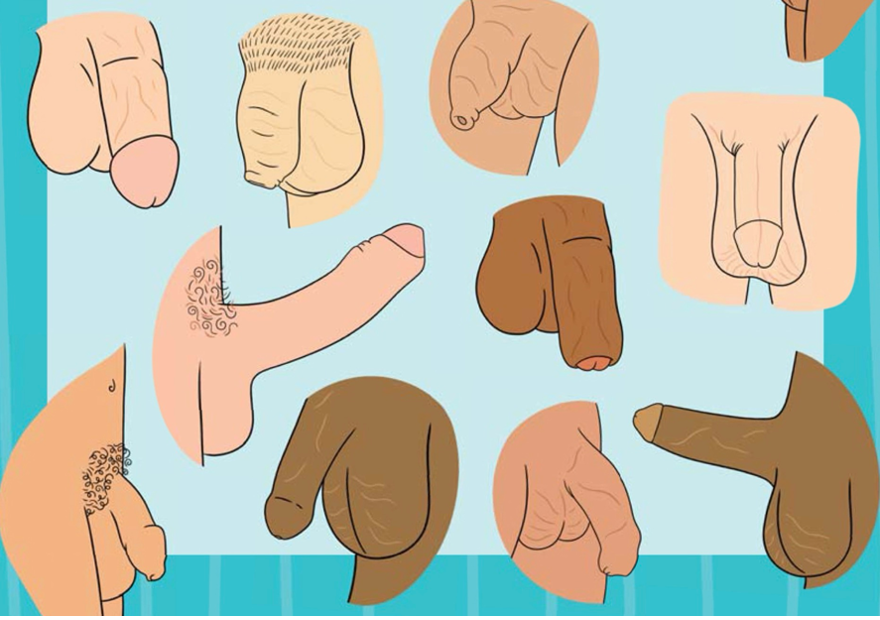
    A ‘bag of dicks’ in Welcome to Sex, p. 113.
    A ‘bag of dicks.’ [Welcome to Sex, p. 113]

    … but is very coy about depicting girls or women wearing hijab and kissing boys. There’s definitely no interracial, same-sex antics going on in that ethno-religious sex category. This is the raunchiest it gets:

    Wearing hijab protects you from interracial lesbian kissing. Welcome to Sex, p. 150.
    Wearing hijab protects you from interracial lesbian kissing. [Welcome to Sex, p. 150]

    Hijab-less girls get it on with boys, and other girls, in all kinds of sexy ways. The authors and publishers have considered very carefully which minorities, religions, and ethnic groups they are prepared to offend or encourage. And when there is something mildly censorious to say about other cultures, quoting ‘the help’ puts the blame somewhere else:

    I met up with ‘Mo’ when I was 16, he was 17. We didn’t have sex, we just talked. He said, ‘Men like [you and me] will get married and cheat on our wives with men.’ I didn’t want that, I would never want that. I think that reflects attitudes towards women that are prevalent in Arabic culture; I think it denigrates women. Bee. from the podcast One Foot In. [Welcome to Sex, p.89]

    … Suggesting, as well, that orientation should not be so ‘fluid’ after marriage, for Arabs, anyway.

    In the imaginary pleasure dome of Welcome to Sex you can be a black lesbian amputee with hairy (or is it tattooed?) butt-cheeks and be down for some satisfying scissoring, but if you have had your breasts removed in a fit of gender-affirmation you will find yourself sexually unrepresented and invisible.

    Amputee-friendly scissoring in Welcome to Sex, p. 166.
    Amputee-friendly scissoring. [Welcome to Sex, p. 166]

    A sex education book that bravely expounds on anal sex and the importance of soap [p. 167], premature ejaculation in the bald, black, cartoon-character community [p. 183], and has a full-page spread on vulvas and pubic hairdos [pp. 114–115], cannot find even one corner of about 300 pages to depict a woman (young or old) who has had her breasts removed. Other books for young people have introduced their readers to the brave new world of breast elimination. This feels like a missed opportunity to satisfy the urge for completeness, and honesty. The authors know there is a point where culture meets the control of sexual pleasure, and comment on it briefly …

    FEMALE GENITAL MUTILATION
    Female genital mutilation (FGM, sometimes called female genital cutting) is when some parts of the genitals are removed, usually when the child is young. It can involve removing some or all of the clitoris tip and hood, and inner and outer labia. This has been practised in some cultures for many centuries but is illegal now in Australia and most other countries, because of its inherent violence and because it causes long-term health effects. [Welcome to Sex, p. 40]

    With so much attention paid to a great variety of subjects, much more could—and should—have been said about body modification, surgery, and the effect of drugs on pubertal, sexual, and psychological development. Such subjects are much more difficult to navigate and the authors of Welcome to Sex have decided it is more important to focus on the positive, enjoying sex, than on the negative, the infertility and unhappiness that might follow on decisions made in adolescence that a girl or boy was born in the ‘wrong body’. These subjects are part of every young person’s future as an adult sexual being, and Welcome to Sex is highly focussed on the feelings of the present.

    Authors and publishers have made difficult and revealing choices about how far to go in exploring issues that adolescents might be interested in, and the limit appears to have been determined by factors other than ‘need to know’. There is no heading on the contents page for ‘Pronouns’, though this is the way everyone, including young people, refer to each other. ‘Xe/Xer’, ‘Ze/Zer’, ‘Ey/Em’, ‘Hir/Hir’, ‘Fae/Faer’, and ‘Hu/Hu’ are not discussed as options, though they are in use in some circles. There is a section on expanding one’s vocabulary, by which the authors mean they provide a list of pre-approved words with unhelpful or wrong definitions. ‘Omnifutuant’ does not get a guernsey. ‘Endosex’ gets two mentions [p.79]: “We tend to learn about bodies being ‘female’ or ‘male’, and have standard ideas about what their body parts (both inside and out) look like. The label ‘endosex’ describes people whose sex characteristics align with these ideas.” Actually, it means ‘the opposite of intersex’ and is a word that has been in very limited use only since about 2000.

    Welcome to Sex sometimes reads like a manual of sexual comedy …

    Welcome to Sex, p.276.
    [Welcome to Sex, p.276]

    I try to imagine what it is like to be a girl categorised in this way. Would I be wrong to think myself cheapened by the idea parts of my body were spoken of like kitchen appliances that came with tips for proper use? Is this the language parents should be using to talk to their children? My own biography will give readers an insight into my shortage of qualifications to answer these questions. But, I assure you, I was an adolescent once.

    A fog descends on the minds of young and old alike:

    Sex and gender—what’s the difference? Sex is to do with the genitals, chromosomes and hormones we have, usually ‘female’, ‘male’ and ‘intersex.’ Gender is how we define ourselves as being female, male, neither, both or something else. [Welcome to Sex, p.77]

    In a book that intends to tell everything about ‘sex’ we are introduced to a world where there are three sexes, ‘intersex’ is counted as “usual”, ‘gender’ concerns only self-definitions rather than behaviors and stereotypes, we can be “both” male and female, or “neither” or “something else”. The perfect liberty to label oneself extends now to the possibility of being a “trans male” (instead of ‘man’) or “trans female” (instead of ‘woman’), and suppressing the meaning of all words we use to distinguish between sexes.

    If to be gay is to be sexually “attracted to people of the same gender,” are penis-owners having sex gay if one of them ‘identifies as’ non-binary? To put it another way: if one cis-gendered penis-owner still identifying as a man has sex with a penis-owner who identifies as non-binary, could we say these penis-owners are occasionally heterosexual? How crucially important is it, from an epidemiological or statistical or medical point of view, to have a meaningful answer to that question?

    Dr Kang and the publisher’s fact-checkers, if there were any, should have known better than to triumphally present ‘intersex’ as a third sex, smashing the binary duopoly of Nature’s norms. Note the emotional exclamation point …

    It’s estimated that about 1.7 per cent of people have an intersex variation—that’s almost two in a hundred! Many intersex people are given hormones or have surgery done to change their genitals […] [Welcome to Sex, p.35]

    This forgets to mention people with intersex conditions who object to being roped into the confusion of ‘sex’ and the many clinicians without ideological objectives who have argued (for decades) that the numbers are very wrong. (To be clear: the 1.7% figure is a statistical sleight-of-hand and clinical absurdity.)

    Opening the book for the first time, I did not doubt Kang and Stynes have a strong protective impulse that they hope will empower young people to make sensible decisions. I believe that’s a correct assessment. So, why the blather and nonsense about ‘gender’? Why do the objectives and methods not seem to fit together?

    Sex education in the 1980s and 1990s focussed on ‘safe sex’ to prevent disease. Sex education now combines practical information about safety with an unstated attempt to dismantle the damaging effects of prejudice against people who simply want to live and love differently. To achieve this, the power of insult and prejudice to inflict pain and to damage ‘identity’ (the sense of oneself) has to be dismantled: if everyone is to be included, no one must be held apart.

    Kang and Stynes bring to sex education a Rouseauist attitude to children and politics in which the unblemished subjectivity of a maturing child needs to be both protected and guided. The terms of a new gender-sensitive language have double meanings. ‘Non-binary’ pretends to assert something real about the nature of sex, but in fact it is only the standard, pseudo-technical way of saying ‘Mind your own business’ or ‘I’m omnifutuant’ or ‘I’m still thinking about it, or might change my mind.’ Permitting male persons to demand and expect inclusion in lesbian groups can be reduced to an endless back and forth over the meaning of ‘woman’, or to a legal fiction intended to show compassion to a vanishingly small portion of the intersex population; but it is promoted, in practice, by disinformation about basic facts of biology.

    Kang and Stynes think they are creating the conditions for freedom of subjectivity and identity. Instead, they prioritise gender over sex, feelings over judgement, present (pleasure) over future (consequences), sexual identity (feeling you were meant to be a woman) over sexual orientation (being a lesbian).

    The practical consequences of this strategy are all around us now: male boxers put in the ring with women; male rapists sent to women’s prisons; young girls required to undress in front of adult men; women’s crisis centres run by men who seek to send those they are sheltering for gender ‘re-education’; the creation of an industry for modifying female bodies to look more like men, and male bodies to look more like women.

    Disinformation about sex or gender is not a kindness to women, or to the many homosexuals who think that body modification to achieve stereotypical gender presentation is a new form of conversion therapy. In a book stuffed to bursting with foggy language about gender and sex, I found only one remark, within a couple of sentences about medically assisted pregnancies, on the effects of “gender-affirming hormones”. The other consequences of ‘puberty blockers’ are not mentioned at all:

    Young people who have medical treatments that might affect their ability to conceive later in life can also receive information and advice about medical assistance. This might include children and teens having cancer treatment, or teens having gender-affirming hormones. [Welcome to Sex, p.251]

    The ‘warning’ is much too little, much too late.

    The most significant assumption at play in Welcome to Sex is that the inner voice, with which we simultaneously talk and listen to our thoughts and report our feelings, is a source of certain knowledge about ourselves. The book is an extended mash-up of sexual liberation and gender solipsism. The effort to dismantle social barriers to acceptance has come to depend entirely on a foundation that is unreliable. If the sources of our truth are entirely private, the character of our social intercourse is certain to be conflicted.


    About the writer

    Stephen J. Williams is a childless and unmarried writer and artist whose opinions on the subject of this essay may, and probably will, be easily dismissed; but he was young once, and that should count for something.
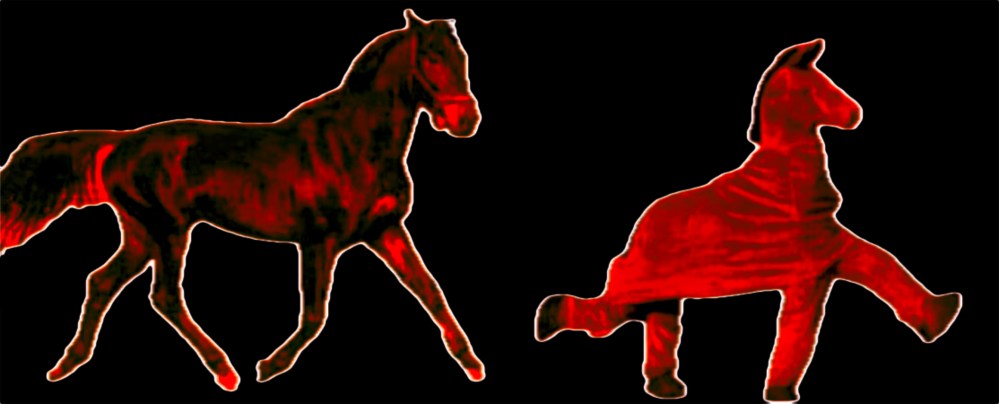
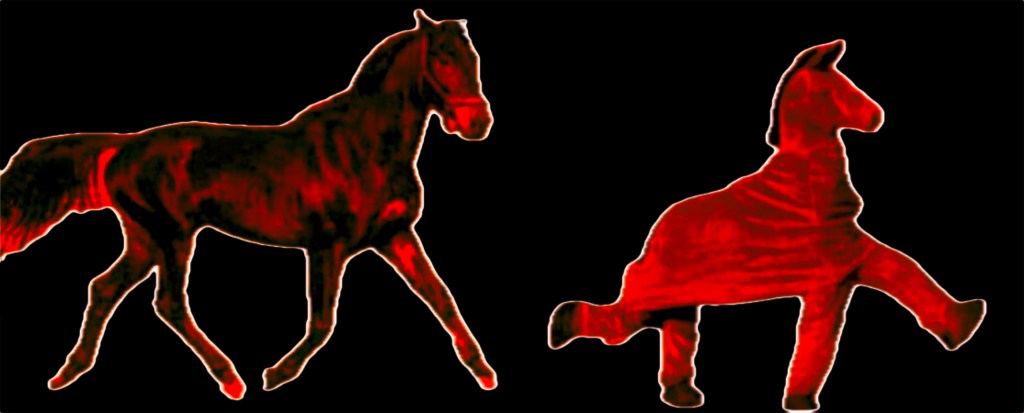
    Horses, or mare and nightmare (digital collage based on an internet meme, 2024) Stephen J. Williams
    Horses, or mare and nightmare (digital collage based on an internet meme, 2024) Stephen J. Williams

    Supporting and additional information

  • This happened …

    This happened …

    Late in 2019, the Australian prime minister (marketing guru and shitty-pants Scott Morrison, ‘Sco-Mo’ to you) and his theatre assistants removed the federal administration’s arts appendix. One moment the word ‘Arts’ appeared somewhere in the names of government departments, and the next it had gone. Snip! And he chucked it in the bin. 

    Well, not exactly… ‘Arts’ was removed from a department’s name. To compensate, the yarts (as they are called in Australia) got an office. The Office of the Arts: <https://www.arts.gov.au/>. Never have the arts and government been so closely aligned than in this uniform resource locator.  

    There were articles in newspapers, outrage on the arts websites, and a long rash of angry emojis at the end of comments on Facebook.  

    The conservative government in Australia, returned at the May 2019 election by a slender margin, had decided a feature of the victory after-party would be to show the country’s angry, artistic child the door. “Your mother and I are tired of you! Always with your hand out, and never a word of thanks! Get a job!” And then, the ‘clap’ of the fly-screen door and a barely audible ‘clack’ of its tiny snib that seemed to say, “And don’t come back.”  

    Making art is a patient, lonely business. Making any progress seems to require years of practice and a bit of luck. Guidebooks and internet articles about being an artist, full of advice and clichés, pile up very quickly. Be yourself. Tell your truth. Talent is important, endurance essential. In the age of Instagram, sexy drawings and a bubble-butt are handy, but not essential (or so they say). Governments are not needed, but academic sinecures, supervising doctorates in novel-writing or discussions of queer theory, good if you can get them. When universities are financially sous vide, as they will be emerging from the 2020–forever pandemic, place bets at long odds that the arts will be favored for rehabilitation.  

    Governments, truth be told, don’t want to help. The governing classes are too busy ‘governing,’ which might as well mean lying, or fudging, or crying crocodile tears, or making a killing on the stock market, or taking a holiday in Hawai’i. To be the governor is to be the winner, the one who calls the shots, to be ‘the decider.’ From their high station in life these decider-governors have a role in narrating our social experience. They have a role we give them in legislating to tell us what is and is not important. (Have you noticed how very often our prime minister tells us what is important, and how very important is the very thing he is now saying?) It’s been a long time since governors of any stripe have shown us how the arts and sciences are important. Business, the economy, the stock market, and jobs are important. Wages growth, arts, and science, women, not so much.  

    UNFURL, my arts publishing project, was a reaction to artists’ reactions to government biases against the arts. Who needs government money anyway? I thought. It turns out, lots of people working in the arts need audiences, and it’s not easy to find and maintain audiences without government assistance. And, even within my narrow range of interests—writing and visual arts—the connections between arts activity and funding are deep. Poetry is not the malnourished tenant of the attic it was in Australia in the mid-1980s. The long lists of books for review and the number of official insignia on web pages are two possible measures of this.  

    Logo, company name

Description automatically generated

    At the same time, long-established literary magazines have had their funding cut. There is money for the arts, so long as it is going to places where the expenditure can be seen to be spent. Government wants the internet to sing “Hey, big spender!” while it cuts funding to Meanjin and others. It may be partly Meanjin’s fault: it has had nearly thirty years to figure out how to get its great store of content online for prospective subscribers to access, while the failure to do so begins to look like obstinacy.  

    UNFURL asked writers and artists to promote their own work to their own social media contacts while doing the same for other artists and writers: it’s a tool for artists to find new audiences and readers. UNFURL /1 started with a couple of writers I knew, Davide Angelo and James Walton, and a writer whom Angelo recommended, Anne CaseySusan Wald, also published in the first UNFURL, was a painter whose work I liked and who had an exhibition planned for early 2020. I wanted to establish a process that could lead to unexpected choices. I would try not to make selections. I wanted artists to select or recommend other artists; and I wanted those artists to choose for themselves what they wanted to show with as little mediation as possible, encouraging people to show and to publish work they liked, and that might not have been selected (or grouped together) by an editor or curator.  

    Government wants the internet to sing “Hey, big spender!” while it cuts funding to Meanjin and others. It may be partly Meanjin’s fault: it has had nearly thirty years to figure out how to get its great store of content online for prospective subscribers to access, while the failure to do so begins to look like obstinacy.

    It is more efficient to work on all one’s secret agendas simultaneously, so I should also admit my concern that belle-lettrist aesthetics (including the idea that poetry is language’s semantics incubator) and faux-modernist experimentation have combined to make poetry mostly irrelevant and a branch of marketing. —One only has to look at the writing being selected by the selectors to see that something is wrong with the practice of selection. As much as possible, I think, best to leave artists to make their own choices; and if there are mistakes, then, we’ll know who to blame. 

    And then, in March 2020 … then was the actual end of the world-as-we-knew-it. Those crazy ‘preppers’ I’ve made fun of started to look like visionaries. “Where the fuck is my bolthole, goddammit!?” and “How big is your bolthole, my friend!?” could have been common questions in some circles. People who could afford it, and had somewhere to go, did leave town. Gen-Xers lost their hospitality jobs, decided that they couldn’t afford their share house rent, and moved back ‘home.’ Artistes no longer had audiences. Artiste-enablers, stagehands, administrators and carpenters, were also out of work.  COVID-19 put the arts and sciences back in the news. 

    The intersectional tragedy of pandemic and conservative political hostility to the lefty arts seemed to many like another opportunity to turn indifference into punishment. It was hard to disagree with pundits who have been cataloging this punishment.   

    UNFURL, possibly because of all this, has done quite well. By the time UNFURL /5 was released, writers and artists could expect to reach about two thousand readers within a couple of weeks of publication. (Each new UNFURL number provided a little boost to the previous issues, so that all the issues now clock up numbers in the thousands.) Eighty per cent of readers were in Australia, and most of the rest in the USA, Canada, UK and Ireland. The male:female ratio of readers was almost 50:50. The largest age group of readers was 18–35 years. (Though if everyone is ten years younger on the internet, maybe that’s 28–45.)  

    It’s difficult to read poetry on small-screen devices, so I did not expect UNFURL to be read on phones. The visual arts component of UNFURL is quite effective on phones and tablets, however. It seems likely that readers interested in the writing in UNFURL resorted to their desktops and printers. Sixty to seventy percent of downloads of UNFURL were to mobile and tablet devices.  

    I learned that women writers (poets) had a ‘stronger’ following among women readers than men had among readers of any kind. It was very apparent, with Gina Mercer, for example, that a very significant number of readers returned more often, subscribed more often, and were women.  

    I learned that women writers (poets) had a ‘stronger’ following among women readers than men had among readers of any kind. It was very apparent, with Gina Mercer, for example, that a very significant number of readers returned more often, subscribed more often, and were women.  

    I learned that social media isn’t the be-all and end-all of connecting with an audience. Old-fashioned email also works really well. Some artists and writers had no significant social media presence but used email effectively to communicate with friends and contacts.  

    I also learned that visual artists were, generally speaking, more enthusiastic and positive about using social media, and even better at basic stuff like answering messages. Visual artists be like Molly Bloom; writers be like Prince of Denmark.  

    I found that both writers and artists did things in UNFURL other publications might not permit (requiring, as they mostly do, first publication rights). Philip Salom published groupings of new and old poems. Alex Skovron published poems, prose, paintings, and drawings. Steven Warburton published a series of pictures about how one canvas evolved over several years. Robyn Rowland published poems and their translations into Turkish for her readers in Turkey. Ron Miller published a brief survey of his life’s work in space art.  

    All that and more to come.  

  • Welcome to Omelas

    Welcome to Omelas

    Australia is the imaginary world of Ursula K. Le Guin


    For many years refugees attempting to reach Australia have been confined by the Australian government in camps on Manus Island and Nauru. This policy has its origin in sudden changes in Australian voter attitudes, emerging in the early 1970s, toward refugees from Vietnam. These attitudes and prejudices about refugee movement appear to be a complex mixture of apprehension about its economic consequences, bigotry, racism, and fears of terrorism. Since 9/11 Australian opinions about refugees have hardened on all sides of the debate.

    A majority of Australians now appear to support a policy that claims to prevent refugee deaths at sea by discouraging refugee movement with off-shore confinement of people detained en route to Australia by boat—people commonly referred to as “illegal refugees” even though there is no such legal category of refugees.

    In 1973 Ursula K. Le Guin published the story The Ones Who Walk Away from Omelas, describing a happy, well-organised, successful and wholly imaginary society. The story has no plot or characters. It is not really a ‘story’ at all. It is the literary version of a ‘thought experiment’.  1973 is also the year Australia adopted the 1967 Protocol on the status of refugees, which removed geographic and temporal restrictions from the 1951 Convention relating to the Status of Refugees. This is the brief period in Australian history, 1972–1975, when Australian families sought to accept several hundred young children orphaned by the war in Vietnam; and only a couple of years before the arrival of the first Vietnamese ‘boat-people’ in Darwin Harbor. Le Guin’s story ‘The Ones Who Walk Away from Omelas’ is approximately the same age as Australia’s recent refugee history.

    It is now supposed that Le Guin’s story is based upon an 1891 address by American philosopher and psychologist William James to the Yale Philosophical Club:

    William James
    William James

    “Experience” of consequences may truly teach us what things are wicked, but what have consequences to do with what is mean and vulgar? … [I]f the hypothesis were offered us of a world in which […] utopias should all be outdone, and millions kept permanently happy on the one simple condition that a certain lost soul on the far-off edge of things should lead a life of lonely torture, what except a specifical and independent sort of emotion can it be which would make us immediately feel, even though an impulse arose within us to clutch at the happiness so offered, how hideous a thing would be its enjoyment when deliberately accepted as the fruit of such a bargain? 

    — William James, The Moral Philosopher and the Moral Life

    Le Guin’s story imagines exactly such a ‘utopia’. Hidden away somewhere, in the basement of a public building or in the cellar of spacious private home, a child has been imprisoned in dreadful conditions. When the young citizens of Omelas reach about eight to twelve years of age they are told about the circumstances of the imprisoned child. The citizens of Omelas generally feel the same way about the child:

    Ursula K. Le Guin
    Ursula K. Le Guin

    They would like to do something for the child. But there is nothing they can do. If the child were brought up into the sunlight out of that vile place, if it were cleaned and fed and comforted, that would be a good thing indeed; but if it were done, in that day and hour all the prosperity and beauty and delight of Omelas would wither and be destroyed. Those are the terms. 

    The Ones Who Walk Away from Omelas

    Le Guin goes on to explain how the people of Omelas cope with this knowledge and come to terms with the arrangement that has been made on their behalf. “Their tears at the bitter injustice dry when they begin to perceive the terrible justice of reality, and to accept it.”

    In the final paragraph of the story Le Guin tells us that some of the children and some of the adults of Omelas decide not to stay in the city. They respond to the conflict they feel about the imprisoned child by walking away. “They leave Omelas, they walk ahead into the darkness, and they do not come back. The place they go towards is a place even less imaginable to most of us than the city of happiness. I cannot describe it at all. It is possible that it does not exist. But they seem to know where they are going, the ones who walk away from Omelas.”

    The meaning of the story is not so straight-forward as it first appears. Le Guin’s story sometimes appears on the reading lists for students of public administration and business courses. Why? It demands to know not only why people might decide to leave but, perhaps more importantly, how the majority of people manage to stay in Omelas, and what they do when they stay. The ones who walk away from Omelas may be the people who have decided the cost of happiness in the city is too high, or they may have given up trying to find ways to change it. Some of the ones who stay in Omelas may still be trying to think of a way to free the child from its prison. On the one hand ‘Omelas’ is a story about a kind of utopia, on the other it is a parable about a corrupt society whose citizens accept as necessary or reject as immoral the reasons for their contentment. What is the more moral thing to do: to go or to stay?

    Noticing the similarity between Australia’s situation and the moral problems outlined by Le Guin and James adds new ideas to the national discussion about what is happening on Manus Island and Nauru, where men, women and children have been detained in order to dissuade others from attempting the sea voyage to Australia on the boats of people-smugglers. Finding both fictional and philosophical versions of Australia’s predicament, of our moral choices, opens up the possibility of examining the ethical statements made about this issue and trying to think about them in non-‘party-political’ ways.

    Does Australians’ happiness depend on keeping people detained in offshore facilities? No-one would have to look very far to find evidence that many Australians believe there are good reasons to pursue policies that aggressively discourage refugees. Some of these reasons are racist or irrational, and some appear utilitarian:

    These are the kinds of reasons that many people believe relate directly to the general well-being of Australian citizens and to the general happiness of Australian society. Your reactions to these reasons could be a litmus tests of the degree of your alignment to popular opinion in Australia. About 70 per cent of Australians accept some combination of these reasons, either alone or in addition to the argument that detaining asylum-seekers in offshore facilities discourages others from making the life-threatening journey to Australia by boat.

    The question of how to prevent deaths at sea has become the principal reason justifying the detention of asylum-seekers. The other reasons I have mentioned play a role—as anyone can see simply by looking through the reader comments underneath any article about asylum-seekers on a public website—but preventing deaths at sea has been placed at the front and centre of all these reasons. Why?

    We started to think about it like a ‘trolley problem’

    Ben Doherty’s article in The Guardian at the end of 2014 explains that the claim to have ‘stopped the boats’ (and therefore the deaths at sea) is a kind of fiction. The fictiveness of the claim does not make it any less compelling. Yes, refugees are still dying at sea but they are doing it somewhere else; and since it is happening somewhere else, clearly outside of Australia’s purview, it is substantially and practically someone else’s problem. As Mr Doherty points out, Australian governments have signed agreements with other countries to ensure border controls are tightened and the flow of refugees reduced. There should, I think, be more discussion about whether such arrangements are morally acceptable. We should all accept that deciding between one solution and another was always going to be difficult. It’s a terrible thing to have to detain people indefinitely or ‘release’ them into communities where they are despised and threatened. But this is better than allowing those who would follow to drown at sea, is it not?

    This is what happened to Australian politics about ‘boat-people’ between August and October 2001—between the ‘Tampa affair’ and the ‘children overboard’ incident. In the middle of it all, and perhaps clouding Australians’ view of what was happening in the world and the chaos that had come to reign in our and the world’s politics, there was the 11 September 2001 al-Qaeda attack on the USA. And then there was an Australian federal election on 10 November 2001.

    The panic about boat arrivals had begun before Tampa, but the children overboard incident clinched how the issue was to be perceived by Australians. Polls at the time said about nine out of every ten Australians agreed with the government’s new hard-line treatment of asylum-seekers. The matter was decided, and confirmed at the election, and henceforth, possibly for a very long time, the major political parties were in agreement that “Arriving in Australia by boat will no longer mean settlement in Australia”. Fulfilling this promise, imagined by John Howard, and articulated by Kevin Rudd (on 19 July 2013), was the principal success of the Tony Abbott government, which the Malcolm Turnbull government continues to support. This is what a clear majority of Australians want.

    Note, though, that this is the new reason for an old decision. After the first refugee boat arrived in Darwin Harbor in 1976, the then Immigration Minister Michael MacKellar, Foreign Minister Andrew Peacock, and Prime Minister Malcolm Fraser, tried to dampen emerging hysteria about refugees, but Australians were not persuaded. Every change of government and every new wave of asylum-seekers caused some subtle escalation of panic and adjustment of language. Between the late 1970s and now, little has changed in the minds of the Australian public. Opinion polls over this forty year period show that a clear majority of Australians—with remarkable consistency (though the poll questions have changed)—want to ‘stop the boats’, favor a process to ‘detain and assess’, and have few qualms about sending refugees ‘back to sea’. Australians no longer openly refer, as they did in the late 1970s, to their wish to re-introduce a White Australia policy.

    The question is, therefore, have we simply found morally acceptable reasoning to support morally repugnant aims?

    The politics of Australia’s moral dilemma has converted the question of what to do with asylum-seekers into a ‘trolley problem’:

    What do you do?
     A runaway trolley is about to go either in one direction, where five people will probably be killed by the trolley (if you do nothing), or the other direction, where one person will be killed by the trolley (if you decide to divert it). Would you shove a fat guy off a bridge to derail the trolley? What if the only person killed was Einstein, or the smart girl who will one day cure cancer? What if the fat guy was a villain?

    This problem was formulated, in the way we recognise it, by the British philosopher Philippa Ruth Foot in an essay in the Oxford Review in 1967, and published again, later, in her book Virtues and Vices, and other essays in moral philosophy. (Foot died, at 90 years of age, in 2010.)  Her original formulation of the problem differs significantly from all the usual variants in a way that is not immediately obvious. You can read about the popular variant scenarios at the Wikipedia page, where there is also the relevant quotation from her essay:

    Philippa Ruth Foot
    Philippa Ruth Foot

    Suppose that a judge or magistrate is faced with rioters demanding that a culprit be found guilty for a certain crime and threatening otherwise to take their own bloody revenge on a particular section of the community. The real culprit being unknown, the judge sees himself as able to prevent the bloodshed only by framing some innocent person and having him executed. Beside this example is placed another in which a pilot whose aeroplane is about to crash is deciding whether to steer from a more to a less inhabited area. To make the parallel as close as possible it may rather be supposed that he is the driver of a runaway tram which he can only steer from one narrow track on to another; five men are working on one track and one man on the other; anyone on the track he enters is bound to be killed. In the case of the riots the mob have five hostages, so that in both examples the exchange is supposed to be one man’s life for the lives of five.

    — Philippa Ruth Foot

    As Foot describes the different scenarios of her moral problem it is clear that each of the individual scenarios required different levels of involvement and sacrifice from the person who is to make the moral decision. The judge must accept complicity in an obviously illegal act. The pilot will sacrifice his own life even as he decides to cause as little harm as possible. The tram driver must make a quick decision about an imminent accident the consequences of which he will have to face personally.

    In each scenario Foot describes she places the person making the decision near the centre of its consequences. Foot’s description of what has come to be known simply as the ‘trolley problem’ does not allow us to make a decision about what to do as though we were not actually involved in the outcome. In thinking about how to act morally in crisis situations, we must consider consequences and costs to ourselves.

    In a similar vein, ‘Jarrahbelt’, a reader of The Guardian, added the following comment to an article about asylum-seekers on Nauru:

    In December 1980 I had the great honour to be present at one of the most desperate and remarkable rescues in maritime history. The story is largely untold, unknown, uncelebrated. On the narrow main deck aft of a guided-missile destroyer of the 7th Fleet of the US Navy a number of young men, the rescue detail, good men and true, fought for an hour to rescue about 30 people from a river boat. The river boat shouldn’t have been in the middle of the South China Sea, not in winter, not in a tropical storm with 40-foot seas, but there it was. Grappled alongside by pure brute force. We were obliged to maneuver alongside them since their engine and steering had failed, a fairly tricky operation in the circumstances. It was no-one’s fault that our port screw went into them, no-one’s fault that the port screw guard came down on top of the women and children and babies clustered on the stern cabin roof. For an hour the rescue detail struggled. I lost count of the number of times we went over the wire to replace them, thinking they had been scoured off the decks by the ferocious ocean. A waterspout went over the bows at some point, the sleet was sideways, we may have been in a vast whirlpool, the wind did its very best to tear us off the ship. We were broaching very badly and rolling like a drunken elephant. But none of that mattered. The ocean would not have them. Our own lives meant nothing then. The lives of the US Navy seals who went into that terrible sea meant nothing to them. I don’t know how they made it back onto the ship, but they did, some of them bearing corpses, because the sea was not even going to have the dead. That’s what it was like. We saved 21 souls that night. They were taken back to Subic Bay and given new homes and lives in America.

    I learned some valuable lessons that night. I understood that all human beings are exactly the same, no matter what their race, creed or colour. We all die the same way. We all have the same needs, wants, hopes and dreams. We all cherish peace, unless we are insane. We are all brothers and sisters under the same sky. To use people in the way these people have been used, as political pawns to satisfy the lowest common denominator of the Australian public, is beyond shame; it is beyond comprehension in an advanced country that holds its traditions dear and has offered its shelter to so many others.

    I doubt very much that I will ever vote in another federal election, I’ll just pay the fine. The choice is between a coward or another coward, unwilling or incapable of raising the timbre of the national conversation to a place where the needs of common humanity take precedence over all else.

    — ‘Jarrahbelt’ (a reader) in The Guardian

    Jarrahbelt’s comment touches upon factors that have a bearing on Australia’s discussion of the current moral dilemma of our treatment of asylum-seekers: the historical failure of governments to raise the tenor of debate; placation of the public’s prejudices and confusion without open discussion of consequences of government decisions; and the role of personal and social sacrifice in addressing an urgent, life-threatening crisis.

    In Australia, as in Omelas, there is little or no open, reasonable, detailed discussion of costs and consequences of the decisions that only appear to have been made by a majority, but in fact have been made on behalf of the majority to garner its support at the ballot box.

    The contempt expressed in the media, from all sides of the discussion, prevents at the start any genuine attempt to persuade people whose opinions differ from our own. Political debate generally, and this ethical debate in particular, tends to herd people into one or other ideological camp, which have become like trenches that troops shoot from across a no-man’s land. Notable for their absence from the serious discussion of these issues are many of the very people who should be helping us in the discussion. Where are the philosophers and ethicists of our universities? Where are the economists, whose job it should be to help us think about the costs and the possible benefits of accepting more refugees?

    If Australians are concerned about the spiralling costs, estimated to be in the order of hundreds of millions of dollars, of supporting refugees in the community, why can we not also have a detailed discussion about how best to spend the billions of dollars allocated to maintaining offshore detention facilities? Have Australian authorities adequately explored alternative strategies, for example, massively increasing the financial, logistical and practical support offered to Indonesian police and navy?

    The debate in Omelas

    This is what the debate about Australia’s treatment of asylum-seekers looked like in 2016, almost exactly forty years after Lam Binh arrived on a boat in Darwin Harbor. David Marr and Gerard Henderson, are openly hostile. They are, however, both citizens of the new Omelas. Mr Marr perfectly exemplified the revulsion some Australians felt when they realised their society had accepted the bargain William James described in his lecture on morals. Mr Henderson, if you listen to his words closely, did not accept the bargain either, recognising that there is a serious problem to be solved and, like many Australians, holding out hope that the government would solve it.

    Those of us who decided to stay in Omelas were left with the struggle about what to do. If the lessons of moral philosophy are any guide, we should have considered more carefully what sacrifices we were prepared to make to relieve the suffering of the people we detained. As we delayed, we caused more suffering. The solution required imagination, compassion, daring—and sacrifice. Convincing Australians that this was the right thing to do was the perfect job for a true leader, but there was none to be found.


    Related links

    Posts about asylum-seekers and refugees at this site

    • Off-shore [20170830 drawing, 74x105mm]
    • Victoria Contreras Flores | correspondence Victoria Contreras Flores received her degree and PhD from the Polytechnic University of Valencia. She was born and lives in Valencia, Spain, and is the creator of ARTNATOMY, and a great variety of other artistic projects.
    • Welcome to Omelas Australia is the imaginary world of Ursula K. Le Guin For many years refugees attempting to reach Australia have been confined by the Australian government in camps on Manus Island and Nauru. This policy has its origin in sudden changes in Australian voter attitudes, emerging in the early 1970s, toward refugees from Vietnam. These attitudes […]
    • Take the pledge … Take the pledge by sharing this graphic in any way you prefer. Download it and use it on Facebook. Send it in replies to emails from politicians. Use it as an avatar. Send the message to politicians that you will not vote for them if they support detaining asylum-seekers. More posts about asylum-seekers and […]
    • Done in our name Our capacity to blame politicians for what they have done in our name appears to have no limit—as though the agency we have through the ballot box to empower our representatives were not the same agency we should use to judge them.
    • What happened, Mr Doherty? When it comes to the issue of Australia’s treatment of asylum seekers, no-one escapes blame—not politicians, not media, and certainly not the Australian ‘public’. Australia’s asylum seeker problem is entirely the fault of the Australian people. It has little or nothing to do with people smugglers.
    • Welcome, Arjun! (Park the elephant anywhere.) Among the people who have tried to arrive in Australia by boat in the last few decades were probably many, whatever their religion, who knew all the details of this story already, and knew its lessons … Every Friday night Sebastian comes around for dinner and drinks. Last Friday he asked if he could invite Arjun to […]
  • A ritual text for gay marriages

    A ritual text for gay marriages

    “so ancient is the desire of one another which is implanted in us, reuniting our original nature, making one of two, and healing the state of man” — Plato, the fable of Aristophanes from the Symposium

    Introduction

    There is currently no standard ritual text for gay marriages for the obvious reason that such marriages have been forbidden and, as a consequence, a public ceremony having the function of liturgy (rites and duties in religious worship) has not developed. In places where gay marriages have been permitted by state authorities the ceremonial language of the marriage either mimics marriages for the union of heterosexual couples, is provided by a helpful marriage celebrant, or is composed by the couple seeking to be married. There are many examples of new texts for gay marriages.

    Androgyne, detail on ancient greek amphora.
    Androgyne, detail on ancient greek amphora.

    It is sometimes said that the advantage of religious rituals for marriage is that they are grounded in traditions that span centuries. By contrast modern rituals for gay marriages, especially if they are composed by the celebrant or participants, do not normally refer to ancient texts. So, we are in the habit of thinking that there are no beautiful ancient texts that could form part of a rite for gay marriages. That is not true.

    The core of this ritual text for gay marriages is a version of the fable of Aristophanes, which is recorded in Plato’s Symposium. It is the original text of the fable that tells the story of the origin of human desire and the meaning of love: we were once a different kind of being, cut in half by the gods, and therefore always destined to search for that lost part of ourselves.

    The ritual may have any cultural characteristics the participants wish: they can choose any location, costume, music, specific vows, or ritual actions borrowed from their personal, religious history (such as the breaking of glasses). In particular, those parts of the Catholic religious ritual that refer to scripture have been removed.

    Stephen J. Williams


    Ritual text for gay marriage

    The persons to be married choose how they are introduced to those invited to participate in the ceremony, and the wording of the promises (vows).

    Celebrant says:

    [Full name of person to be married] and [Full name of person to be married] welcome you all to the celebration of their marriage.

    Our original nature was not like the present, but different. We know that the sexes were not two, but three—man, woman, and the union of the two—just as the sun, the earth and the moon are three.

    In our original nature we were all bound at the back and sides, forming a circle, to the other half of ourselves.

    Neither gods nor nature suffer our insolence to be unrestrained. And, so, they made a plan to humble our pride and improve our manners. To diminish our strength they cut us in two, and gave us, each, a neck that could be turned to contemplate the part of ourselves that was lost. Through this we were to learn humility.

    Separated from the other part of our true selves, these two parts of [man/woman], each desiring [his/her] other half, come together, throwing their arms about one another, entwined in mutual embraces, longing to grow into one. The desire of one another which is implanted in us, reuniting our original nature, making one of two, is the ancient and healing state of every person.

    Each of us now separated from the other part of our true selves is but the indenture of a [man/woman], and [he/she] is always looking for [his/her] other half.

    We are prone to love and ready to return love, always embracing that which is akin to us. And when one of us meets with [his/her] other half, the actual half of [himself/herself], the pair are lost in an amazement of love and friendship and intimacy, and would not be out of the other’s sight even for a moment: these are the people who pass their whole lives together; yet they could not explain what they desire of one another.

    Please face one another.

    Do you [name of person to be married] take this [man/woman] to be your lawfully wedded [husband/wife], promise to keep [him/her], love and comfort [him/her], in sickness and in health, whether you are rich or poor, and to be kind and faithful to [him/her] for the rest of your life?

    Person to be married says:

    I do.

    Celebrant says:

    Do you [name of other person to be married] take this [man/woman] to be your lawfully wedded [husband/wife], promise to keep [him/her], love and comfort [him/her], in sickness and in health, whether you are rich or poor, and to be kind and faithful to [him/her] for the rest of your life?

    Other person to be married says:

    I do.

    Celebrant says:

    Do you have rings?

    Person to be married says:

    [Name], I give you this ring, a symbol of my promises and love.

    Other person to be married says:

    [Name], I give you this ring, a symbol of my promises and love.

    Celebrant says:

    We praise Love, our greatest benefactor, which both leads us in this life back to our own nature, and gives us high hopes for the future, for Love promises that if we are worthy, it will restore us to our original state, and heal us and make us happy.

    I pronounce you married. You may kiss.


    This document is a work in progress and I welcome constructive comments to improve it. Originally published in 2006, this is version 2.0 (Monday 14 December 2015). Shortlink: http://wp.me/p5OAfE-Iw 


    Notes


    Send me a comment

    Go back

    Your message has been sent

    Warning
    Warning
    Warning

    Warning.

  • What happened, Mr Doherty?

    When it comes to the issue of Australia’s treatment of asylum seekers, no-one escapes blame—not politicians, not media, and certainly not the Australian ‘public’.


    transfield notice

    Australian journalist Ben Doherty’s photograph appeared early in 2015 on a notice distributed to staff of Transfield, the company that manages facilities in which refugees are confined. The instruction was simple: “Do not exchange any information with this gentleman.” Mr Doherty was sent to Coventry by Transfield because he collects information about refugees and publishes it in newspapers.

    Mr Doherty’s article in The Guardian at the end of 2014 explained that the claim to have ‘stopped the boats’ (and therefore the deaths at sea) is a kind of fiction. The fictiveness of the claim does not make it any less compelling. Yes, refugees are still dying at sea but they are doing it somewhere else; and since it is happening somewhere else, supporters of the policy say, it is substantially and practically someone else’s problem. Governments of other countries have not been as tough or as practical as Australia’s has been.

    The reference to fiction’s role in politics made me think of Orwell’s Nineteen eighty-four, and about the year itself, about who was prime minister (Bob Hawke), and whether our world is more like that novel now than it was then, or less. The details of history seem surreal in retrospect; a sure sign that the reality of even one’s own life eventually turns into ‘story’.

    Many think Orwell’s warnings were apt. We do appear to have something like perpetual war and an ever-escalating state of emergency that requires citizens accept measures hostile to their own freedoms and privacy. Governments almost everywhere seem more susceptible to forces outside the ballot booth. Orwell was right to warn us that the language of politicians tries to make lies sound truthful and the wind seem solid. The evidence is everywhere and on every side of politics.

    When I try to find information about the behavior of my own government and only discover that press releases have been removed to another location, I immediately think “memory hole”. Political debate is more furious and more anonymous than ever, but the outcomes narrower: the current public circumlocution about refugees forces us think of the ‘problem’ as a moral or political struggle where the blame is always somewhere else or in another ideological camp: “We must stop people drowning at sea.” “People-smugglers are evil.” “Why is the government torturing refugees on Manus Island? “

    default-image-port

    After the Transfield affair, Mr Ben Doherty was Thomson Reuters fellow at Oxford University in the Trinity term of 2015; and his dissertation, Call me illegal: The semantic struggle over asylum in Australia, narrates the events, rhetorical changes and policy manoeuvres of Australia’s response to asylum seekers.

    Lam Binh was first. The self-taught sailor and four friends found Australia from Vietnam navigating with a single page torn from a school atlas. The page went no further south than Timor: from there he was simply following a hand-drawn arrow on the bottom of the page. But on April 26, 1976 he sighted land, and piloted his battered junk, the Kien Giang, into Darwin harbour, where he dropped anchor and waited. Lam had a speech prepared for the immigration officer who boarded the next morning: “Good morning. My name is Lam Binh and these are my friends from South Vietnam and we would like permission to stay in Australia”.

    page 7  »» opens new tab

    The then Immigration Minister Michael MacKellar, Foreign Minister Andrew Peacock, and Prime Minister Malcolm Fraser, tried to dampen emerging hysteria about refugees, but Australians could not be moved.

    Every change of government and every new wave of asylum seekers caused some subtle escalation of panic and adjustment of language.

    Between the late 1970s and now, little has changed in the minds of the Australian public. Opinion polls over this forty year period show that a clear majority Australians—with remarkable consistency (though the poll questions have changed)—want to ‘stop the boats’, favor a process to ‘detain and assess’, and have few qualms about sending refugees ‘back to sea’. However,

    It is important to note a distinction apparent in Australian attitudes towards asylum seekers who arrive by boat, and those who arrive by other methods (through the offshore humanitarian program or by plane). “The public makes a distinction between refugees selected under the off-shore program and self-selected asylum seekers,” Betts says in her analysis of opinion poll data. “Hostility to boat people does not mean hostility to refugees.” Australians are broadly supportive—75 per cent in favour—of refugees who have first been assessed overseas, then being resettled in the country. McKay et al argue that government and media narratives contrasting boat-borne asylum seekers with resettled refugees are crucial to public perceptions. 

    page 54  »» opens new tab

    Mr Doherty’s distinction generously offers Australians a convenient place to hide our prejudices in plain view.

    Call me illegal provides an insider view of how successive Australian governments tailored language to manage the public’s anger.

    When it comes to the issue of Australia’s treatment of asylum seekers, no-one escapes blame—not politicians, not media, and certainly not the Australian ‘public’. Australia’s asylum seeker problem is entirely the fault of the Australian people. It has little or nothing to do with people smugglers.

    We have (politicians and public alike) been behaving like avaricious, racist hypocrites; and have sought, for about forty years, to camouflage our insecurities with political blamestorming. Journalists and media pundits, who could have helped to pull down the propaganda and lies upon which our prejudices have built the current system of abuses, did little to mitigate the effects.

    The people who pretend to lead us, having decided it was easier to manage our prejudices for their own benefit than to educate us, created ever-more absurd excesses of placation; until billions of dollars were spent on detaining a couple of thousand asylum seekers, and tens of millions of dollars thrown at other governments in our region so they would accept the small number of refugees who wanted to live with us.

    Nineteen eighty-four needs to be revised for Australia: Big Brother has been watching… how you vote.


    More information on refugees

  • Joyce Lee’s It is nearly dark when I come to the Indian Ocean

    I edited and published Joyce Lee’s collected poems, It is nearly dark when I come to the Indian Ocean, in 2003. While the book is no longer in print, I am pleased that the files of the book are still available and I am able to publish them here. Also reproduced, below, is the book’s foreword by Chris Wallace-Crabbe. Ms Lee died in February 2007 [PDF ⤴︎ obituary].


    Joyce Lee, 1993. Photograph by Stephen J. Williams.
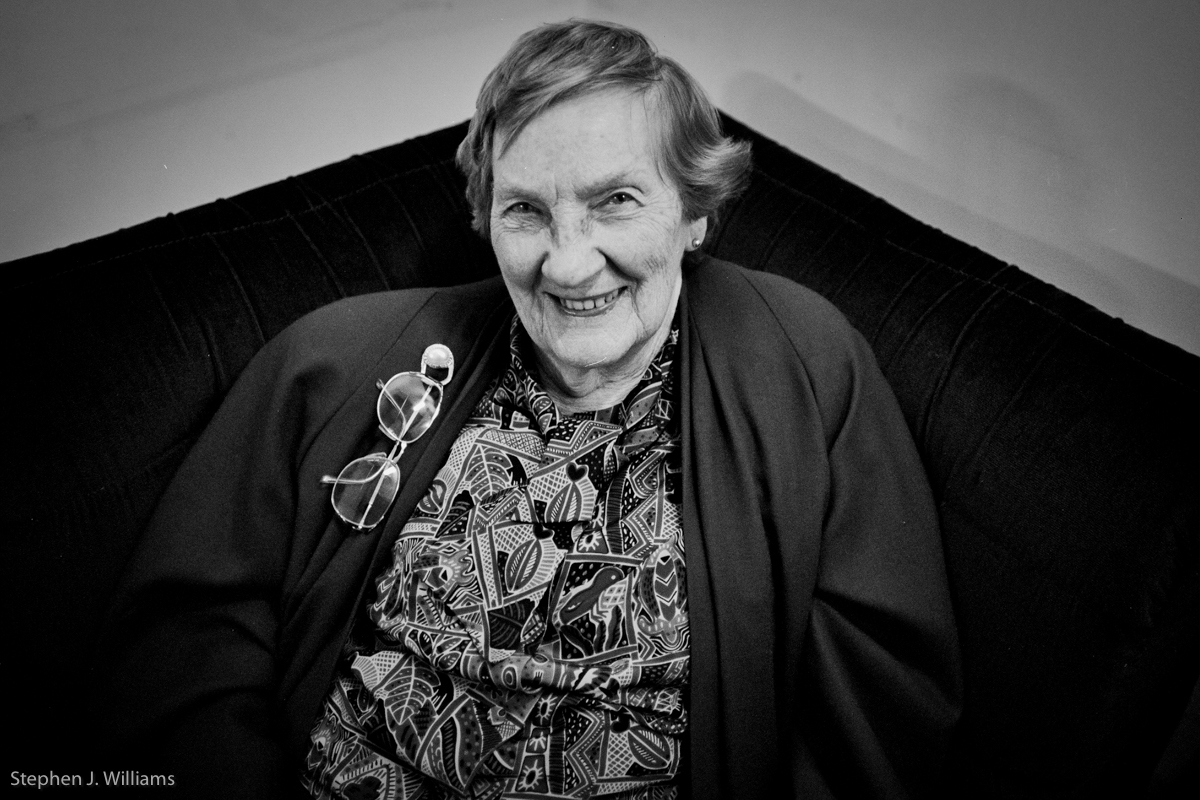
    Joyce Lee, 1993. Photograph by Stephen J. Williams.

    Foreword

    by CHRIS WALLACE-CRABBE, to Joyce Lee’s collected poems (2003)

                  Hear me, lesser seasons.
    It may be autumn, may be winter
    but I’ll be living summer.

    What can poetry do for us these days? It’s not in the business of swaying the masses; indeed, as Peter Porter has ever so gracefully put it, “Poetry is one of the few arts which is not menaced by not having an audience.” Yet it somehow retains an almost popular role in bearing witness to human decency. Yes, poetry produces some of the durable vessels which are brimming with hope.

    Such concepts as humanity and humanism have been cast aside in recent times like tattered banners, outmoded ensigns. Given that climate, it is a joy to encounter some book that is everywhere imbued with a humane spirit, a book that combines alert intelligence with decency and warmth. As the writer in question, the Melbourne poet Joyce Lee says about her artistic heritage, “Old now, I treasure what was given to me, perhaps in riddles”. But as we read them we find that her poems always strive to make such riddles come clear. In this she may be seen as a traditionalist, which is no bad thing.

    Cover of Joyce Lee's It is nearly dark when I come to the Indian Ocean
    Cover of Joyce Lee’s It is nearly dark when I come to the Indian Ocean

    Lee’s new, retrospective volume of poetry, gorgeously entitled It is nearly dark when I come to the Indian Ocean, pays tribute to human community and continuity. It gathers her clean, vividly substantial poems from as far back as their appearance in Sisters Poets 1, edited by Rosemary Dobson and published in 1979; from there it comes down to the present day, most of the earlier poems having been rewritten to some extent. The result, I am convinced, is a wonderfully coherent collection.

    Long a professional pharmacist, Lee came to poetry in her middle years. The voice was there, and the lyrics it articulated could range from the familiar ground of ‘Wimmera child’s first waterfall’ or ‘Double wedding’, back through history and dream to the Biblical Hagar, and to Gerda, the Celtic witch whose potions prefigure those of a modern chemist’s shop.

    Indeed, as her book shows, the poems torn out of history add something exotic and also bracing to Lee’s Wimmera-formed imagination. They leave dark shadows in the corners of her picturing. They remind us that even this brave new world of wheat and sheep and sprawling spaces comes out of history. What is more, not even the recovered landscape of country trains, scorching wind and cars that break down inconveniently quite fills her imagination: no, it is not all steeped in Wimmera naturalism. Lee’s dreams “encompass every shade of blue”; her yearnings reach for the sky. As she writes about the truths she learned tacitly, visually from her influential painter uncle (personally influential, that is),

    The dark side is part of the whole, a secret under-knowledge, a
    strengthener to get you through when your light is in some distant
    sky or disappears. The process is mysterious, its gifts measureless.

    Yet this is the poet who says to herself, in another voice, “What you know is yours.” She is not at all naïve about solids.

    In her compelling verse, the recurring strain of mystery does not entail vagueness or verbal chicanery, but has its roots in accurate knowledge. This is the basis of Joyce Lee’s persuasiveness, of her poetic strength, despite her deeply modern acknowledgement that “All I believe in is change.” Metaphysical questing rides on the shoulders of verismo.

    On the evidence of what we read here, she is subject to metaphysical yearning, not least in the presence of music, which Les Murray has more skeptically dubbed, “The greatest form of nonsense verse.” Responding to that transcendent composer Messaien, she hazards that “The note pins silence/ never to resound”, while in another poem she laments that “you are left with longing/ for the voice beyond the note.”

    Yet as I have suggested, her dominant imagery is rooted in the flat, pastoral Wimmera, with its bluish edge of Grampians. These poems return again and again to rock, dryness, dust, vistas of plains: to what she calls in the title of one, ‘Plain dreaming.’ Far overseas, in a prospect of Dubrovnik, she can write, “In the late afternoon, stones/ glisten like sheep on bare hills.” Also to country sounds, among them the mopoke, a horse stamping in its stable, express trains passing in the night.

    The poetic vocabulary of this poetry is rich, using the whole palette, as she would be glad to say. Yet the language is not arcane, nowhere near as baroque as Peter Steele, or Anthony Hecht, or Marianne Moore. It is plumfull of colors, hard nouns and proper names: not the “long lists of proper names” which the formalist Auden thought a poet should enjoy, along with riddles and complicated stanzas. Lee is above all a realist in the homestead of poetry. Most of her capitalized names are lodged in families, active in social milieux.

    These poems come over to us in clear stanzas of modestly free verse, in linguistic orchestration by way of such tasty words as triangle, peephole, hem, gimme, scrubbiness, lobster, blisters, quinine, snow gum and, in triumphant upper case, MADAGASCAR. Hers is an active world crammed with things, hues and actions—even the memories are rock-solid. They contain such vivid place/events as The casino

    end of Point Lonsdale pier.
    Interval at a film hot air balloon, swimming
    with sharks at the aquarium,
    riding a bejeweled elephant.

    These strengths are manifest in such poems as ‘The past walks noiselessly’ and ‘Travelling backwards’, or in such precisely physical lines as these:

    Unloaded in scorching wind
    I’d watched him jack the car, carefully mend the puncture,
    no cursing in church clothes. Minna
    didn’t mention how she’d sweated in the kitchen.

    Evenings round the stove, Gus and Ernest
    red-faced in shiny second best, talking
    thread darning and embroidery needles. I learn
    to stitch neat edges, work to a pattern.
    We share mystery and far places.
    I go to bed held safely in a large world.

    Surely that is what Lee’s poems themselves do: go to the black and white bed of print “held safely in a large world.” It is also a realm that has space for humour: one need only think of such poems as ‘Car week’ and ‘Untidy legs.’ Who else could possibly have used “untidy” like that?

    Once upon a day I lamented that most books, at least in Australia, were written by people who didn’t know anything about work. It is a pleasure here to see how persuasively the poet evokes teacher or preacher, drover or country housewife, even the persuasive committee man, having a damn good sense of what they actually do. As she says of such awareness, “Peasant born, I inherited/ hard work from a grandfather/ migrating with his tribe/ for betterment.”

    Mostly, however, she writes in the present tense, employing that present-emphatic that plays so large a part in modern Australian poetry. Within this climate of syntax, the past recurs over and over again, shaping events and people, giving meaning to the great Where We Are Now. Lee is a poet of generations, it might be said, recalling in this the David Campbell of Deaths and Pretty Cousins: and Campbell was, of course, another poet who knew what work could be. His high Monaro has a great deal in common with her Wimmera.

    Reading Lee, I am sometimes taken back to those once-influential studies by Erik Erikson on childhood, society and the life-history. She feels and records how human strength flows down like honey from generation to generation. Not only can she travel backwards in time, along the psychological railway, all the way to Murtoa station; she records her profession ironically with the reflection that “My workingplace is filled with prescription ghosts” and she recreates ‘My father’s country’, a grandmother’s kitchen or the grandfather leading a bride on each arm into the local church. Each of these chronotropes is far too strongly rendered to smack of sentimental nostalgia. As Octavio Paz once observed, “Poetry is memory become image, and image become voice.”

    The newest writing in It is nearly dark makes radiantly clear that, as much as being an art of mimesis or of tribute, poetry can be an art of yearning. These late lyrics are full of ontological hunger. They yearn for truths which are too large to be named, or fully understood. Again and again the trope is light, flame, perhaps candlelight. “I must pursue an unknown brighter light,” she writes, reaching out for something beyond the Johannine logos, seeking to touch the ineffable. Of such poems it would be impertinent to say more.

    In the large picture this book is like a tessellated novel, the pieces reshuffled but the characters intact—on the other hand, it seems possible that if the poems were set down in exactly the right order we would have Joyce Lee’s autobiography. Viewed, more sensibly after all, as a book of poetry, this is writing in which accuracy of perception is harmoniously balanced with generosity of spirit.

    Chris Wallace-Crabbe
    Melbourne, July 2002

    Originally published by Artist’s Proof (Stephen J. Williams) in 2003.


    1 MB PDF file, opening in a new browser tab:

    It is nearly dark when I come to the Indian Ocean: collected poems 1965-2003 by Joyce Lee

  • Welcome, Arjun! (Park the elephant anywhere.)

    Among the people who have tried to arrive in Australia by boat in the last few decades were probably many, whatever their religion, who knew all the details of this story already, and knew its lessons …


    Krishna reveals his universal form to Arjuna.
    Krishna reveals his universal form to Arjuna.

    Every Friday night Sebastian comes around for dinner and drinks. Last Friday he asked if he could invite Arjun to call in, late, and join us. I had not met Arjun before. I thought for a moment, trying to recall the name in the Bhagavad Gita. It has been a long time since I read it. A very long time. “Yes… Is it as in ‘Arjuna’?”

    Sebastian sent the agreed-upon text message to Arjun’s phone… “Park the elephant anywhere. I’ll come out to show you in.” —As though anyone with a modern Hindu name would turn up for drinks on an elephant.

    Arjun arrived later than expected. He had been to an exhibition and the art was ‘experimental’. “I went with an artist who tried to explain it to me. Apparently it starts off being a painting, and then it gets turned into a print, and then it’s projected. There were videos, too.” So, we talked about art.

    Every long friendship is a secret place, a bolthole that is also a hall of mirrors where language, laughter and identity reflect on each other. We tell politically incorrect jokes about gays, women, blacks, politics, and then quickly straighten ourselves, pretending to worry that someone might be listening at the window or that there is a microphone hidden under the table. These jokes, to be fair, are often at our own expense. No-one gets out alive.

    Blacks call each other ‘nigger’. Gays take back ownership of ‘queer’ and ‘faggot’. But in our colonial outpost at the end of Asia, surrounded on all sides by water, Muslims, Hindus, Maoris and ice, people who look and speak like ‘foreigners’—non-Anglo, non-Euro foreigners—are still having a gruesome time.

    It is not difficult to perceive a shrill panic in Australian language in 2015. Online newspapers are stuffed full of (mostly) anonymous complaints about fake refugees. “Surely everyone knows that the countries refugees want to live in are white countries.” “The refugee convention does not guarantee that refugees can only be resettled in the wealthy country of their choosing. Yet, many refugees seem to want only to come to Australia and reject safe harbor in other countries.” And so on. Genuinely racist urges are easily camouflaged with concern that we should not allow refugees to drown at sea.

    Australia has developed a heap of festering prejudices. “Why do these people have to come here.” “They’ve spoiled their own countries,” “ruined their own cultures with religious wars.” “We don’t want that sort of thing here.” “There are Muslim countries they can go to. Why don’t they go there?” “The Indian student who faked an attack on himself.” “Oh, God, they’ve taken over the Seven-Eleven stores…” “Asians. I think they’re aliens. I mean really aliens. From outer space.” 

    I like to think I know a thing or two about art, but the truth is I do not know very much at all. Asian art, for example, is a mystery to me. I think I am not alone. All the Catholic and Christian stuff I have down pat, rehearsing it since childhood. To my deeply prejudicial frame of mind, Muslim art is easy: they don’t like images. What’s next? Ah, the Hindus: statues with many heads and way too many arms. I have no idea what it means.

    What does it mean? I acknowledge it simply as a symbol of exotic excess. Those asian artists, you know, they just do not know when to stop. And there appear to be different versions of the same thing: one is a Krishna, the other a Shiva; some of them are dancing and some not. It’s all just too complicated—and alien.

    Properly motivated, it does not take long to find out what it means.

    With apologies to Hindus who may be offended by a clumsy contraction of several million words into these few paragraphs…

    Hindus, like Catholics, believe in a god who transcends everything in time and space. Brahma is the supreme god of creation (alongside Vishnu the preserver and Shiva the destroyer—making the Hindu trinity). It is Brahma who is the father of Manu, from whom all human beings descend.

    The central, though not by a long way the oldest, texts of Hinduism are the Mahabharata and Ramayana. Composition of both began around 400 BCE, and the texts finalised around 400 CE. The Mahabharata is the great story of the ‘Bharata’ dynasty—a history of the contest for accession between the Pandava princes and the Kaurava princes. At the core of the story is the recounting of the Kurukshetra war in which the armies of the branches of the dynasty fight each other. (In this and all the other Hindu texts, the ‘story’ is accompanied by much philosophical and devotional material.)

    The Mahabharata is the longest verse epic in world literature. While the centrepiece of the poem is the description of the eighteen day battle, the Mahabharata also contains, just before the battle begins, one of the key texts of Hinduism—the Bhagavad Gita.

    Arjuna, the Pandava prince, arrives in a chariot to the place where the Kurukshetra war is to start. Krishna, in human form (he is the eighth incarnation of Vishnu), is Arjuna’s charioteer. Arjuna looks at the army opposing him and is paralysed by the thought that many of the people there are beloved members of his family and his teachers.

    Arjuna asks Krishna for his advice. Krishna does not hold back. He tells Arjuna his duty and reminds him that there is no point delaying taking action. The fate of the Kaurava princes is already determined—by Krishna himself.

    To prove his point, Krishna reveals his universal form to Arjuna. This is the moment (chapter 11, verses 10 and 11) we see depicted in the paintings of the (often blue) deity with many heads and many arms. Krishna sees everywhere, and his hands guide everything in the universe.

    Arjuna’s dialogue with Krishna is crucially important to Hindus—personally, culturally and politically. It is a narrative about fate, courage, the necessity for action, and the role of heroism in personal and social life. Its influence runs deep in Hindu culture. Political leaders, past and present, including Mohandas Gandhi, interpreted the narrative of the Bhagavad Gita to clarify their own ideas and actions.

    Careful readers will have noted that Arjuna does not arrive on an elephant.

    Among the people who have tried to arrive in Australia by boat in the last few decades were probably many, whatever their religion, who knew all the details of this story already, and knew its lessons. It takes some courage to get into a wooden boat and try to cross hundreds of miles of ocean, does it not?

    I understand there are many Australians who believe there is an imperative to preserve life; to keep straight the lines and the lengthening queues of people wanting to come here; and perhaps even to sort through those queues for the kinds of people we would prefer.

    Australia is filling up with believers who are concerned to do the right thing.

    Speaking only for myself, I have decided that it is not necessary to pretend to judge whether someone is actually a refugee. I do not believe we should pretend it is moral to punish someone who seeks a better life with alienation, abuse and rape; and to promise it will be punishment without relief.

    I cannot promise it will make any sense to you because I hardly understand it myself: the story of Arjuna is about how to act, and the need to act, even though we are quite certain that no matter what we do we will cause suffering. These ideas are permanent and universal. They were the same in Asia two thousand years ago as they are now in Greece or Italy.

    At around the same time that the Mahabharata was being composed, on the other side of the world, a bronze statue of a boxer was being created. This statue was unearthed on the Quirinal Hill in Rome in 1885 by the archaeologist Rodolfo Lanciani. The bronze has copper inlays that make the flesh of the boxer look bruised. When the figure was cast the sculptor took a chisel to his work and gouged scars in its face.

    The creators of the Mahabharata and the statue of the seated boxer were both trying to tell us something about human suffering and heroic action.

    Statue of a seated boxer, 3rd century BCE, Palazzo Massimo. Photograph by F Tronchin (2007).
    Statue of a seated boxer, 3rd century BCE, Palazzo Massimo. Photograph by F Tronchin (2007).


    Asylum Seeker Resource Centre

    More information about refugees (links)