Author: Stephen J. Williams

  • Michelle Ramin | in real life

    Michelle Ramin | in real life

    Michelle Ramin won the San Francisco Bay Guardian 2014 Goldie Award for Excellence in Visual Art. She has exhibited her paintings in San Francisco, New York, Portland, Nashville, New Orleans, and in the UK. She was born in North Central Pennsylvania and currently lives and works in San Francisco. Ramin studied at Penn State University and received an MFA from the San Francisco Art Institute. Her work has appeared in New American Paintings, SF Chronicle, SF Weekly, Beautiful Decay, 580 Split, and is included in the Jimenez-Colon permanent collection in Puerto Rico. A solo exhibition of Ramin’s work opened at the Duplex Gallery in Oregon on 2 June 2016.


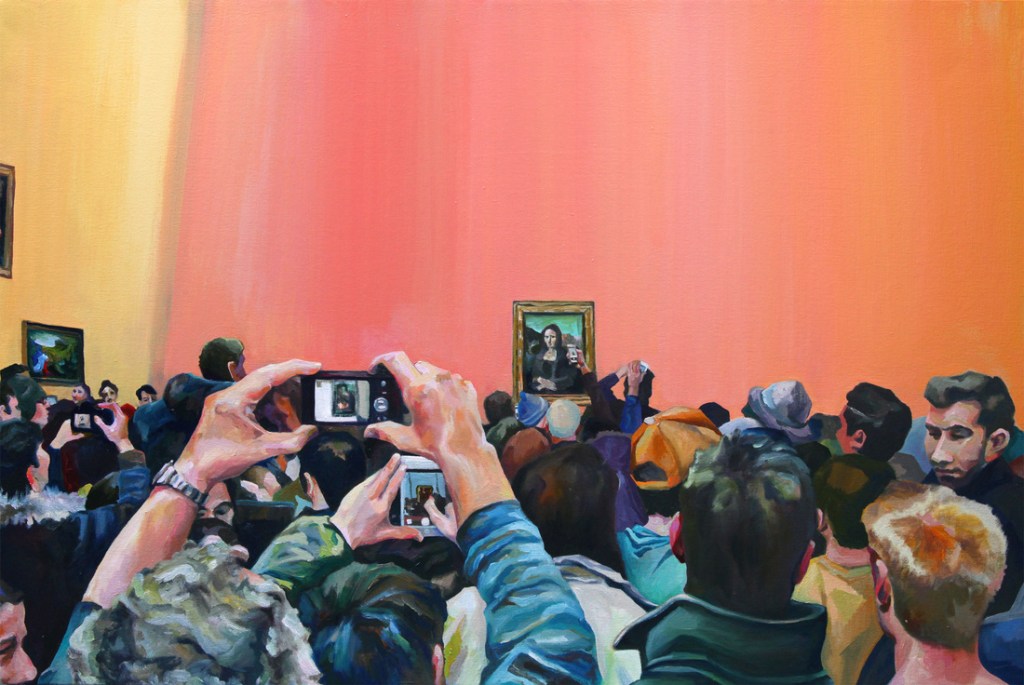
    Williams: I was in the Louvre probably decades before you, and before the space in which the ‘Mona Lisa’ is hung was renovated. Nothing important about the experience appears to have changed. There were no ‘smartphones’ then, but there were lots of cameras. A large group of people, which seemed to be moving as a pack from room to room, ignored every other picture in the Denon wing. Your painting, ‘Mona Lisa IRL’, does a number of interesting things with this scene, which must now be familiar to most tourists who visit Paris. To my mind, the most important thing you do is confidently announce that paintings are as good or better than photographs at contemplating our now surreal relationship with images and art. The virtual ‘Mona Lisa’, one we might see on the Louvre website, is somehow more real than the ‘Mona Lisa’ in real life.

    Michelle Ramin
    Michelle Ramin

    Ramin: Yeah, I think that’s interesting—the idea of the ‘Virtual Mona Lisa’ vs. Mona Lisa ‘IRL’. She’s more famous as a replicated digital or printed image than as an actual painting. When I got into the room, I kinda stopped caring about the painting itself. In that moment, I was able to check it off my tourist list of things to see. I didn’t get very close and could honestly barely make out that it was the ‘Mona Lisa’, except for the huge crowd around her. It mattered to me more to be experiencing the way in which people experience her rather than getting close to the actual painting and observing the brush strokes, colors used, composition, size, etc. I studied all of that in school but all that knowledge didn’t mean a thing when I got into that room. It was then that I realised I wanted my next body of work to be about crowds of people observing famous pieces of art. It’s interesting to me that some people find the need to check certain famous pieces off of a list—as in the Louvre brochure—while others spend minutes or sometimes hours studying the same piece. It’s like this at concerts, too, and other cultural institutions and happenings. Something about hype and fame—the bragging rights involved—that really draws people, but perhaps for the wrong reasons. Then again, who am I to judge how people should and should not experience something?

    Williams: Digital photography has become the standard method of certifying experience in a way that seems more reliable and objective than memory… until the drive fails or your cloud is hacked. Your paintings of subjects inside the Louvre and the Musée d’Orsay are also about the spectacle of art and the hype surrounding it. To experience this as a tourist or art lover is one thing, but artists experience the spectacle and hype of the art world in a different way, as I suspect you are finding now you have several exhibitions of your own coming up.

    Ramin: Hype is a very real and intimidating phenomenon, especially now with the advent of social media. As young as I am (thirty-four), I still remember the days without computers, cell phones, internet, etc. Word of mouth and the printed word were the only way to get information out there. Now, there are so many ways—so many websites, blogs, apps, etc.—I can’t keep up, nor do I want to. The popular way to virtually socialise changes constantly. A week out from the opening of my solo exhibition ‘Jet Lag’, at Duplex Gallery in Portland, Oregon, and I find myself full of anxiety over whether or not I sent press releases to the right people. Who are the ‘right’ people? Even a few years ago, it was so much clearer. All I’ve been seeing this week is an ocean of faceless art blogs and Instagram accounts. I find myself feeling very much like I did in the congested museums of Paris—alone in a crowded room, and very overwhelmed. This is all part of the process, of course. The art making is the easy part for an artist. It’s everything else that is so difficult.

    Williams: The recent gallery paintings are unusual in your body of work because they have not edited out the architecture and environment of the subjects. In much of your other work, for example ‘Ben and Travis Find a Tube’ [Watercolor on Paper, 22″ x 30″, 2015], the setting is missing and only the subject and action is left. Something that may have started out being a photograph or a memory, or both, ends up being a pictorial distillation. Can you tell me something about your editorial process, about how you decide what gets left in and what gets cut out, about how you decide what your real subject matter is?

    Ramin: I’ve always been a very focused person. I have a tendency to focus so much on one thing that I miss all the details surrounding the thing. Most of my work over the past five years has been intentionally editing out the background or surroundings of the figures—mostly because I, myself, only really cared about the subjects and their actions. The rest seemed superfluous. I wanted the viewers to see what I was seeing, which was the interaction and relationships between the figures, and nothing else. My newest body of work is about something a little different—still about people, their interactions with each other, but also their interaction with the unique space that constitutes a museum. There’s so much weight to a museum—historically, of course, but also architecturally. It’s contextually important for me to include this unique environment in the paintings. I didn’t want to introduce backgrounds again until I knew for sure it provided something important and relevant to the works’ content.

    Williams: Some of your other projects, from 2011 and 2012—the installations ‘Mask Booth’ and ‘Try it on’—appear to invite or challenge people to try on something that in Australia we call a ‘balaclava’. It makes everyone look like a criminal, or like they’re on a polar expedition. What is this about?

    Ramin: When I was in graduate school, I took up the mask, or balaclava, as a multi-layered, politically-charged symbol representing various identities. I used this metaphor as a way to discuss hidden identities, subcontexts, in each of our personalities. By putting on the mask, one takes on a new and very different identity. The body of work relating to masks centered around private vs. public personas and the existence of this doubling in everyone. This theme can be extended to include social media personas and public branding as well. At the time, 2011–2012, the Occupy Movement in the Bay Area was ramping up, the punk band Pussy Riot was very active politically and the film ‘Spring Breakers’ had come out. When I began the mask series, these cultural icons weren’t present, but by the time I was in the midst of the series they were. A form of the collective unconscious, I suppose. It seemed like the balaclava was on everyone’s minds, so it felt like a very relevant representation of that moment, especially following the 2008 recession and being an election year here in the U.S.

    Williams: Yes, and by the time this zeitgeist filters through to your watercolor and pencil drawings, something else has happened. The hidden, masked self is perfectly domesticated and comfortable on the sofa. ‘Three aliases’ [Colored Pencil on Paper, 22 x 30 inches, 2011] is both funny and disturbing.

    Artists have to be concerned about what other people think. At one end of the spectrum it’s ‘Will they like my work?’, and at the other it’s ‘Will they understand what it means?’ Are you a worrier? Are you on the side of authenticity or on the side of sincerity?

    Ramin: I am absolutely a worrier! —In all aspects of my life. At this point in my career I care very much about what people think and how the work will be received. I want it to be accessible to everyone but I also want it to function on a higher level, where artists, critics, historians, etc., can gather more information from the work. I don’t want to choose sides. I want it all, really. Doesn’t everyone?

    Williams: Maybe. The path we take to get to where we are seems less important at the start than when you get to near the end. That’s the difference between being thirty-four and fifty-eight.

    We’ve touched on how technology now mediates how we experience art. This means that art is made by people who have seen more art than ever before. What have you been looking at recently? What have you discovered?

    Ramin: The last art I went to see was at the San Francisco Art Institute (SFAI) and California College of the Arts (CCA) MFA thesis exhibitions. They are the annual displays of graduate students’ work. I love checking out the work of emerging artists coming out of graduate art programs. A lot of the work is missing steps but some is extraordinary. There’s such a refreshing feeling to young (in career, not necessarily age) artists’ work: the best of the showings can be invigorating and inspiring, like Laura Rokas and Robin Crofut-Brittingham. The worst is still really intriguing because it’s candid in its failure: no censorship, just letting it all hang out. I appreciate that on a lot of levels. That’s what graduate school is for… Experimentation and failure: something that should be encouraged more in post-graduate work and, honestly, in our daily lives.

    Related links on other sites

    Conversations

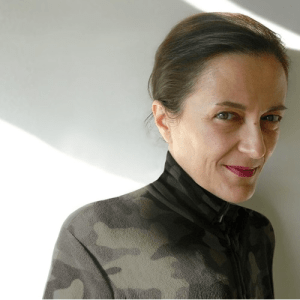
    • Victoria Contreras Flores | correspondence Victoria Contreras Flores received her degree and PhD from the Polytechnic University of Valencia. She was born and lives in Valencia, Spain, and is the creator of ARTNATOMY, and a great variety of other artistic projects.
    • Santiago Cañón Valencia | interview Santiago Cañón Valencia is a cellist. An emerging solo artist of great technical brilliance, he was born in Bogotá, Colombia, completed his bachelor degree with James Tennant at the University of Waikato in New Zealand and advanced studies with Andrés Díaz at the Southern Methodist University in Dallas. Winner of many awards, he has performed with orchestras in Colombia, Australia, New Zealand, the USA, Canada, and Hungary.
    • David Hensel | interview I cheered on reading Brian Sewell’s scathing article about the Summer Exhibition, because I read it returning from going to the preview, where I’d hoped to find my own sculpture. Instead what I found was the empty base, without the sculpture. We know the art market prefers obscure art as somehow more advanced, and anything […]
    • Victoria Contreras Flores | Art~natomist Artnatomia is a tremendously clever use of Flash and a great educational tool. It is the inspirational work of art teacher and artist, Victoria Contreras Flores, who, with a contrary view of the demands of the art market, has decided to concentrate on using new tools and media to express herself and teach her students. Her […]
  • Shakespeare

    By the time Shakespeare was my age he had been dead for six years.

    »» New York Times article.

  • Victoria Contreras Flores | correspondence

    Victoria Contreras Flores received her degree and PhD from the Polytechnic University of Valencia. She was born and lives in Valencia, Spain, and is the creator of ARTNATOMY, and a great variety of other artistic projects.


    Williams: Victoria, it has been about ten years since ARTNATOMY. It is a beautiful and practical tool for students, artists and illustrators. Has it been doing well, and getting the attention it deserves?

    Contreras Flores: Yes, ARTNATOMY will celebrate its ten-year anniversary in September [2016]. I’m preparing a celebration! My little virtual pedagogical toy fulfilled and exceeded all my expectations: it is still selling an offline version, although it remains free online for students. It has also led to derivative commissioned works, interesting collaborations and international contacts and friends. It has exceeded the user target I predicted and the application is avowed useful not only by artists but by psychologists, neurologists, plastic surgeons, coaches—even criminologists. It has received international awards, been featured in magazines and cited in books and academic papers. I could not be more satisfied. For it to be a more popular site and tool I would have to overcome my laziness for business and social media marketing. But I have other interests, too.

    A screenshot of ARTNATOMY by Victoria Contreras Flores.
    A screenshot of ARTNATOMY by Victoria Contreras Flores.

    Williams: You refer often in your correspondence, sometimes by way of apology, to what you call your ‘dilettante-ism’. To be an amateur is not such a bad thing. But you have made it your style to be a professional non-specialist, a dabbler who is also a discoverer of new things. I can see an advantage in this, if a way must be found to pay the bills. It also means, does it not, that some of the brief artistic commitments do not work out the way you planned?

    Contreras Flores: Let’s see… First, I distrust works that ‘need explanations’. I produce objects, works, music that do not belong to the realm of language. They can simply thrill you or not, make you feel, identify with them, or not. When a work comes to us, we do not mind the author. I am much worse than my best works and I should not matter.

    Victoria Contreras Flores
    Victoria Contreras Flores

    I understand, since I am also a spectator, other people have an interest in the person behind the art. When I have to introduce myself, to define myself, to be honest, I can only do it from the dilettante-ism which is neither more nor less than the result of my curious nature and my heterogeneous interests. I tend to emphasise—not in a cynical way—I work hard and humbly in learning everything I try. I’m a professional player. I accept me as ‘numerous’ and enjoy it. In this way, I think people understand why my production is so diverse.

    This makes me an outsider within the art market. It is a sign of the times because ‘experts’ frown on unskilled labor, but I am sure that culture is the antithesis of specialisation. In any case, in me, this is not a theoretical starting point, not an a priori, but the result that I work by passion and curiosity: there is never much planned and the result always surprises me, and in a positive way.

    None of my inventions, it is true, manage alone to pay the bills.  I have to accept commissioned work such as programming, or teaching. There are other costs, too: being free of children, luxury and property. I prefer to live this way to dedicate my life and efforts to make a business from my creations. I do not serve as a businessman. I did not choose that profession. I could, perhaps, get better economic results devoting all my efforts to a single thing … but only by being as bored and as sad as if I were working in a bank or living in a jail forged with my own hands.

    Williams: … “Mientras voy, y vengo, por el camino me entretengo” [“I go, and come back, by the way I enjoy”] is the phrase you have mentioned. It seems like a good philosophy, and one way to prepare for any surprise from the Nietzschean demon.

    Your interest in putting new technology to work in artistic projects appears to have led to the creation of some beautiful necklaces. They are made with 3D-printing, I think. The project combines the decorative, the literary, and a little eroticism.

    Contreras Flores: They were created playing, by mixing things I love: reading, calligraphy, typography, arabesque, and ajouré. I suppose I am not immune to the fact that my birthland mixes seven centuries of Muslim heritage with Spanish baroque. I design working on paper, getting a single, quick piece that must be legible. After that, I order the laser-cut from a supplier, and finally I hand-mount it. This is one of those inventions for those I would love to find a producer. I am interested in the field of jewellery because it mixes again l’objet d’art and applied art and allows sculpture in small sizes, experimenting very freely with materials and shapes.

    I hope I will not be lost in translation but I am flattered to be related to ‘the smiling and playful’ Nietzsche. He aims and encourages us to be free from time-calculation—the furthest thing from a megalomaniac—facing our ephemeral insignificance should help us to live more freely, more calmly, and to enjoy more. In this way, too, I am just an ‘amateur’ who will die learning. So, I am glad if you find some eroticism—another of the simple good things of life—in my necklaces, which I could not prescind from formal exuberance to transmit their passionate messages.

    The phrase ‘I go, and come back, by the way I enjoy’ has a good dose of black humor, by reducing life—‘el camino’—to a short, and not very serious, trip. This idea is also in the Spanish reflexive verb ‘entretenerse’, which is more like ‘to amuse oneself’.

    Nietzsche is a key philosopher for me. It is interesting you mention him though we have never spoken about him before. People sometimes refer to Nietzsche as a severe, permanently angry, megalomaniac. Very different from the Nietzsche I know. I am flattered if you associate, at some point, some of my statements with the Nietzsche of ‘gaia scienza’: ‘superman’ is an ideal of courage to face life, which is facing death;  active thinking, not-condescending. A ‘logos’ strengthened in the consciousness of its insignificance, should manifest itself in a rigorous ethical demand, auto-immune to self-deception and, paradoxically, liberate us from false responsibilities and illegitimate ambitions. This makes life light, encouraging us to live in a more lucid, more laughing, and more vital way…

    I will say that the human is my only theme and my inexhaustible source. The senses are instruments of knowledge for me (in Spanish, ‘sentido’, can mean ‘sense’, ‘felt’ or ‘meaning’ ) and I’m glad if you perceive any kind of sensuality in my work.

    Williams: Yes, there is something about the choice of quotations, and the writers, that invites that interpretation. There is also the simple fact that in order to read the text of the necklaces it is necessary to gaze at the bare neck of the wearer. Imagining this moment invites erotic interpretation.

    When you wrote to me of ‘the brief trip by which we amuse ourselves,’ I was reading The Gay Science. The allegory of the demon is a striking idea. I wonder why it is not taught in schools. (It may be because it is a dangerous idea; and perhaps because we now have a complicated relationship with the character that Nietzsche has become in our imaginations.) I am thinking of ‘eternal recurrence’, now, not in terms of its meaning to our isolated selves but as either rebuke or praise of the way we treat other people. Am I prepared for the violence, judgments, and wrongs committed against others to be endured, by them, over and over again?

    In Australia it seems a majority of the voting population supports harsh measures—I would say inhumane measures—to prevent asylum-seekers reaching our shores.

    Contreras Flores: Valencia is a wide-open mediterranean sea town, but there are no boats of people arriving on the beach. The refugee situation remains ‘someone else’s problem’, in Valencia as for most of Europe. I could not be more ashamed by our politicians—applying inhuman laws on our behalf, fomenting fear and nationalist discourses that only conceal ignorance and fear of ‘the other’ and the unknown. As a political subject—as we all are—I try to ‘Think globally, act locally’, I am involved in civil associations, and personally try to fight with my humble weapons, which are just pencils and thinking. It is always insufficient.

    Williams: What are you working on now, Victoria?

    Contreras Flores: I have been focused on music, learning amazing software that allows me to record and produce my own music with an acceptable quality. In the realm of soundtracks and music for shorts films I collaborate in projects by talented people and continue to mix all the disciplines I am interested in—films, literature, images, and music.

    Contreras Flores’s necklaces can be bought directly online from her website, where there is also a short list of retailers, information about her experiments with 3D-printers, and other design objects for sale.

  • Welcome to Omelas

    Welcome to Omelas

    Australia is the imaginary world of Ursula K. Le Guin


    For many years refugees attempting to reach Australia have been confined by the Australian government in camps on Manus Island and Nauru. This policy has its origin in sudden changes in Australian voter attitudes, emerging in the early 1970s, toward refugees from Vietnam. These attitudes and prejudices about refugee movement appear to be a complex mixture of apprehension about its economic consequences, bigotry, racism, and fears of terrorism. Since 9/11 Australian opinions about refugees have hardened on all sides of the debate.

    A majority of Australians now appear to support a policy that claims to prevent refugee deaths at sea by discouraging refugee movement with off-shore confinement of people detained en route to Australia by boat—people commonly referred to as “illegal refugees” even though there is no such legal category of refugees.

    In 1973 Ursula K. Le Guin published the story The Ones Who Walk Away from Omelas, describing a happy, well-organised, successful and wholly imaginary society. The story has no plot or characters. It is not really a ‘story’ at all. It is the literary version of a ‘thought experiment’.  1973 is also the year Australia adopted the 1967 Protocol on the status of refugees, which removed geographic and temporal restrictions from the 1951 Convention relating to the Status of Refugees. This is the brief period in Australian history, 1972–1975, when Australian families sought to accept several hundred young children orphaned by the war in Vietnam; and only a couple of years before the arrival of the first Vietnamese ‘boat-people’ in Darwin Harbor. Le Guin’s story ‘The Ones Who Walk Away from Omelas’ is approximately the same age as Australia’s recent refugee history.

    It is now supposed that Le Guin’s story is based upon an 1891 address by American philosopher and psychologist William James to the Yale Philosophical Club:

    William James
    William James

    “Experience” of consequences may truly teach us what things are wicked, but what have consequences to do with what is mean and vulgar? … [I]f the hypothesis were offered us of a world in which […] utopias should all be outdone, and millions kept permanently happy on the one simple condition that a certain lost soul on the far-off edge of things should lead a life of lonely torture, what except a specifical and independent sort of emotion can it be which would make us immediately feel, even though an impulse arose within us to clutch at the happiness so offered, how hideous a thing would be its enjoyment when deliberately accepted as the fruit of such a bargain? 

    — William James, The Moral Philosopher and the Moral Life

    Le Guin’s story imagines exactly such a ‘utopia’. Hidden away somewhere, in the basement of a public building or in the cellar of spacious private home, a child has been imprisoned in dreadful conditions. When the young citizens of Omelas reach about eight to twelve years of age they are told about the circumstances of the imprisoned child. The citizens of Omelas generally feel the same way about the child:

    Ursula K. Le Guin
    Ursula K. Le Guin

    They would like to do something for the child. But there is nothing they can do. If the child were brought up into the sunlight out of that vile place, if it were cleaned and fed and comforted, that would be a good thing indeed; but if it were done, in that day and hour all the prosperity and beauty and delight of Omelas would wither and be destroyed. Those are the terms. 

    The Ones Who Walk Away from Omelas

    Le Guin goes on to explain how the people of Omelas cope with this knowledge and come to terms with the arrangement that has been made on their behalf. “Their tears at the bitter injustice dry when they begin to perceive the terrible justice of reality, and to accept it.”

    In the final paragraph of the story Le Guin tells us that some of the children and some of the adults of Omelas decide not to stay in the city. They respond to the conflict they feel about the imprisoned child by walking away. “They leave Omelas, they walk ahead into the darkness, and they do not come back. The place they go towards is a place even less imaginable to most of us than the city of happiness. I cannot describe it at all. It is possible that it does not exist. But they seem to know where they are going, the ones who walk away from Omelas.”

    The meaning of the story is not so straight-forward as it first appears. Le Guin’s story sometimes appears on the reading lists for students of public administration and business courses. Why? It demands to know not only why people might decide to leave but, perhaps more importantly, how the majority of people manage to stay in Omelas, and what they do when they stay. The ones who walk away from Omelas may be the people who have decided the cost of happiness in the city is too high, or they may have given up trying to find ways to change it. Some of the ones who stay in Omelas may still be trying to think of a way to free the child from its prison. On the one hand ‘Omelas’ is a story about a kind of utopia, on the other it is a parable about a corrupt society whose citizens accept as necessary or reject as immoral the reasons for their contentment. What is the more moral thing to do: to go or to stay?

    Noticing the similarity between Australia’s situation and the moral problems outlined by Le Guin and James adds new ideas to the national discussion about what is happening on Manus Island and Nauru, where men, women and children have been detained in order to dissuade others from attempting the sea voyage to Australia on the boats of people-smugglers. Finding both fictional and philosophical versions of Australia’s predicament, of our moral choices, opens up the possibility of examining the ethical statements made about this issue and trying to think about them in non-‘party-political’ ways.

    Does Australians’ happiness depend on keeping people detained in offshore facilities? No-one would have to look very far to find evidence that many Australians believe there are good reasons to pursue policies that aggressively discourage refugees. Some of these reasons are racist or irrational, and some appear utilitarian:

    These are the kinds of reasons that many people believe relate directly to the general well-being of Australian citizens and to the general happiness of Australian society. Your reactions to these reasons could be a litmus tests of the degree of your alignment to popular opinion in Australia. About 70 per cent of Australians accept some combination of these reasons, either alone or in addition to the argument that detaining asylum-seekers in offshore facilities discourages others from making the life-threatening journey to Australia by boat.

    The question of how to prevent deaths at sea has become the principal reason justifying the detention of asylum-seekers. The other reasons I have mentioned play a role—as anyone can see simply by looking through the reader comments underneath any article about asylum-seekers on a public website—but preventing deaths at sea has been placed at the front and centre of all these reasons. Why?

    We started to think about it like a ‘trolley problem’

    Ben Doherty’s article in The Guardian at the end of 2014 explains that the claim to have ‘stopped the boats’ (and therefore the deaths at sea) is a kind of fiction. The fictiveness of the claim does not make it any less compelling. Yes, refugees are still dying at sea but they are doing it somewhere else; and since it is happening somewhere else, clearly outside of Australia’s purview, it is substantially and practically someone else’s problem. As Mr Doherty points out, Australian governments have signed agreements with other countries to ensure border controls are tightened and the flow of refugees reduced. There should, I think, be more discussion about whether such arrangements are morally acceptable. We should all accept that deciding between one solution and another was always going to be difficult. It’s a terrible thing to have to detain people indefinitely or ‘release’ them into communities where they are despised and threatened. But this is better than allowing those who would follow to drown at sea, is it not?

    This is what happened to Australian politics about ‘boat-people’ between August and October 2001—between the ‘Tampa affair’ and the ‘children overboard’ incident. In the middle of it all, and perhaps clouding Australians’ view of what was happening in the world and the chaos that had come to reign in our and the world’s politics, there was the 11 September 2001 al-Qaeda attack on the USA. And then there was an Australian federal election on 10 November 2001.

    The panic about boat arrivals had begun before Tampa, but the children overboard incident clinched how the issue was to be perceived by Australians. Polls at the time said about nine out of every ten Australians agreed with the government’s new hard-line treatment of asylum-seekers. The matter was decided, and confirmed at the election, and henceforth, possibly for a very long time, the major political parties were in agreement that “Arriving in Australia by boat will no longer mean settlement in Australia”. Fulfilling this promise, imagined by John Howard, and articulated by Kevin Rudd (on 19 July 2013), was the principal success of the Tony Abbott government, which the Malcolm Turnbull government continues to support. This is what a clear majority of Australians want.

    Note, though, that this is the new reason for an old decision. After the first refugee boat arrived in Darwin Harbor in 1976, the then Immigration Minister Michael MacKellar, Foreign Minister Andrew Peacock, and Prime Minister Malcolm Fraser, tried to dampen emerging hysteria about refugees, but Australians were not persuaded. Every change of government and every new wave of asylum-seekers caused some subtle escalation of panic and adjustment of language. Between the late 1970s and now, little has changed in the minds of the Australian public. Opinion polls over this forty year period show that a clear majority of Australians—with remarkable consistency (though the poll questions have changed)—want to ‘stop the boats’, favor a process to ‘detain and assess’, and have few qualms about sending refugees ‘back to sea’. Australians no longer openly refer, as they did in the late 1970s, to their wish to re-introduce a White Australia policy.

    The question is, therefore, have we simply found morally acceptable reasoning to support morally repugnant aims?

    The politics of Australia’s moral dilemma has converted the question of what to do with asylum-seekers into a ‘trolley problem’:

    What do you do?
     A runaway trolley is about to go either in one direction, where five people will probably be killed by the trolley (if you do nothing), or the other direction, where one person will be killed by the trolley (if you decide to divert it). Would you shove a fat guy off a bridge to derail the trolley? What if the only person killed was Einstein, or the smart girl who will one day cure cancer? What if the fat guy was a villain?

    This problem was formulated, in the way we recognise it, by the British philosopher Philippa Ruth Foot in an essay in the Oxford Review in 1967, and published again, later, in her book Virtues and Vices, and other essays in moral philosophy. (Foot died, at 90 years of age, in 2010.)  Her original formulation of the problem differs significantly from all the usual variants in a way that is not immediately obvious. You can read about the popular variant scenarios at the Wikipedia page, where there is also the relevant quotation from her essay:

    Philippa Ruth Foot
    Philippa Ruth Foot

    Suppose that a judge or magistrate is faced with rioters demanding that a culprit be found guilty for a certain crime and threatening otherwise to take their own bloody revenge on a particular section of the community. The real culprit being unknown, the judge sees himself as able to prevent the bloodshed only by framing some innocent person and having him executed. Beside this example is placed another in which a pilot whose aeroplane is about to crash is deciding whether to steer from a more to a less inhabited area. To make the parallel as close as possible it may rather be supposed that he is the driver of a runaway tram which he can only steer from one narrow track on to another; five men are working on one track and one man on the other; anyone on the track he enters is bound to be killed. In the case of the riots the mob have five hostages, so that in both examples the exchange is supposed to be one man’s life for the lives of five.

    — Philippa Ruth Foot

    As Foot describes the different scenarios of her moral problem it is clear that each of the individual scenarios required different levels of involvement and sacrifice from the person who is to make the moral decision. The judge must accept complicity in an obviously illegal act. The pilot will sacrifice his own life even as he decides to cause as little harm as possible. The tram driver must make a quick decision about an imminent accident the consequences of which he will have to face personally.

    In each scenario Foot describes she places the person making the decision near the centre of its consequences. Foot’s description of what has come to be known simply as the ‘trolley problem’ does not allow us to make a decision about what to do as though we were not actually involved in the outcome. In thinking about how to act morally in crisis situations, we must consider consequences and costs to ourselves.

    In a similar vein, ‘Jarrahbelt’, a reader of The Guardian, added the following comment to an article about asylum-seekers on Nauru:

    In December 1980 I had the great honour to be present at one of the most desperate and remarkable rescues in maritime history. The story is largely untold, unknown, uncelebrated. On the narrow main deck aft of a guided-missile destroyer of the 7th Fleet of the US Navy a number of young men, the rescue detail, good men and true, fought for an hour to rescue about 30 people from a river boat. The river boat shouldn’t have been in the middle of the South China Sea, not in winter, not in a tropical storm with 40-foot seas, but there it was. Grappled alongside by pure brute force. We were obliged to maneuver alongside them since their engine and steering had failed, a fairly tricky operation in the circumstances. It was no-one’s fault that our port screw went into them, no-one’s fault that the port screw guard came down on top of the women and children and babies clustered on the stern cabin roof. For an hour the rescue detail struggled. I lost count of the number of times we went over the wire to replace them, thinking they had been scoured off the decks by the ferocious ocean. A waterspout went over the bows at some point, the sleet was sideways, we may have been in a vast whirlpool, the wind did its very best to tear us off the ship. We were broaching very badly and rolling like a drunken elephant. But none of that mattered. The ocean would not have them. Our own lives meant nothing then. The lives of the US Navy seals who went into that terrible sea meant nothing to them. I don’t know how they made it back onto the ship, but they did, some of them bearing corpses, because the sea was not even going to have the dead. That’s what it was like. We saved 21 souls that night. They were taken back to Subic Bay and given new homes and lives in America.

    I learned some valuable lessons that night. I understood that all human beings are exactly the same, no matter what their race, creed or colour. We all die the same way. We all have the same needs, wants, hopes and dreams. We all cherish peace, unless we are insane. We are all brothers and sisters under the same sky. To use people in the way these people have been used, as political pawns to satisfy the lowest common denominator of the Australian public, is beyond shame; it is beyond comprehension in an advanced country that holds its traditions dear and has offered its shelter to so many others.

    I doubt very much that I will ever vote in another federal election, I’ll just pay the fine. The choice is between a coward or another coward, unwilling or incapable of raising the timbre of the national conversation to a place where the needs of common humanity take precedence over all else.

    — ‘Jarrahbelt’ (a reader) in The Guardian

    Jarrahbelt’s comment touches upon factors that have a bearing on Australia’s discussion of the current moral dilemma of our treatment of asylum-seekers: the historical failure of governments to raise the tenor of debate; placation of the public’s prejudices and confusion without open discussion of consequences of government decisions; and the role of personal and social sacrifice in addressing an urgent, life-threatening crisis.

    In Australia, as in Omelas, there is little or no open, reasonable, detailed discussion of costs and consequences of the decisions that only appear to have been made by a majority, but in fact have been made on behalf of the majority to garner its support at the ballot box.

    The contempt expressed in the media, from all sides of the discussion, prevents at the start any genuine attempt to persuade people whose opinions differ from our own. Political debate generally, and this ethical debate in particular, tends to herd people into one or other ideological camp, which have become like trenches that troops shoot from across a no-man’s land. Notable for their absence from the serious discussion of these issues are many of the very people who should be helping us in the discussion. Where are the philosophers and ethicists of our universities? Where are the economists, whose job it should be to help us think about the costs and the possible benefits of accepting more refugees?

    If Australians are concerned about the spiralling costs, estimated to be in the order of hundreds of millions of dollars, of supporting refugees in the community, why can we not also have a detailed discussion about how best to spend the billions of dollars allocated to maintaining offshore detention facilities? Have Australian authorities adequately explored alternative strategies, for example, massively increasing the financial, logistical and practical support offered to Indonesian police and navy?

    The debate in Omelas

    This is what the debate about Australia’s treatment of asylum-seekers looked like in 2016, almost exactly forty years after Lam Binh arrived on a boat in Darwin Harbor. David Marr and Gerard Henderson, are openly hostile. They are, however, both citizens of the new Omelas. Mr Marr perfectly exemplified the revulsion some Australians felt when they realised their society had accepted the bargain William James described in his lecture on morals. Mr Henderson, if you listen to his words closely, did not accept the bargain either, recognising that there is a serious problem to be solved and, like many Australians, holding out hope that the government would solve it.

    Those of us who decided to stay in Omelas were left with the struggle about what to do. If the lessons of moral philosophy are any guide, we should have considered more carefully what sacrifices we were prepared to make to relieve the suffering of the people we detained. As we delayed, we caused more suffering. The solution required imagination, compassion, daring—and sacrifice. Convincing Australians that this was the right thing to do was the perfect job for a true leader, but there was none to be found.


    Related links

    Posts about asylum-seekers and refugees at this site

    • Off-shore [20170830 drawing, 74x105mm]
    • Victoria Contreras Flores | correspondence Victoria Contreras Flores received her degree and PhD from the Polytechnic University of Valencia. She was born and lives in Valencia, Spain, and is the creator of ARTNATOMY, and a great variety of other artistic projects.
    • Welcome to Omelas Australia is the imaginary world of Ursula K. Le Guin For many years refugees attempting to reach Australia have been confined by the Australian government in camps on Manus Island and Nauru. This policy has its origin in sudden changes in Australian voter attitudes, emerging in the early 1970s, toward refugees from Vietnam. These attitudes […]
    • Take the pledge … Take the pledge by sharing this graphic in any way you prefer. Download it and use it on Facebook. Send it in replies to emails from politicians. Use it as an avatar. Send the message to politicians that you will not vote for them if they support detaining asylum-seekers. More posts about asylum-seekers and […]
    • Done in our name Our capacity to blame politicians for what they have done in our name appears to have no limit—as though the agency we have through the ballot box to empower our representatives were not the same agency we should use to judge them.
    • What happened, Mr Doherty? When it comes to the issue of Australia’s treatment of asylum seekers, no-one escapes blame—not politicians, not media, and certainly not the Australian ‘public’. Australia’s asylum seeker problem is entirely the fault of the Australian people. It has little or nothing to do with people smugglers.
    • Welcome, Arjun! (Park the elephant anywhere.) Among the people who have tried to arrive in Australia by boat in the last few decades were probably many, whatever their religion, who knew all the details of this story already, and knew its lessons … Every Friday night Sebastian comes around for dinner and drinks. Last Friday he asked if he could invite Arjun to […]

  • A ritual text for gay marriages

    A ritual text for gay marriages

    “so ancient is the desire of one another which is implanted in us, reuniting our original nature, making one of two, and healing the state of man” — Plato, the fable of Aristophanes from the Symposium

    Introduction

    There is currently no standard ritual text for gay marriages for the obvious reason that such marriages have been forbidden and, as a consequence, a public ceremony having the function of liturgy (rites and duties in religious worship) has not developed. In places where gay marriages have been permitted by state authorities the ceremonial language of the marriage either mimics marriages for the union of heterosexual couples, is provided by a helpful marriage celebrant, or is composed by the couple seeking to be married. There are many examples of new texts for gay marriages.

    Androgyne, detail on ancient greek amphora.
    Androgyne, detail on ancient greek amphora.

    It is sometimes said that the advantage of religious rituals for marriage is that they are grounded in traditions that span centuries. By contrast modern rituals for gay marriages, especially if they are composed by the celebrant or participants, do not normally refer to ancient texts. So, we are in the habit of thinking that there are no beautiful ancient texts that could form part of a rite for gay marriages. That is not true.

    The core of this ritual text for gay marriages is a version of the fable of Aristophanes, which is recorded in Plato’s Symposium. It is the original text of the fable that tells the story of the origin of human desire and the meaning of love: we were once a different kind of being, cut in half by the gods, and therefore always destined to search for that lost part of ourselves.

    The ritual may have any cultural characteristics the participants wish: they can choose any location, costume, music, specific vows, or ritual actions borrowed from their personal, religious history (such as the breaking of glasses). In particular, those parts of the Catholic religious ritual that refer to scripture have been removed.

    Stephen J. Williams


    Ritual text for gay marriage

    The persons to be married choose how they are introduced to those invited to participate in the ceremony, and the wording of the promises (vows).

    Celebrant says:

    [Full name of person to be married] and [Full name of person to be married] welcome you all to the celebration of their marriage.

    Our original nature was not like the present, but different. We know that the sexes were not two, but three—man, woman, and the union of the two—just as the sun, the earth and the moon are three.

    In our original nature we were all bound at the back and sides, forming a circle, to the other half of ourselves.

    Neither gods nor nature suffer our insolence to be unrestrained. And, so, they made a plan to humble our pride and improve our manners. To diminish our strength they cut us in two, and gave us, each, a neck that could be turned to contemplate the part of ourselves that was lost. Through this we were to learn humility.

    Separated from the other part of our true selves, these two parts of [man/woman], each desiring [his/her] other half, come together, throwing their arms about one another, entwined in mutual embraces, longing to grow into one. The desire of one another which is implanted in us, reuniting our original nature, making one of two, is the ancient and healing state of every person.

    Each of us now separated from the other part of our true selves is but the indenture of a [man/woman], and [he/she] is always looking for [his/her] other half.

    We are prone to love and ready to return love, always embracing that which is akin to us. And when one of us meets with [his/her] other half, the actual half of [himself/herself], the pair are lost in an amazement of love and friendship and intimacy, and would not be out of the other’s sight even for a moment: these are the people who pass their whole lives together; yet they could not explain what they desire of one another.

    Please face one another.

    Do you [name of person to be married] take this [man/woman] to be your lawfully wedded [husband/wife], promise to keep [him/her], love and comfort [him/her], in sickness and in health, whether you are rich or poor, and to be kind and faithful to [him/her] for the rest of your life?

    Person to be married says:

    I do.

    Celebrant says:

    Do you [name of other person to be married] take this [man/woman] to be your lawfully wedded [husband/wife], promise to keep [him/her], love and comfort [him/her], in sickness and in health, whether you are rich or poor, and to be kind and faithful to [him/her] for the rest of your life?

    Other person to be married says:

    I do.

    Celebrant says:

    Do you have rings?

    Person to be married says:

    [Name], I give you this ring, a symbol of my promises and love.

    Other person to be married says:

    [Name], I give you this ring, a symbol of my promises and love.

    Celebrant says:

    We praise Love, our greatest benefactor, which both leads us in this life back to our own nature, and gives us high hopes for the future, for Love promises that if we are worthy, it will restore us to our original state, and heal us and make us happy.

    I pronounce you married. You may kiss.


    This document is a work in progress and I welcome constructive comments to improve it. Originally published in 2006, this is version 2.0 (Monday 14 December 2015). Shortlink: http://wp.me/p5OAfE-Iw 


    Notes


    Send me a comment

    Go back

    Your message has been sent

    Warning
    Warning
    Warning

    Warning.

  • Take the pledge

    I pledge not to vote for any political party or individual whose policies support detaining asylum-seekers in facilities managed on behalf of the Australian government.

    … Take the pledge by sharing this graphic in any way you prefer.

    • Download it and use it on Facebook.
    • Send it in replies to emails from politicians.
    • Use it as an avatar.

    Send the message to politicians that you will not vote for them if they support detaining asylum-seekers.


    More posts about asylum-seekers and refugees at this site:

    • Done in our name Our capacity to blame politicians for what they have done in our name appears to have no limit—as though the agency we have through the ballot box to empower our representatives were not the same agency we should use to judge them.
    • What happened, Mr Doherty? When it comes to the issue of Australia’s treatment of asylum seekers, no-one escapes blame—not politicians, not media, and certainly not the Australian ‘public’. Australia’s asylum seeker problem is entirely the fault of the Australian people. It has little or nothing to do with people smugglers.
    • Welcome, Arjun! (Park the elephant anywhere.) Among the people who have tried to arrive in Australia by boat in the last few decades were probably many, whatever their religion, who knew all the details of this story already, and knew its lessons … Every Friday night Sebastian comes around for dinner and drinks. Last Friday he asked if he could invite Arjun to […]

  • Santiago Cañón Valencia | interview

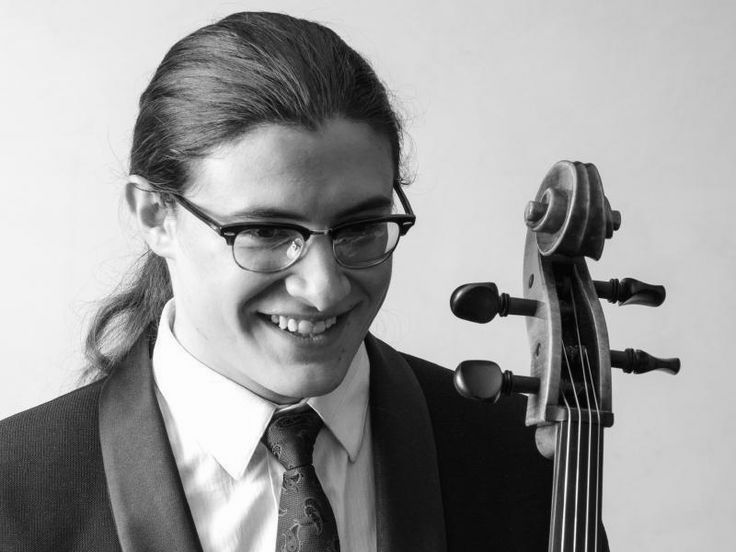
    Santiago Cañón Valencia is a cellist, and an emerging solo artist of great technical brilliance. He was born in May 1995 in Bogotá, Colombia, completed his bachelor degree with James Tennant at the University of Waikato in New Zealand and advanced studies with Andrés Díaz at the Southern Methodist University in Dallas. Winner of many awards, he has performed with orchestras in Colombia, Australia, New Zealand, the USA, Canada, and Hungary, and given more than a hundred concerts with pianist Katherine Austin. Cañón Valencia’s first album, ‘Solo’ [iTunes link ⤴︎], recorded works by Gaspar Cassadó, Alberto Ginastera, György Ligeti, and Zoltán Kodály on the Atoll label.

    Santiago Cañón Valencia
    Santiago Cañón Valencia

    Cañón Valencia has two new compact disc recordings published by Atoll: one a selection of twentieth century Russian sonatas (Shostakovich, Schnittke and Prokofiev); and the other of short and virtuoso pieces for cello and piano.

    He was a finalist in the 2017 Queen Elisabeth Cello Competition. There are excellent videos of the performances in this competition.

    Williams: The special nature of education for elite musicians is mano a mano, so to speak. Who are your musical antecedents, and what have they given to you?

    Santiago Cañón Valencia
    Santiago Cañón Valencia

    Cañón Valencia: I come from a family of musicians, my father is a clarinet player who works at the Bogotá Philharmonic, my sister is a violinist, and my mother used to play the cello. She was in fact my very first cello teacher and the one that got me to play the cello. Because of my family’s background, my life has always been surrounded by art. I believe being an artist in any discipline was always meant to be, though, I am sure that if I wanted to do something non-art related my family would have been just as supportive and encouraging as they have been with what I am doing now. From all of this I have learned to love, value and admire not only music but art in general and I am proud of being an artist.

    Williams: Anyone who watches and listens to your performances closely will have noticed your father’s immense pride when you perform with the Bogotá Philharmonic. It’s clear he gets a buzz from it.

    Cañón Valencia: Yeah, I am happy I make him and the rest of my family proud.

    About my teachers… I’ve only had three throughout these almost sixteen years of playing the cello and I believe each one of them has had a huge impact and influence on the way I approach the cello and how I play it, of course.

    My first teacher was Henryk Zarzycki, I studied with him for about eight years and he is like a musical grandfather to me. He was the one that basically formed me musically and technically as I started studying with him since the age of four and a half. Not only was he an amazing teacher but he also encouraged my other interests, aside from music, like painting. His teaching was truly inspiring, he always had a way of coming up with different stories for every piece I was working on. Apart from being entertaining, it really opened my mind to think of music as just another way of communication, much like a book you read or a person you listen to speak or sing.

    Santiago Cañón Valencia's first album, Solo, published by Atoll.

    My second teacher was James Tennant, with whom I studied for five years. This was an amazing time, not only because that is when I was introduced to the beautiful country of New Zealand, but because in those five years James developed my musical and expressive side so much. Those five years were spent mostly focused on really delving inside every piece of music I played. It did not matter whether it was a big work like a sonata, or a short concert piece, the point of it was to really give meaning to every note in every work I played and to think beyond just playing everything nicely without mistakes.

    My third teacher was Andrés Díaz with whom I worked for two years. The time I got to spend with him was very interesting as he provided me with an inside look of what it was like to live the life of a touring soloist. This for me is very valuable as he not only focused on cello playing but he also focused on teaching me how to be smart in the professional music world.

    I have nothing but admiration and respect for these three amazing musicians.

    Williams: Musicians of your age and younger are the first ‘generation’ to learn about music, performance and technique with the additional aid of both audio recordings and YouTube. Do you think it has it made a difference?

    Cañón Valencia: I think YouTube has had the biggest impact on music students as it gives all of us the opportunity to have all the great performers in front of us and watch them play whenever we want. However, for me, YouTube is also a great platform to promote myself as a musician because it gives me the opportunity to share all my performances with the world. Many people do this because it is a great way to gain a worldwide audience.

    Williams: You answered a ‘dinner party’ question recently with a list of ideal guests that included Casals, Chuck Close and Arvo Pärt—but left out Rostropovich! This is your chance to explain yourself, and maybe to tell us about the kind of art and artists you like …

    Casa Batllo (Barcelona, Spain). Architect: Antoni Gaudí.
    Casa Batllo (Barcelona, Spain). Architect: Antoni Gaudí.

    Cañón Valencia: In that answer I thought that for me, it would have been a more interesting dinner party if it wasn’t just centered in music. I chose a variety of artists that I really admire. For example, I always think of Dalí and Gaudí together because Gaudí’s constructions look like something that could have easily come out of a Dalí painting, or, a Dalí painting looks like something inspired by a Gaudí construction. For me, those two are some of the most interesting and innovative artists and their works just have a way of getting inside my mind without ever leaving. Another one is Arvo Pärt, who’s music I have always loved and he is one of the very few minimalist composers who always keeps me listening carefully with never-ending interest. I chose Casals as the only cellist simply because he is like the father of all modern cellists and definitely one that I admire the most, not only because of his artistic qualities but also because of his human qualities. I could have chosen so many cellists but I admire so many that if i was to list them all, there would be too many. Of course I admire Rostropovich and if he wanted to join the party I wouldn’t dare say no.

    Williams:  Rostropovich would have brought the vodka; I’m not sure about Casals. I agree wholeheartedly about Casals, though.

    I mention Rostropovich because he used his status and relationships with composers to create new music; and I wanted to ask you: Where do you think new music (for the cello) is going to come from now? We are living in a difficult period for composers, aren’t we? —More difficult for composers than performers?

    Cañón Valencia: I think that as long as there are great musicians, there will always be a big open door for great new music to come. I also think that the popularity that the cello has gained over the years is constantly inspiring more and more young composers to explore the instrument and its vast tonal range. Like you say, Rostropovich, more than any other cellist, brought so much great music to the cello repertoire from great composers like Britten, Shostakovich, Prokofiev, Ginastera, Dutilleux (just to name a few). I think that in the present there many great cellists still promoting new music and I hope I can also become a part of that.

    ‘Nightwind’ (for two cellos, composed 2011) is from the album Toru (ACD143, Atoll), a collection of chamber works by Martin Lodge. In this recording Santiago Cañón Valencia and Edward King are the cellists. The producer was Wayne Laird.

    Williams: It is a fairly common view among musicologists—and competition judges—that “recording has directed performance style into a search for greater precision and perfection, with a consequent loss of spontaneity and warmth”. Trying to negotiate an audience’s desire for both perfection and spontaneity becomes a high-wire act for solo performers. Lucas Debargue’s performances in Moscow show how interesting—and divisive—this act can be.

    What is your opinion about this, and do you have a strategy for coping with it yourself as you prepare for performances or recordings?

    Cañón Valencia: This is an interesting question. I’ve always been in a search for balance between both, musical spontaneity and technical precision. I believe that both are important when presenting yourself to an audience in any concert hall.

    CD recordings for me should be the same, they need to have the excitement and spontaneity that comes with the adrenaline of performing live. I think listening to mere technical perfection would eventually get a little boring.

    When it comes to competitions it is really difficult to know what the judges want exactly. I say this because I’ve had personal experiences in international competitions where personal expression and spontaneity is actually looked down upon. Some judges are very literal with the score and a ‘perfect’ performance for them might just mean playing exactly what’s written. Whereas some others encourage individuality and may think that there is more to the music than what is printed on the page.

    In my personal opinion, I like to take both points of view into account and address pieces with my own individual approach but still find a way to keep true to the work. I believe in being true to the style of every piece too. If it’s a work by Bach I would not play it like I would play Dvořák, and I would not play Dvořák the way I would play Shostakovich. Apart from the individual musical language from every composer, I think it is also important to take into account the musical style of the period in which they lived in.

    Williams: If you were a writer I would ask you what you were reading. But you’re a musician, so you should tell me what you are listening to …

    Cañón Valencia: I’m listening to quite a lot now. For study: Il Progetto Vivaldi: Sol Gabetta and Sonatori de la Gioiosa MarcaSix Suites for Violoncello Solo: Pieter Wispelwey (this recording is his 1998 version of the suites, I believe). Truls Mørk’s recording of the sonata for solo cello by George Crumb. And the Ginastera Cello Concertos: Mark Kosower, Bamberg Symphony Orchestra and Lothar Zagrosek.

    As far as music that I listen to in my free time, there are too many albums to list but mainly I like to listen to post rock, ambient, shoegaze, noise rock and a bit of prog metal.

    In 2019, Santiago won second place in the cello section of the Tchaikovsky Competition.

    This interview, conducted in writing between 3 October and 21 October 2015, is copyright © Santiago Cañón Valencia and Stephen J. Williams and may not be reproduced without permission of the authors.

    Related links on other sites


    Music and videos related to this interview

    Ginastera: Cello Concerto # 2, Op 50, Santiago Cañón Valencia

    Lucas Debargue performs Pyotr Ilyich Tchaikovsky Six Pieces, Op. 51 No. 6 in F Minor, ‘Valse Sentimentale’.

    Cañón Valencia performs Niccolò Paganini caprice number 24

    Cañón Valencia at the 2015 Tchaikovsky Competition


    Conversations

    • Michelle Ramin | in real life Michelle Ramin won the San Francisco Bay Guardian 2014 Goldie Award for Excellence in Visual Art. She has exhibited her paintings in San Francisco, New York, Portland, Nashville, New Orleans, and in the UK. She was born in North Central Pennsylvania and currently lives and works in San Francisco. Ramin studied at Penn State University […]
    • Victoria Contreras Flores | correspondence Victoria Contreras Flores received her degree and PhD from the Polytechnic University of Valencia. She was born and lives in Valencia, Spain, and is the creator of ARTNATOMY, and a great variety of other artistic projects.
    • Santiago Cañón Valencia | interview Santiago Cañón Valencia is a cellist. An emerging solo artist of great technical brilliance, he was born in Bogotá, Colombia, completed his bachelor degree with James Tennant at the University of Waikato in New Zealand and advanced studies with Andrés Díaz at the Southern Methodist University in Dallas. Winner of many awards, he has performed with orchestras in Colombia, Australia, New Zealand, the USA, Canada, and Hungary.
    • David Hensel | interview I cheered on reading Brian Sewell’s scathing article about the Summer Exhibition, because I read it returning from going to the preview, where I’d hoped to find my own sculpture. Instead what I found was the empty base, without the sculpture. We know the art market prefers obscure art as somehow more advanced, and anything […]
    • Victoria Contreras Flores | Art~natomist Artnatomia is a tremendously clever use of Flash and a great educational tool. It is the inspirational work of art teacher and artist, Victoria Contreras Flores, who, with a contrary view of the demands of the art market, has decided to concentrate on using new tools and media to express herself and teach her students. Her […]