Category: Writing

Writing posts.

  • In the circle of men singing

    Why, when the singing was over, did the young man’s nose look crooked?

    Normally, a choir will line up to fill the space in which it sings, but this choir is a circle.

    When the game is over and the teams fall back to their rooms, the losing side sits dejectedly along the walls.

    The winning side stands in a circle of players, to the exclusion of all others, arms around each other’s shoulders, singing the club song. The words tumble out quickly. There is no effort at all to co-ordinate one voice with another, and no division between tenors, baritones, and basses. And, certainly, no harmony. Heads and shoulders bob up and down excitedly in the rhythm of the song.

    Why, when the singing was over, the winning club and fans all happy, was the young man’s nose crooked and his face covered in blood? He was singing with the others. He sang the same lyrics. Players noticed the rover’s grin through a face covered in mud and sweat.

    But, just as the singing stopped, and a cheer went up, everyone in the room shouting exaltedly, the smallest man there stepped back from the circle and his face turned away, body bent double, hands cupped underneath his nose as a stream of sticky, vivid red blood poured over his mouth and jaw.

    The room was still murmuring with self-congratulation and laughter as arms began to gather around the rover’s shoulders to help him to a bench. While players and team staff fussed around the rover’s head, offering towels, simultaneously barking questions and commands— “What happened?!” and “Put your head back!” —all eyes turned to the bloodied centre of the room.

    “No. No. Please don’t. I’ll be all right,” the rover said, adding a hint of uncertainty and pathos with “… I think.” A doctor was called. And the doctor called an ambulance. “I’ll be fine. I think.”

    It did seem strange that a nose so irregular should take so long to bleed after coming off the field. Absent testimony or witnesses, the coach and some players scoured video of the game for any record of the final moments of play and of the opposing team’s crestfallen retreat from the field. They found nothing, and their rover was silent, except to apologise for the trouble his nose had caused.

    Some secrets escape even a camera’s gaze, and the next day, when club managers viewed a CCTV recording of the circle of men singing, it was still not clear what it showed, or that it showed anything. Arms raised and bodies jumping and hugging obscured the final second when the rover stepped back from the choir. In one moment he stands next to the team’s ruck, the taller player looking down into the rover’s face; and in the next they have both disappeared in the chaos of the team’s rejoicing.

    When, the next day, the rover’s face emerged with a bandage on it, a theory also surfaced. And, since rumors abhor a silence, there were many more fictions than facts about what had happened. Neither the plentiful fictions nor the rare facts would go away; and both the rover and the ruck were silent.

    The public’s mind is a dark and noisy place, and imagination lights a flame where there is no spark of intelligence—or truth. It was inevitable this imaginary fire would have to be put out, but the coach’s remarks to journalists seemed obtuse, like someone trying over and over to kick goals with a lettuce. The ruck was there, too, thinking he might have one chance to douse the hot mess.

    One journalist squeezed her way through to the front of the conference. “Don’t mind me. I’m short. You won’t miss a thing,” she said, excusing herself, as she pointed a recorder up to the ruck’s mouth. “There’s been a suggestion,” she called out in a loud voice with staccato emphasis on her key words, “that you’re going to offer a ‘… gay … panic …’ defence and that …”

    “Hold on. Let me stop you right there, so you don’t embarrass yourself. I don’t want anyone to be embarrassed. I … did … not … punch my friend in the nose because he touched me in a … special … way,” the tall man said, repeating the journalist’s staccato. “I punched him because he didn’t ask first.”


    Richmond club rooms, 2020
    Richmond club rooms, 2020

  • Attack of the Nabokovs

    Look! From out of history’s darkening skies
    A kaleidoscope of amorous, witty butterflies
    Comes to save us—from fatuous liars
    And deceivers, from ‘fake news’ and perdition’s fires.
    
    Welcome them, friend. Let them land
    Their gaudy wings upon your hand,
    Or head, or nose, or knee, or bum.
    Let them flit and ‘do their thing’ until the job is done!
    Attack of the Nabokovs (pencil, 20220220) Stephen J. Williams

  • This happened …

    This happened …

    Late in 2019, the Australian prime minister (marketing guru and shitty-pants Scott Morrison, ‘Sco-Mo’ to you) and his theatre assistants removed the federal administration’s arts appendix. One moment the word ‘Arts’ appeared somewhere in the names of government departments, and the next it had gone. Snip! And he chucked it in the bin. 

    Well, not exactly… ‘Arts’ was removed from a department’s name. To compensate, the yarts (as they are called in Australia) got an office. The Office of the Arts: <https://www.arts.gov.au/>. Never have the arts and government been so closely aligned than in this uniform resource locator.  

    There were articles in newspapers, outrage on the arts websites, and a long rash of angry emojis at the end of comments on Facebook.  

    The conservative government in Australia, returned at the May 2019 election by a slender margin, had decided a feature of the victory after-party would be to show the country’s angry, artistic child the door. “Your mother and I are tired of you! Always with your hand out, and never a word of thanks! Get a job!” And then, the ‘clap’ of the fly-screen door and a barely audible ‘clack’ of its tiny snib that seemed to say, “And don’t come back.”  

    Making art is a patient, lonely business. Making any progress seems to require years of practice and a bit of luck. Guidebooks and internet articles about being an artist, full of advice and clichés, pile up very quickly. Be yourself. Tell your truth. Talent is important, endurance essential. In the age of Instagram, sexy drawings and a bubble-butt are handy, but not essential (or so they say). Governments are not needed, but academic sinecures, supervising doctorates in novel-writing or discussions of queer theory, good if you can get them. When universities are financially sous vide, as they will be emerging from the 2020–forever pandemic, place bets at long odds that the arts will be favored for rehabilitation.  

    Governments, truth be told, don’t want to help. The governing classes are too busy ‘governing,’ which might as well mean lying, or fudging, or crying crocodile tears, or making a killing on the stock market, or taking a holiday in Hawai’i. To be the governor is to be the winner, the one who calls the shots, to be ‘the decider.’ From their high station in life these decider-governors have a role in narrating our social experience. They have a role we give them in legislating to tell us what is and is not important. (Have you noticed how very often our prime minister tells us what is important, and how very important is the very thing he is now saying?) It’s been a long time since governors of any stripe have shown us how the arts and sciences are important. Business, the economy, the stock market, and jobs are important. Wages growth, arts, and science, women, not so much.  

    UNFURL, my arts publishing project, was a reaction to artists’ reactions to government biases against the arts. Who needs government money anyway? I thought. It turns out, lots of people working in the arts need audiences, and it’s not easy to find and maintain audiences without government assistance. And, even within my narrow range of interests—writing and visual arts—the connections between arts activity and funding are deep. Poetry is not the malnourished tenant of the attic it was in Australia in the mid-1980s. The long lists of books for review and the number of official insignia on web pages are two possible measures of this.  

    Logo, company name

Description automatically generated

    At the same time, long-established literary magazines have had their funding cut. There is money for the arts, so long as it is going to places where the expenditure can be seen to be spent. Government wants the internet to sing “Hey, big spender!” while it cuts funding to Meanjin and others. It may be partly Meanjin’s fault: it has had nearly thirty years to figure out how to get its great store of content online for prospective subscribers to access, while the failure to do so begins to look like obstinacy.  

    UNFURL asked writers and artists to promote their own work to their own social media contacts while doing the same for other artists and writers: it’s a tool for artists to find new audiences and readers. UNFURL /1 started with a couple of writers I knew, Davide Angelo and James Walton, and a writer whom Angelo recommended, Anne CaseySusan Wald, also published in the first UNFURL, was a painter whose work I liked and who had an exhibition planned for early 2020. I wanted to establish a process that could lead to unexpected choices. I would try not to make selections. I wanted artists to select or recommend other artists; and I wanted those artists to choose for themselves what they wanted to show with as little mediation as possible, encouraging people to show and to publish work they liked, and that might not have been selected (or grouped together) by an editor or curator.  

    Government wants the internet to sing “Hey, big spender!” while it cuts funding to Meanjin and others. It may be partly Meanjin’s fault: it has had nearly thirty years to figure out how to get its great store of content online for prospective subscribers to access, while the failure to do so begins to look like obstinacy.

    It is more efficient to work on all one’s secret agendas simultaneously, so I should also admit my concern that belle-lettrist aesthetics (including the idea that poetry is language’s semantics incubator) and faux-modernist experimentation have combined to make poetry mostly irrelevant and a branch of marketing. —One only has to look at the writing being selected by the selectors to see that something is wrong with the practice of selection. As much as possible, I think, best to leave artists to make their own choices; and if there are mistakes, then, we’ll know who to blame. 

    And then, in March 2020 … then was the actual end of the world-as-we-knew-it. Those crazy ‘preppers’ I’ve made fun of started to look like visionaries. “Where the fuck is my bolthole, goddammit!?” and “How big is your bolthole, my friend!?” could have been common questions in some circles. People who could afford it, and had somewhere to go, did leave town. Gen-Xers lost their hospitality jobs, decided that they couldn’t afford their share house rent, and moved back ‘home.’ Artistes no longer had audiences. Artiste-enablers, stagehands, administrators and carpenters, were also out of work.  COVID-19 put the arts and sciences back in the news. 

    The intersectional tragedy of pandemic and conservative political hostility to the lefty arts seemed to many like another opportunity to turn indifference into punishment. It was hard to disagree with pundits who have been cataloging this punishment.   

    UNFURL, possibly because of all this, has done quite well. By the time UNFURL /5 was released, writers and artists could expect to reach about two thousand readers within a couple of weeks of publication. (Each new UNFURL number provided a little boost to the previous issues, so that all the issues now clock up numbers in the thousands.) Eighty per cent of readers were in Australia, and most of the rest in the USA, Canada, UK and Ireland. The male:female ratio of readers was almost 50:50. The largest age group of readers was 18–35 years. (Though if everyone is ten years younger on the internet, maybe that’s 28–45.)  

    It’s difficult to read poetry on small-screen devices, so I did not expect UNFURL to be read on phones. The visual arts component of UNFURL is quite effective on phones and tablets, however. It seems likely that readers interested in the writing in UNFURL resorted to their desktops and printers. Sixty to seventy percent of downloads of UNFURL were to mobile and tablet devices.  

    I learned that women writers (poets) had a ‘stronger’ following among women readers than men had among readers of any kind. It was very apparent, with Gina Mercer, for example, that a very significant number of readers returned more often, subscribed more often, and were women.  

    I learned that women writers (poets) had a ‘stronger’ following among women readers than men had among readers of any kind. It was very apparent, with Gina Mercer, for example, that a very significant number of readers returned more often, subscribed more often, and were women.  

    I learned that social media isn’t the be-all and end-all of connecting with an audience. Old-fashioned email also works really well. Some artists and writers had no significant social media presence but used email effectively to communicate with friends and contacts.  

    I also learned that visual artists were, generally speaking, more enthusiastic and positive about using social media, and even better at basic stuff like answering messages. Visual artists be like Molly Bloom; writers be like Prince of Denmark.  

    I found that both writers and artists did things in UNFURL other publications might not permit (requiring, as they mostly do, first publication rights). Philip Salom published groupings of new and old poems. Alex Skovron published poems, prose, paintings, and drawings. Steven Warburton published a series of pictures about how one canvas evolved over several years. Robyn Rowland published poems and their translations into Turkish for her readers in Turkey. Ron Miller published a brief survey of his life’s work in space art.  

    All that and more to come.  

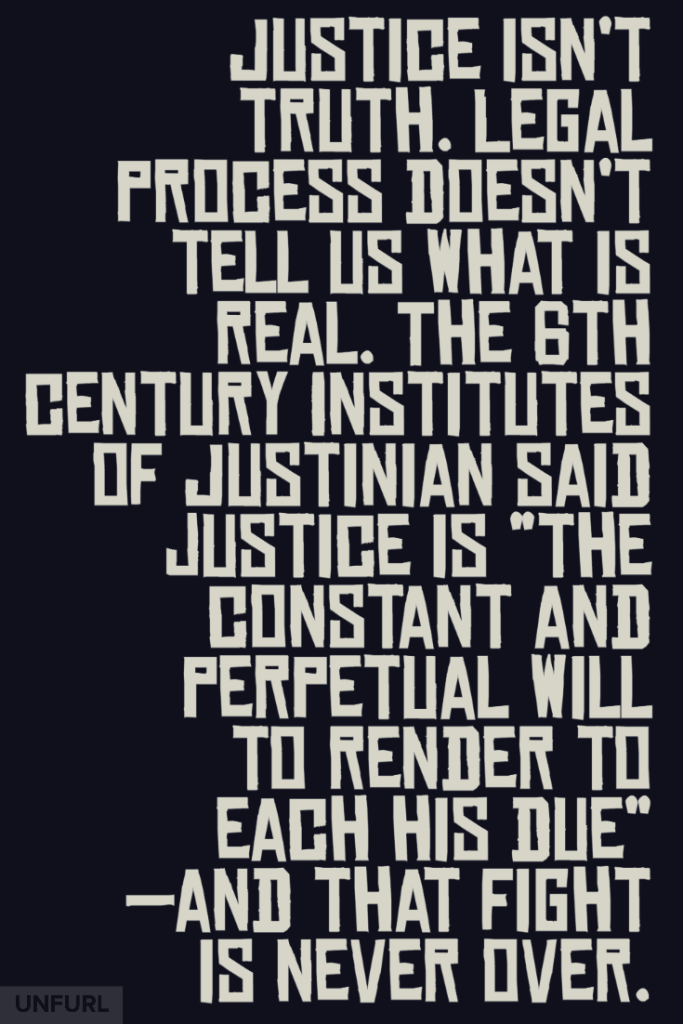
  • To render to each his due

    I hate to hear smart people talk bullshit in public. So I made this…

  • Scientific progress you can make while you sleep …

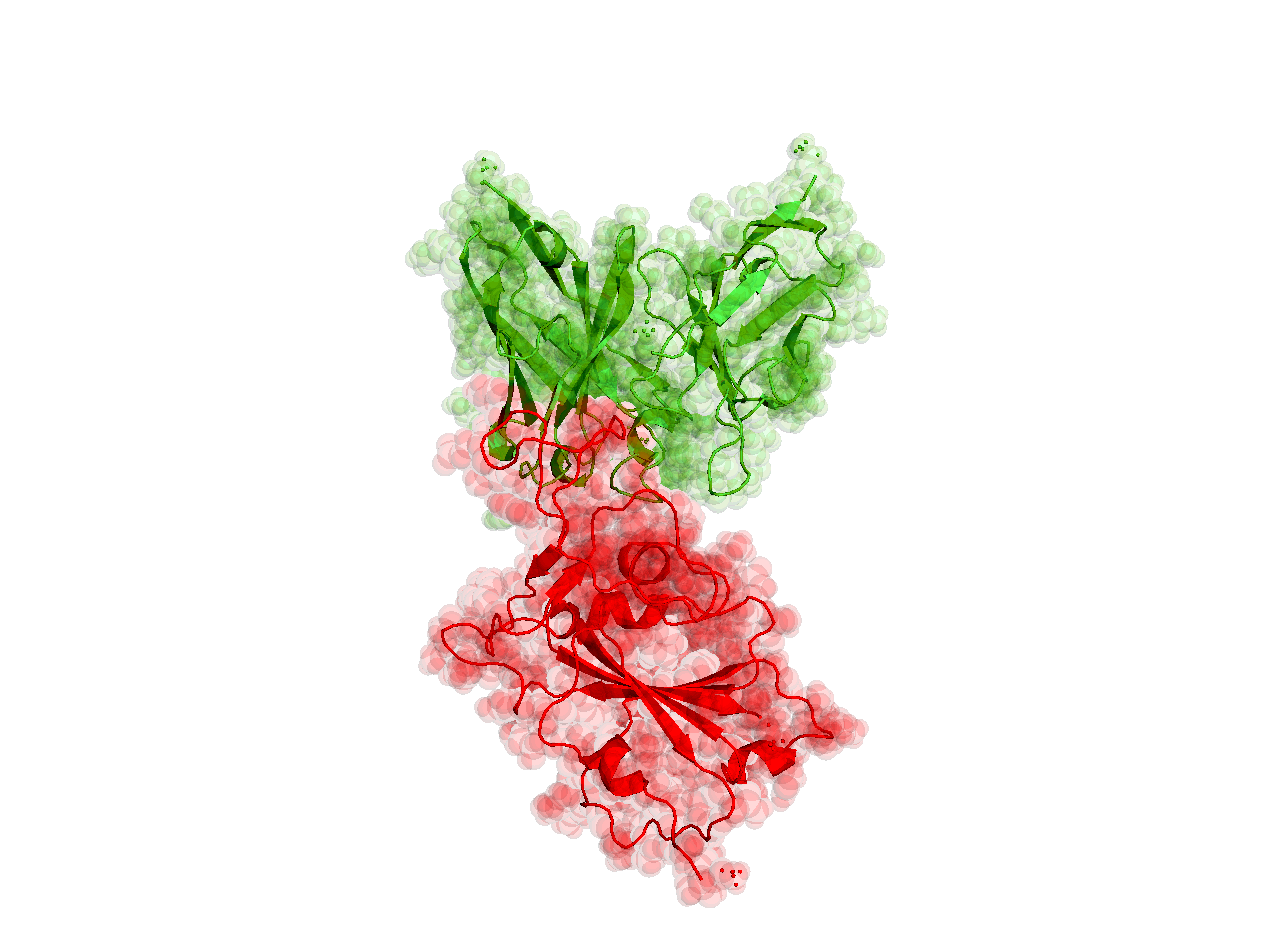
    Folding@home is a distributed computing project that originated in Stanford University. It aims to get 1 million people involved in donating computer power to model the folding of proteins that are implicated in diseases such as breast cancer and Alzheimer’s, and several contagious diseases, now including COVID-19.

    There are currently about 110k participants.

    Make your computer get off its arse and save the world while you sleep.

    Installing the program is easy.

    Start folding proteins at home.

    COVID-19 update on the Folding@home site

  • Ideology of the horse

    The horse moved quietly among us in the street
     The giant head of this horse did not whinny
     There were no thoughts behind its dark eyes when I looked into them
     We talked about such horses being noble creatures but what is a virtuous horse?
     It was bred to be a working animal and therefore we imagined it was like us
     The horse moved away and climbed a hill on which there was a plinth
     When it arrived there it adopted a fighting pose
     Both forelegs tore at the grey sky
     The halo of the sun shone behind the horse’s head
     Immediately, the self-sacrificing horse jumped high into the light
     It seemed to reach a very great height
     Then, I admit I felt for a moment both sickness and fear
     (I did not want to look
     But look we all did, just in a glance)
     The horse’s thick neck broke awkwardly underneath its fallen body
     What was the ideology of the horse?
     What was it thinking?!
     It was tough then to look into its dead eyes

  • I remember it was a rainy night

    I remember it was a rainy night, and cold
    For our reunion my father took me to his favorite restaurant
    His Chrysler Valiant was painted pearlescent white
    He drove much too fast of course on slippery roads, and parked in a dark street
    When we arrived it was already very late
    In this part of town theatre people, and prostitutes, were everywhere
    A tall man with an ornate beard stood in the restaurant window’s light
    My father was known here so, when we entered, we were seated immediately
    One elderly couple had brought their little tan-and-white dog to dine with them
    It was creating a puddle on the floor underneath their table
    A large party had formed near us, several tables crashed together
    There was laughter and shouting for more wine and bread
    For a while the restaurant was a chaos of yellow light, food and noise
    Tables rearranged themselves like Dodgem cars
    And my father’s table crashed the party forming in the centre of the room
    There were some people we knew—Susan, for example
    She was relating the story of her assault on the base camp of Everest
    And there was Thomas, the tiny but famous author with white stubble
    I tried to listen to everyone, and even to Susan whose story I had heard before
    Thomas tried to speak to me to tell me about something he thought important
    I watched his mouth as it spoke to me
    Then, unfortunately, Susan saw that I was no longer listening to her
    She leaned forward, stared me down, tugging at her ear
    Oh, Susan, I said, no one wants to hear what unrecyclables you left at the feet of the gods
    So, she was hurt of course but I did not see any way of avoiding it
    And Thomas and the secret he was whispering to me were gone
    People had already started to leave before the lights went up
    It was the time of morning bakers go to work
    My father took his coat and headed out before me
    He did not wait for me and crossed the road
    His silhouette marched into a narrow laneway and then it turned a corner
    That was where I also turned to follow after him
    I found only wide, dark pools of water there
    The steep road, winding along the edge of a city park, was empty
    The early morning smelled shiny-wet, and he was nowhere to be seen
    I walked in circles and walked in circles and then came back to where I’d been
    I fell in a gutter and my skirt and shoes were soaked
    The man with the elaborate beard was still standing there
    Even after several hours he was still waiting though I didn’t know for what
    And inside, I could see through the window the dining room being dismantled
    Renovations that could not be started during service had begun
    And workers were already atop of their ladders getting ready to paint
    The old patron said, it’s cold outside come in
    Thank you, if you don’t mind, I will use your restroom, I said to him
    And slipping in, behind me, the strangely bearded man followed me
    Me too, he said, pretending we were together
    Behind a door from the dining room the bakers were on the morning shift
    A beautiful young girl with the tray of sweets swept past me, smiling
    Try, she said, and tilted the display toward me
    I could smell the powdery confection under my nose
    Warm, nutty and sweet, and ready to eat
    And behind me the smell of my new, wet friend
    His arm stretched over my shoulder to grab a treat
    His beard, thin as a tattoo, sculpted into spirals, scratched my cheek
    I could have fucked him then and there
    It was what we wanted, but we threw ourselves into a soft sofa
    In the family rooms there were other diners who also had returned, defeated
    My wet friend wrapped his legs around me
    I looked closely into his eyes, asking for reassurance but finding none
    I kept one hand on his shaven neck and with the other painted his lips with sugar