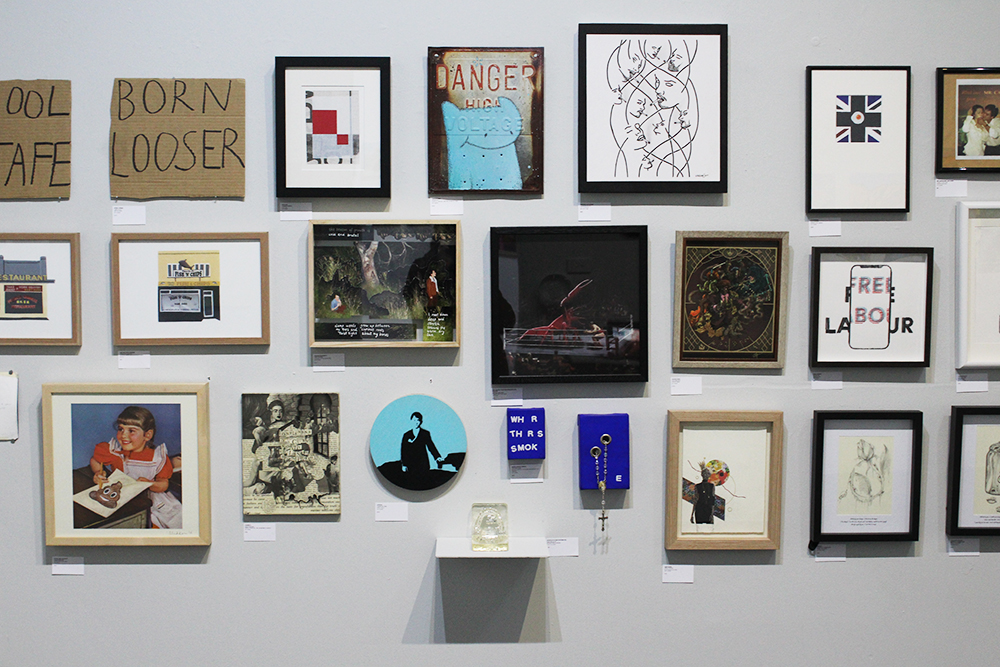
A small, framed print of ‘The contest over neuroscience and culture’ is on show, and for sale, at an exhibition of small works at the Brunswick Street Gallery from 26 June to 18 July 2019. Get in quick!
The gallery is at Level 1 & 2, 322 Brunswick Street, Fitzroy VIC 3065 Australia. Open Tuesdays to Sundays, 10–6pm. Closed Mondays.
In case you were wondering the quiet Australians
Won’t tell you what they are thinking. Their patriotic
Yowl is stifled by a kind of shame, or fear of shame
That in a plastic-colored world of money, generations
Of growth and privilege do not add up to much.
The quiet Australians want someone to wail for them

To sob about unfairness, suffering, their piece of cake
To blame, to tear down, to strategise retaking what
Was taken from the history their forebears vandalised.
The quiet Australians would stand up to be counted
If they had a leg to stand on. They would go to war
If war did not require a sacrifice they shrink from.

Fears aside, the quiet Australians sometimes speak
When martyrdom can be assured, when whistling
At a pitch that dingoes hear their words give voice
To pain they sincerely feel in the salty cracking
Landscape of their lives. There on the dusty plain
The quiet Australians cultivate contempt for strangers.

Not feeling for them, we pretend the strangers cannot
Feel. We, I say, since I am one of you and know that
Silence can be strength; I know what lengths my hate
Can go to. When we quiet Australians learn to speak
We might have something good to say. But, when?
I don’t know. I’m old. One day, I think. One day.
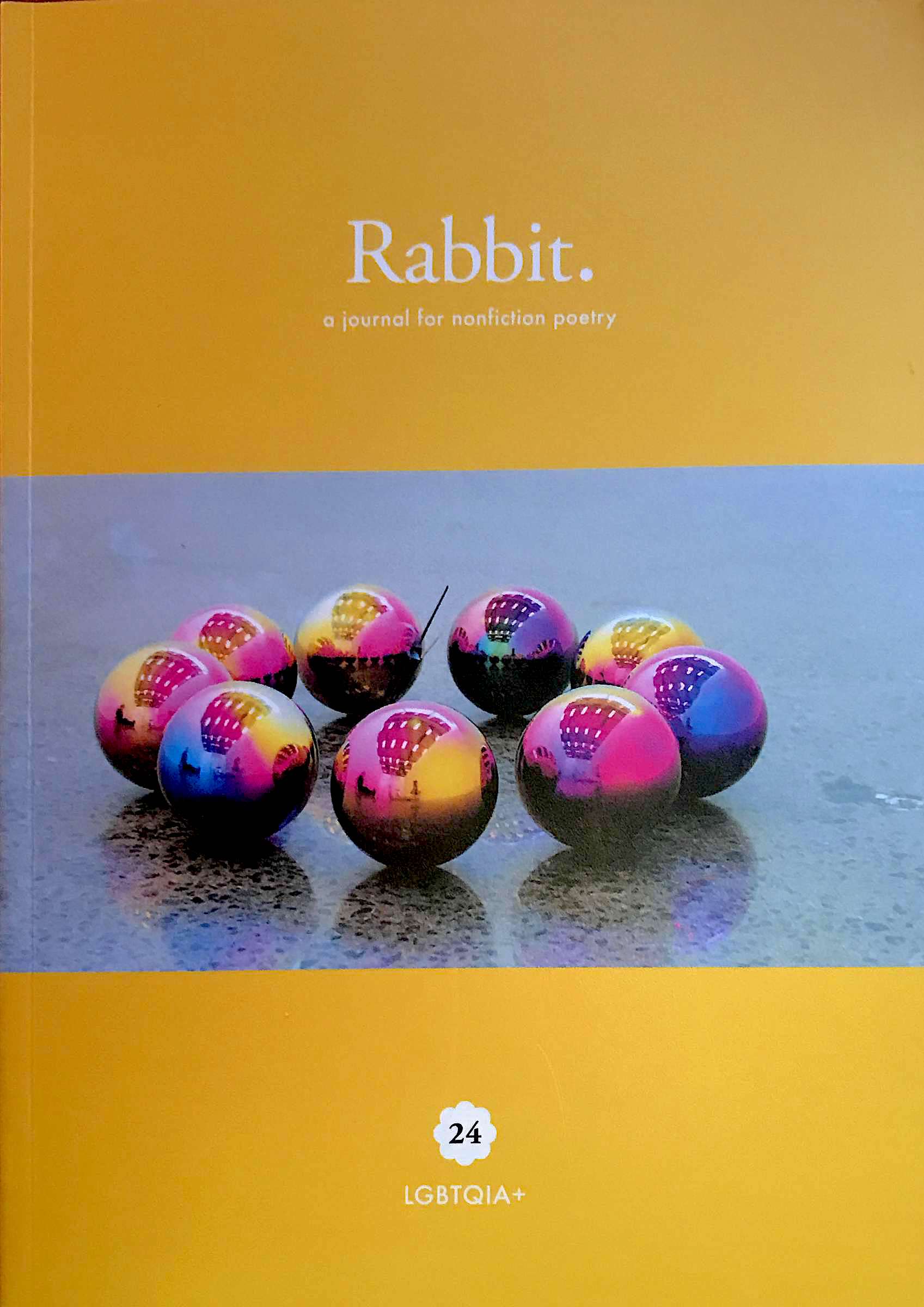
In print now, the 24th issue of Rabbit—a journal of nonfiction poetry. The whole issue is devoted to LGBTQ poetry. Michael Farrell was the guest editor. There are some very interesting writers and artists represented in this issue. Oh… and, then, there’s me.
I also have a poem and drawings in the most recent Pink Cover Zine (no. 3). You can read the whole thing at https://pinkcoverzine.wordpress.com.
The Nobel Committee for Literature has announced new procedures for determining laureates in the field of literature.
Current Nobel committee members Per Wästberg, Anders Olsson, Kristina Lugn, and Horace Engdahl, and associate members Sara Danius and Katarina Frostenson, have spoken at length about their dissatisfaction with the selection process. “Det är en jävla cirkus,” Wästberg said. “På något sätt blev hela jävla galen och vi hamnade med en jävla musiker. Hur hände det? jag vet inte.”
Determined that past errors and controversies would not be repeated, Danius and Frostenson have suggested that there should be a new protocol for nominations: “Vi kommer att få människor att kämpa i sina underkläder och under de hårda förhållandena. Det kommer att bli kallt. Verkligen väldigt kallt. Och det kommer att bli lera – enorma mängder mycket våt, slarvig lera.”
Once nominations have been received through the new process, a new protocol for selection will be equally rigorous. “Vi ska göra det på den gamla vägen. Naturligtvis kan vi inte avslöja för mycket, men det kommer att involvera äppelkakor, våfflor och pannkakor. Och risgrynsgröt, förstås,” Kristina Lugn said.
The Nobel Committee receives over one hundred official nominations each year for the literature prize. The nominees are usually pretty good writers, yet somehow the Nobel Committee manages to come up with a decision.
“Några av dessa tekniker används för närvarande i mongolsk och australisk litteratur, och deras genomförande här kommer att leda Nobelprisen till nittonde århundradet,” Horace Engdahl added.
The ancient techniques of Mongolian and Australian poets promote new respect for literature.
I left home in the late 1970s. My first nights of freedom I slept on the banks of the Yarra River in Melbourne, at a bend near where there is now a skate park. The first home of my own was a couple of rooms in North Fitzroy that were more like corrugated iron lean-tos than rooms. These rooms were air-conditioned but not waterproof; the windows were broken, glass louvres, and the entrance door had a large hole in it. By 1980 I had moved into digs, at the rear of 777 Park Street in Brunswick, that are still standing and still look like a granny flat. I was twenty-one when 1980 ended. Worries about finding and keeping a home were often on my mind.
Unit 5, 777 Park Street, Brunswick
And the world seemed to go haywire. In 1979 Margaret Thatcher became Prime Minister in the UK. ‘Mad Max’, an apocalyptic premonition, appeared on cinema screens. Later in 1979, Iranian students and ‘radicals’ invaded the US embassy in Tehran and took ninety hostages. In December 1979 the Soviet Union invaded Afghanistan. In early 1980 the world looked overheated and dangerous, and Ronald Reagan was chosen to be the Republican Party nominee for the November presidential election.
‘Protect and Survive’, published in the UK in May 1980.
In these first few months of 1980 I took my anxieties about ‘home’, welded them to my anxieties about everything else, and tried to tell myself a joke to relieve the tension. That joke is the story ‘On the uncertainty of finding a place to call home’. I was never happy with it, partly because it seemed too slight, partly because the ‘voice’ adopted in it did not treat my secret feelings with appropriate seriousness.
A half-life later I am struck that this only slightly funny story—of a man trying to survive in a world that has already fallen apart—tries to be funny at all. It is not the kind of humor that is a string of jokes. Instead, it asks readers to notice, over and over again, that the central character’s principal flaws are timidity and an inability to face reality. This, I thought, was what was wrong with everyone, including myself. It is not really a joking matter.
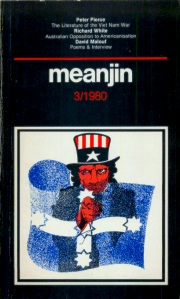
When it was finished I sent it off, with a ridiculous and completely unwarranted degree of self-assurance, and a stamped self-addressed envelope, to Meanjin. I was lucky that the then editor of Meanjin, Jim Davidson, had been putting together an issue in which some professional thinkers would set down their thoughts about Australia’s war literature and opposition to Americanisation. Arthur Phillips picked my story out from the leaning tower of words that was stacked in J.D.’s fiction in-tray … and the rest is all regret and tears.
Rejecting this story from inclusion in my first book was the first step in rejecting everything about writing that I associated with the performative staginess that was a common mode of poetry in the early 1980s and is still alive and well. (More power to everyone who can cope with the special rigors of that mode of publication!)
Trump’s epic struggle to read a book (from Slate.com)
That was then; this is now…
The election of an entitled, self-absorbed septuagenarian populist to the US presidency seems to mark a turning point if one looks at things from the narrow perspective of party politics. But several writers and historians have pointed out, setting aside startling differences of tone and ambience, the course of US and world politics, Australia included, is not much changed since at least the late 1990s—and it is possible the current direction was set even decades earlier. Richard Rorty wrote, in 1998:
Members of labor unions, and unorganized unskilled workers, will sooner or later realize that their government is not even trying to prevent wages from sinking or to prevent jobs from being exported. Around the same time, they will realize that suburban white-collar workers—themselves desperately afraid of being downsized—are not going to let themselves be taxed to provide social benefits for anyone else. At that point, something will crack. The nonsuburban electorate will decide that the system has failed and start looking for a strongman to vote for—someone willing to assure them that, once he is elected, the smug bureaucrats, tricky lawyers, overpaid bond salesmen, and postmodernist professors will no longer be calling the shots.
Richard Rorty, Achieving Our Country
When Barack Obama let US bankers escape prosecution or personal consequences for the havoc they wrought in the world’s economy, he joined the club of presidents and ‘progressive’ leaders around the world who have kept their respective polities on a starvation diet, caring too much about points gained on the stock market and too little about the health of democracy, society, and working people. Since the late 1990s the average worker’s ‘take home’ from the growth of developed economies has been zero or less than zero; while high-earning managers and CEOs who twenty years ago earned forty times an average wage are now earning 350 times the average wage. The economic ideology that created this result operates at the level of threat: it tells working people over and over again that government must take care of business or jobs will go: submit or starve.
I woke this morning from a dream in which the future
had been laid out before me like mathematics. All the assertions
of economists and other soothsayers about the sickening movements
of markets could be denied; and everything will be denied
everything—except that two plus two equals four.
The animal used in this auguration was the self-acting mule, a machine
that has arms and pincers, and can be made to perform
routine tasks tirelessly, without complaint except that it might
give a kick now and then. This animal, this algorithm without feeling
has been shitting in our society for years—and now we have found a use for it.
The dream did not turn out at all how I expected it to turn out.
That is how you know dreams have turned into nightmares.
We are all going to find ourselves crouching in a dark space
not together—that is, not acting in unison, as a group—but separately
and individually responsible in the fight that is coming.
The rulers, however—the presidents, governors and the rest—
who have always united for the purpose of our repression and
do not like to share any ground with other people
will be onboard their yachts and planes at the crucial moment
when promises are made and broken in the same breath, and things fall apart.
It is just then that the failure of truth will be its own punishment
and facts will stand out in stark relief, like someone screaming
on a cold night. It will be fight or die. A survivor will be left standing
covered in blood and it will not seem proper to talk about right or wrong
because some questions have always been answered this way.
Robert Mapplethorpe (1946-1989), American Flag, 1977. Gelatin silver print, 19 3/4 × 15 15/16 in. (50.2 × 40.5 cm). Whitney Museum of American Art, New York.








You must be logged in to post a comment.