-

A ritual text for gay marriages
“so ancient is the desire of one another which is implanted in us, reuniting our original nature, making one of two, and healing the state of man” — Plato, the fable of Aristophanes from the Symposium
Introduction
There is currently no standard ritual text for gay marriages for the obvious reason that such marriages have been forbidden and, as a consequence, a public ceremony having the function of liturgy (rites and duties in religious worship) has not developed. In places where gay marriages have been permitted by state authorities the ceremonial language of the marriage either mimics marriages for the union of heterosexual couples, is provided by a helpful marriage celebrant, or is composed by the couple seeking to be married. There are many examples of new texts for gay marriages.

Androgyne, detail on ancient greek amphora. It is sometimes said that the advantage of religious rituals for marriage is that they are grounded in traditions that span centuries. By contrast modern rituals for gay marriages, especially if they are composed by the celebrant or participants, do not normally refer to ancient texts. So, we are in the habit of thinking that there are no beautiful ancient texts that could form part of a rite for gay marriages. That is not true.
The core of this ritual text for gay marriages is a version of the fable of Aristophanes, which is recorded in Plato’s Symposium. It is the original text of the fable that tells the story of the origin of human desire and the meaning of love: we were once a different kind of being, cut in half by the gods, and therefore always destined to search for that lost part of ourselves.
The ritual may have any cultural characteristics the participants wish: they can choose any location, costume, music, specific vows, or ritual actions borrowed from their personal, religious history (such as the breaking of glasses). In particular, those parts of the Catholic religious ritual that refer to scripture have been removed.
Stephen J. Williams
Ritual text for gay marriage
The persons to be married choose how they are introduced to those invited to participate in the ceremony, and the wording of the promises (vows).
Celebrant says:
[Full name of person to be married] and [Full name of person to be married] welcome you all to the celebration of their marriage.
Our original nature was not like the present, but different. We know that the sexes were not two, but three—man, woman, and the union of the two—just as the sun, the earth and the moon are three.
In our original nature we were all bound at the back and sides, forming a circle, to the other half of ourselves.
Neither gods nor nature suffer our insolence to be unrestrained. And, so, they made a plan to humble our pride and improve our manners. To diminish our strength they cut us in two, and gave us, each, a neck that could be turned to contemplate the part of ourselves that was lost. Through this we were to learn humility.
Separated from the other part of our true selves, these two parts of [man/woman], each desiring [his/her] other half, come together, throwing their arms about one another, entwined in mutual embraces, longing to grow into one. The desire of one another which is implanted in us, reuniting our original nature, making one of two, is the ancient and healing state of every person.
Each of us now separated from the other part of our true selves is but the indenture of a [man/woman], and [he/she] is always looking for [his/her] other half.
We are prone to love and ready to return love, always embracing that which is akin to us. And when one of us meets with [his/her] other half, the actual half of [himself/herself], the pair are lost in an amazement of love and friendship and intimacy, and would not be out of the other’s sight even for a moment: these are the people who pass their whole lives together; yet they could not explain what they desire of one another.
Please face one another.
Do you [name of person to be married] take this [man/woman] to be your lawfully wedded [husband/wife], promise to keep [him/her], love and comfort [him/her], in sickness and in health, whether you are rich or poor, and to be kind and faithful to [him/her] for the rest of your life?
Person to be married says:
I do.
Celebrant says:
Do you [name of other person to be married] take this [man/woman] to be your lawfully wedded [husband/wife], promise to keep [him/her], love and comfort [him/her], in sickness and in health, whether you are rich or poor, and to be kind and faithful to [him/her] for the rest of your life?
Other person to be married says:
I do.
Celebrant says:
Do you have rings?
Person to be married says:
[Name], I give you this ring, a symbol of my promises and love.
Other person to be married says:
[Name], I give you this ring, a symbol of my promises and love.
Celebrant says:
We praise Love, our greatest benefactor, which both leads us in this life back to our own nature, and gives us high hopes for the future, for Love promises that if we are worthy, it will restore us to our original state, and heal us and make us happy.
I pronounce you married. You may kiss.
This document is a work in progress and I welcome constructive comments to improve it. Originally published in 2006, this is version 2.0 (Monday 14 December 2015). Shortlink: http://wp.me/p5OAfE-Iw
Notes
- An alternative history of rites is outlined in this New York Times review.
- PDF version of this document.
- General information about marriage equality:
Send me a comment
-
Take the pledge

… Take the pledge by sharing this graphic in any way you prefer.
- Download it and use it on Facebook.
- Send it in replies to emails from politicians.
- Use it as an avatar.
Send the message to politicians that you will not vote for them if they support detaining asylum-seekers.
More posts about asylum-seekers and refugees at this site:
- Done in our name – Our capacity to blame politicians for what they have done in our name appears to have no limit—as though the agency we have through the ballot box to empower our representatives were not the same agency we should use to judge them.
- What happened, Mr Doherty? – When it comes to the issue of Australia’s treatment of asylum seekers, no-one escapes blame—not politicians, not media, and certainly not the Australian ‘public’. Australia’s asylum seeker problem is entirely the fault of the Australian people. It has little or nothing to do with people smugglers.
- Welcome, Arjun! (Park the elephant anywhere.) – Among the people who have tried to arrive in Australia by boat in the last few decades were probably many, whatever their religion, who knew all the details of this story already, and knew its lessons … Every Friday night Sebastian comes around for dinner and drinks. Last Friday he asked if he could invite Arjun to […]
-
Santiago Cañón Valencia | interview
Post-Script
What has happened since 2015 …
The decade since Santiago Cañón-Valencia’s interview in 2015 (see below) has seen a transformation of artistic depth and global acclaim. The still young Santiago Cañón Valencia, who was then a ‘rising star,’ has solidified his position as a fixture of the international stage, and he has done it in a unique way. He did not follow the typical path of the competition winner; he built a multifaceted career that integrates the meticulous discipline of a world-class soloist with the visionary freedom of a contemporary composer and visual artist.
The progress is evident in the numbers—silver at the Tchaikovsky, third at the Queen Elisabeth, and a seat on the jury in Budapest. Santiago has become a cellist who tries to expand the field of performance, who performs Bach with unconventional tempos, and can pivot to his own Ascenso Hacia lo Profundo, utilising percussive ricochet and string slapping to create a modern soundscape. He has become an artist asks his audience to experience music as a kind of visual entity, reflected in his relocation to Vienna and his debut solo exhibition in late 2023.
There will be a 2026 Carnegie Hall debut. He remains, of course, the same technically flawless performer I spoke to a decade ago.
Reviews and articles …
- The Strad – Playing Hub: Deep-dive interview regarding the revival of Tobias Picker’s Cello Concerto and the discipline of a global soloist.
- Textura: Critical analysis of the Ascenso album and its world-premiere recordings of contemporary Colombian works.
- Musical America: Formal announcement of the 2025–2026 international season and major orchestral engagements.
- Bachtrack Performer Page: Comprehensive archive of concert reviews from Madrid, Coruña, and Seville.
- Artsy Profile: Official gallery listing for his visual art, including acrylic works and past exhibition details in Vienna.
Performance Videos and Digital Media
- Deutsche Grammophon (YouTube): Official performance of Ouróboros and Arvo Pärt’s Fratres as part of the “Musical Moments” series.
- Medici.tv Archive: Full performances from the XVI International Tchaikovsky Competition, including the Haydn C Major and Elgar Concertos.
- Queen Elisabeth Competition (YouTube): Archive of the 2017 semi-final and final rounds, featuring the Shostakovich Cello Concerto No. 1 and Bottermund-Starker Variations.
- The Strad (Video Hub): High-definition performance of Bach’s Cello Suite No. 6 in D Major on five-stringed baroque cello.
- Santiago Cañón-Valencia Official YouTube Channel: A curated list of popular encores, recitals, and multimedia projects.
Official Links
Santiago Cañón Valencia is a cellist, and an emerging solo artist of great technical brilliance. He was born in May 1995 in Bogotá, Colombia, completed his bachelor degree with James Tennant at the University of Waikato in New Zealand and advanced studies with Andrés Díaz at the Southern Methodist University in Dallas. Winner of many awards, he has performed with orchestras in Colombia, Australia, New Zealand, the USA, Canada, and Hungary, and given more than a hundred concerts with pianist Katherine Austin. Cañón Valencia’s first album, ‘Solo’ [iTunes link ⤴︎], recorded works by Gaspar Cassadó, Alberto Ginastera, György Ligeti, and Zoltán Kodály on the Atoll label.
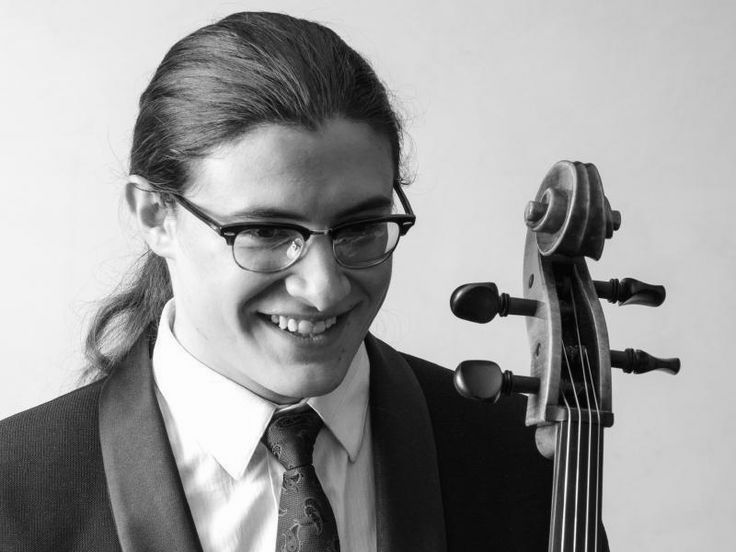
Santiago Cañón Valencia Cañón Valencia has two new compact disc recordings published by Atoll: one a selection of twentieth century Russian sonatas (Shostakovich, Schnittke and Prokofiev); and the other of short and virtuoso pieces for cello and piano.
He was a finalist in the 2017 Queen Elisabeth Cello Competition. There are excellent videos of the performances in this competition.
…
Williams: The special nature of education for elite musicians is mano a mano, so to speak. Who are your musical antecedents, and what have they given to you?

Santiago Cañón Valencia Cañón Valencia: I come from a family of musicians, my father is a clarinet player who works at the Bogotá Philharmonic, my sister is a violinist, and my mother used to play the cello. She was in fact my very first cello teacher and the one that got me to play the cello. Because of my family’s background, my life has always been surrounded by art. I believe being an artist in any discipline was always meant to be, though, I am sure that if I wanted to do something non-art related my family would have been just as supportive and encouraging as they have been with what I am doing now. From all of this I have learned to love, value and admire not only music but art in general and I am proud of being an artist.
Williams: Anyone who watches and listens to your performances closely will have noticed your father’s immense pride when you perform with the Bogotá Philharmonic. It’s clear he gets a buzz from it.
Cañón Valencia: Yeah, I am happy I make him and the rest of my family proud.
About my teachers… I’ve only had three throughout these almost sixteen years of playing the cello and I believe each one of them has had a huge impact and influence on the way I approach the cello and how I play it, of course.
My first teacher was Henryk Zarzycki, I studied with him for about eight years and he is like a musical grandfather to me. He was the one that basically formed me musically and technically as I started studying with him since the age of four and a half. Not only was he an amazing teacher but he also encouraged my other interests, aside from music, like painting. His teaching was truly inspiring, he always had a way of coming up with different stories for every piece I was working on. Apart from being entertaining, it really opened my mind to think of music as just another way of communication, much like a book you read or a person you listen to speak or sing.
My second teacher was James Tennant, with whom I studied for five years. This was an amazing time, not only because that is when I was introduced to the beautiful country of New Zealand, but because in those five years James developed my musical and expressive side so much. Those five years were spent mostly focused on really delving inside every piece of music I played. It did not matter whether it was a big work like a sonata, or a short concert piece, the point of it was to really give meaning to every note in every work I played and to think beyond just playing everything nicely without mistakes.
My third teacher was Andrés Díaz with whom I worked for two years. The time I got to spend with him was very interesting as he provided me with an inside look of what it was like to live the life of a touring soloist. This for me is very valuable as he not only focused on cello playing but he also focused on teaching me how to be smart in the professional music world.
I have nothing but admiration and respect for these three amazing musicians.
Williams: Musicians of your age and younger are the first ‘generation’ to learn about music, performance and technique with the additional aid of both audio recordings and YouTube. Do you think it has it made a difference?
Cañón Valencia: I think YouTube has had the biggest impact on music students as it gives all of us the opportunity to have all the great performers in front of us and watch them play whenever we want. However, for me, YouTube is also a great platform to promote myself as a musician because it gives me the opportunity to share all my performances with the world. Many people do this because it is a great way to gain a worldwide audience.
Williams: You answered a ‘dinner party’ question recently with a list of ideal guests that included Casals, Chuck Close and Arvo Pärt—but left out Rostropovich! This is your chance to explain yourself, and maybe to tell us about the kind of art and artists you like …

Casa Batllo (Barcelona, Spain). Architect: Antoni Gaudí. Cañón Valencia: In that answer I thought that for me, it would have been a more interesting dinner party if it wasn’t just centered in music. I chose a variety of artists that I really admire. For example, I always think of Dalí and Gaudí together because Gaudí’s constructions look like something that could have easily come out of a Dalí painting, or, a Dalí painting looks like something inspired by a Gaudí construction. For me, those two are some of the most interesting and innovative artists and their works just have a way of getting inside my mind without ever leaving. Another one is Arvo Pärt, who’s music I have always loved and he is one of the very few minimalist composers who always keeps me listening carefully with never-ending interest. I chose Casals as the only cellist simply because he is like the father of all modern cellists and definitely one that I admire the most, not only because of his artistic qualities but also because of his human qualities. I could have chosen so many cellists but I admire so many that if i was to list them all, there would be too many. Of course I admire Rostropovich and if he wanted to join the party I wouldn’t dare say no.
Williams: Rostropovich would have brought the vodka; I’m not sure about Casals. I agree wholeheartedly about Casals, though.
I mention Rostropovich because he used his status and relationships with composers to create new music; and I wanted to ask you: Where do you think new music (for the cello) is going to come from now? We are living in a difficult period for composers, aren’t we? —More difficult for composers than performers?
Cañón Valencia: I think that as long as there are great musicians, there will always be a big open door for great new music to come. I also think that the popularity that the cello has gained over the years is constantly inspiring more and more young composers to explore the instrument and its vast tonal range. Like you say, Rostropovich, more than any other cellist, brought so much great music to the cello repertoire from great composers like Britten, Shostakovich, Prokofiev, Ginastera, Dutilleux (just to name a few). I think that in the present there many great cellists still promoting new music and I hope I can also become a part of that.
‘Nightwind’ (for two cellos, composed 2011) is from the album Toru (ACD143, Atoll), a collection of chamber works by Martin Lodge. In this recording Santiago Cañón Valencia and Edward King are the cellists. The producer was Wayne Laird.
Williams: It is a fairly common view among musicologists—and competition judges—that “recording has directed performance style into a search for greater precision and perfection, with a consequent loss of spontaneity and warmth”. Trying to negotiate an audience’s desire for both perfection and spontaneity becomes a high-wire act for solo performers. Lucas Debargue’s performances in Moscow show how interesting—and divisive—this act can be.
What is your opinion about this, and do you have a strategy for coping with it yourself as you prepare for performances or recordings?
Cañón Valencia: This is an interesting question. I’ve always been in a search for balance between both, musical spontaneity and technical precision. I believe that both are important when presenting yourself to an audience in any concert hall.
CD recordings for me should be the same, they need to have the excitement and spontaneity that comes with the adrenaline of performing live. I think listening to mere technical perfection would eventually get a little boring.
When it comes to competitions it is really difficult to know what the judges want exactly. I say this because I’ve had personal experiences in international competitions where personal expression and spontaneity is actually looked down upon. Some judges are very literal with the score and a ‘perfect’ performance for them might just mean playing exactly what’s written. Whereas some others encourage individuality and may think that there is more to the music than what is printed on the page.
In my personal opinion, I like to take both points of view into account and address pieces with my own individual approach but still find a way to keep true to the work. I believe in being true to the style of every piece too. If it’s a work by Bach I would not play it like I would play Dvořák, and I would not play Dvořák the way I would play Shostakovich. Apart from the individual musical language from every composer, I think it is also important to take into account the musical style of the period in which they lived in.
Williams: If you were a writer I would ask you what you were reading. But you’re a musician, so you should tell me what you are listening to …
Cañón Valencia: I’m listening to quite a lot now. For study: Il Progetto Vivaldi: Sol Gabetta and Sonatori de la Gioiosa Marca. Six Suites for Violoncello Solo: Pieter Wispelwey (this recording is his 1998 version of the suites, I believe). Truls Mørk’s recording of the sonata for solo cello by George Crumb. And the Ginastera Cello Concertos: Mark Kosower, Bamberg Symphony Orchestra and Lothar Zagrosek.
As far as music that I listen to in my free time, there are too many albums to list but mainly I like to listen to post rock, ambient, shoegaze, noise rock and a bit of prog metal.
In 2019, Santiago won second place in the cello section of the Tchaikovsky Competition.
This interview, conducted in writing between 3 October and 21 October 2015, is copyright © Santiago Cañón Valencia and Stephen J. Williams and may not be reproduced without permission of the authors.
Related links on other sites
- Santiago Cañón Valencia’s Facebook page
- YouTube channel
- On Spanish Wikipedia
- Biography page at the Queen Elisabeth Cello Competition 2017
- Semi-final performance a the Queen Elisabeth Cello Competition 2017
Music and videos related to this interview
Ginastera: Cello Concerto # 2, Op 50, Santiago Cañón Valencia
Lucas Debargue performs Pyotr Ilyich Tchaikovsky Six Pieces, Op. 51 No. 6 in F Minor, ‘Valse Sentimentale’.
Cañón Valencia performs Niccolò Paganini caprice number 24
Cañón Valencia at the 2015 Tchaikovsky Competition
Conversations
- Michelle Ramin | in real life – Michelle Ramin won the San Francisco Bay Guardian 2014 Goldie Award for Excellence in Visual Art. She has exhibited her paintings in San Francisco, New York, Portland, Nashville, New Orleans, and in the UK. She was born in North Central Pennsylvania and currently lives and works in San Francisco. Ramin studied at Penn State University […]
- Victoria Contreras Flores | correspondence – Victoria Contreras Flores received her degree and PhD from the Polytechnic University of Valencia. She was born and lives in Valencia, Spain, and is the creator of ARTNATOMY, and a great variety of other artistic projects.
- Santiago Cañón Valencia | interview – Santiago Cañón Valencia is a cellist. An emerging solo artist of great technical brilliance, he was born in Bogotá, Colombia, completed his bachelor degree with James Tennant at the University of Waikato in New Zealand and advanced studies with Andrés Díaz at the Southern Methodist University in Dallas. Winner of many awards, he has performed with orchestras in Colombia, Australia, New Zealand, the USA, Canada, and Hungary.
- David Hensel | interview – I cheered on reading Brian Sewell’s scathing article about the Summer Exhibition, because I read it returning from going to the preview, where I’d hoped to find my own sculpture. Instead what I found was the empty base, without the sculpture. We know the art market prefers obscure art as somehow more advanced, and anything […]
- Victoria Contreras Flores | Art~natomist – Artnatomia is a tremendously clever use of Flash and a great educational tool. It is the inspirational work of art teacher and artist, Victoria Contreras Flores, who, with a contrary view of the demands of the art market, has decided to concentrate on using new tools and media to express herself and teach her students. Her […]
-
Done in our name
The federal Liberal-National Party government in Australia changes leaders, convinced that it cannot win a 2016 election with Mr Tony Abbott as prime minister and choosing Mr Malcolm Turnbull to replace him. Not a single word was uttered all day by politicians of the major parties about the plight of refugees detained on Manus Island and Nauru. It was… leadership, leadership, leadership, economy, economy, economy. What our political representatives said, and how what they said was reported in the media, demonstrated yet again that Australia’s treatment of refugees was irrelevant to most Australians. Electorally irrelevant, that is, because the major parties have agreed with each other to agree with Australian electors.

First Dog on the Moon (September 2015). And yet, all over the (left-hand side of the) internet are calls for Abbott to be tried at The Hague; and for Cheney, Bush and others to face justice for their torture of prisoners at Guantánamo and elsewhere. Our capacity to blame politicians for what they have done in our name appears to have no limit—as though the agency we have through the ballot box to empower our representatives were not the same agency we should use to judge them. As the New York Times editorial board has noted, it is an outrage that official investigations of the abuses of prisoners have not led to the trial and conviction of any but the lowliest responsible agents of government policy. We must expect the same in Australia, when the question of whom we will blame for what has happened on Manus Island and Nauru enters the national consciousness as shame.
This is the reason public discussions of national guilt and reparations are important. I have come to accept that for many years I voted for major political parties that had policies I now think are repugnant. It seemed easy to reach the conclusion that, on balance, one imperfect arrangement of policies was better than another. I have been part of the process that led us to where we are.
More posts about asylum-seekers and refugees at this site:
- Off-shore [20170830 drawing, 74x105mm] –
- Victoria Contreras Flores | correspondence – Victoria Contreras Flores received her degree and PhD from the Polytechnic University of Valencia. She was born and lives in Valencia, Spain, and is the creator of ARTNATOMY, and a great variety of other artistic projects.
- Welcome to Omelas – Australia is the imaginary world of Ursula K. Le Guin For many years refugees attempting to reach Australia have been confined by the Australian government in camps on Manus Island and Nauru. This policy has its origin in sudden changes in Australian voter attitudes, emerging in the early 1970s, toward refugees from Vietnam. These attitudes […]
- Take the pledge – … Take the pledge by sharing this graphic in any way you prefer. Download it and use it on Facebook. Send it in replies to emails from politicians. Use it as an avatar. Send the message to politicians that you will not vote for them if they support detaining asylum-seekers. More posts about asylum-seekers and […]
- Done in our name – Our capacity to blame politicians for what they have done in our name appears to have no limit—as though the agency we have through the ballot box to empower our representatives were not the same agency we should use to judge them.
- What happened, Mr Doherty? – When it comes to the issue of Australia’s treatment of asylum seekers, no-one escapes blame—not politicians, not media, and certainly not the Australian ‘public’. Australia’s asylum seeker problem is entirely the fault of the Australian people. It has little or nothing to do with people smugglers.
- Welcome, Arjun! (Park the elephant anywhere.) – Among the people who have tried to arrive in Australia by boat in the last few decades were probably many, whatever their religion, who knew all the details of this story already, and knew its lessons … Every Friday night Sebastian comes around for dinner and drinks. Last Friday he asked if he could invite Arjun to […]
-
Sr Pessoa

Of course, in times of crisis I do not write
poetry—a consequence of having escaped
pretenses about pain and metaphysics.Last night, though, my head was full
of dreams—most particularly
that my friend (a euphemism)had decided it was time to leave—
bringing us to the long struggle (an embrace,
perhaps, but it may have been a death-clutch).And when I woke
everything in my world was ruined
and in fog.So, it has been impossible to speak
a word that makes sense
and there is no pleasure in a pun.After all the excitement
I am just another child sleeping
face-down at the edge of the abyss.Come over some day—
I can offer refuge
in tired abstractions.I will put on my red dress,
make tea, and then
ignoring Life, we will walk or write. -
What happened, Mr Doherty?
When it comes to the issue of Australia’s treatment of asylum seekers, no-one escapes blame—not politicians, not media, and certainly not the Australian ‘public’.

Australian journalist Ben Doherty’s photograph appeared early in 2015 on a notice distributed to staff of Transfield, the company that manages facilities in which refugees are confined. The instruction was simple: “Do not exchange any information with this gentleman.” Mr Doherty was sent to Coventry by Transfield because he collects information about refugees and publishes it in newspapers.
Mr Doherty’s article in The Guardian at the end of 2014 explained that the claim to have ‘stopped the boats’ (and therefore the deaths at sea) is a kind of fiction. The fictiveness of the claim does not make it any less compelling. Yes, refugees are still dying at sea but they are doing it somewhere else; and since it is happening somewhere else, supporters of the policy say, it is substantially and practically someone else’s problem. Governments of other countries have not been as tough or as practical as Australia’s has been.
…
The reference to fiction’s role in politics made me think of Orwell’s Nineteen eighty-four, and about the year itself, about who was prime minister (Bob Hawke), and whether our world is more like that novel now than it was then, or less. The details of history seem surreal in retrospect; a sure sign that the reality of even one’s own life eventually turns into ‘story’.
Many think Orwell’s warnings were apt. We do appear to have something like perpetual war and an ever-escalating state of emergency that requires citizens accept measures hostile to their own freedoms and privacy. Governments almost everywhere seem more susceptible to forces outside the ballot booth. Orwell was right to warn us that the language of politicians tries to make lies sound truthful and the wind seem solid. The evidence is everywhere and on every side of politics.
When I try to find information about the behavior of my own government and only discover that press releases have been removed to another location, I immediately think “memory hole”. Political debate is more furious and more anonymous than ever, but the outcomes narrower: the current public circumlocution about refugees forces us think of the ‘problem’ as a moral or political struggle where the blame is always somewhere else or in another ideological camp: “We must stop people drowning at sea.” “People-smugglers are evil.” “Why is the government torturing refugees on Manus Island? “
…

After the Transfield affair, Mr Ben Doherty was Thomson Reuters fellow at Oxford University in the Trinity term of 2015; and his dissertation, Call me illegal: The semantic struggle over asylum in Australia, narrates the events, rhetorical changes and policy manoeuvres of Australia’s response to asylum seekers.
Lam Binh was first. The self-taught sailor and four friends found Australia from Vietnam navigating with a single page torn from a school atlas. The page went no further south than Timor: from there he was simply following a hand-drawn arrow on the bottom of the page. But on April 26, 1976 he sighted land, and piloted his battered junk, the Kien Giang, into Darwin harbour, where he dropped anchor and waited. Lam had a speech prepared for the immigration officer who boarded the next morning: “Good morning. My name is Lam Binh and these are my friends from South Vietnam and we would like permission to stay in Australia”.
page 7 »» opens new tab
The then Immigration Minister Michael MacKellar, Foreign Minister Andrew Peacock, and Prime Minister Malcolm Fraser, tried to dampen emerging hysteria about refugees, but Australians could not be moved.
Every change of government and every new wave of asylum seekers caused some subtle escalation of panic and adjustment of language.
Between the late 1970s and now, little has changed in the minds of the Australian public. Opinion polls over this forty year period show that a clear majority Australians—with remarkable consistency (though the poll questions have changed)—want to ‘stop the boats’, favor a process to ‘detain and assess’, and have few qualms about sending refugees ‘back to sea’. However,
It is important to note a distinction apparent in Australian attitudes towards asylum seekers who arrive by boat, and those who arrive by other methods (through the offshore humanitarian program or by plane). “The public makes a distinction between refugees selected under the off-shore program and self-selected asylum seekers,” Betts says in her analysis of opinion poll data. “Hostility to boat people does not mean hostility to refugees.” Australians are broadly supportive—75 per cent in favour—of refugees who have first been assessed overseas, then being resettled in the country. McKay et al argue that government and media narratives contrasting boat-borne asylum seekers with resettled refugees are crucial to public perceptions.
page 54 »» opens new tab
Mr Doherty’s distinction generously offers Australians a convenient place to hide our prejudices in plain view.
Call me illegal provides an insider view of how successive Australian governments tailored language to manage the public’s anger.
When it comes to the issue of Australia’s treatment of asylum seekers, no-one escapes blame—not politicians, not media, and certainly not the Australian ‘public’. Australia’s asylum seeker problem is entirely the fault of the Australian people. It has little or nothing to do with people smugglers.
We have (politicians and public alike) been behaving like avaricious, racist hypocrites; and have sought, for about forty years, to camouflage our insecurities with political blamestorming. Journalists and media pundits, who could have helped to pull down the propaganda and lies upon which our prejudices have built the current system of abuses, did little to mitigate the effects.
The people who pretend to lead us, having decided it was easier to manage our prejudices for their own benefit than to educate us, created ever-more absurd excesses of placation; until billions of dollars were spent on detaining a couple of thousand asylum seekers, and tens of millions of dollars thrown at other governments in our region so they would accept the small number of refugees who wanted to live with us.
Nineteen eighty-four needs to be revised for Australia: Big Brother has been watching… how you vote.
-
Joyce Lee’s It is nearly dark when I come to the Indian Ocean
I edited and published Joyce Lee’s collected poems, It is nearly dark when I come to the Indian Ocean, in 2003. While the book is no longer in print, I am pleased that the files of the book are still available and I am able to publish them here. Also reproduced, below, is the book’s foreword by Chris Wallace-Crabbe. Ms Lee died in February 2007 [PDF ⤴︎ obituary].
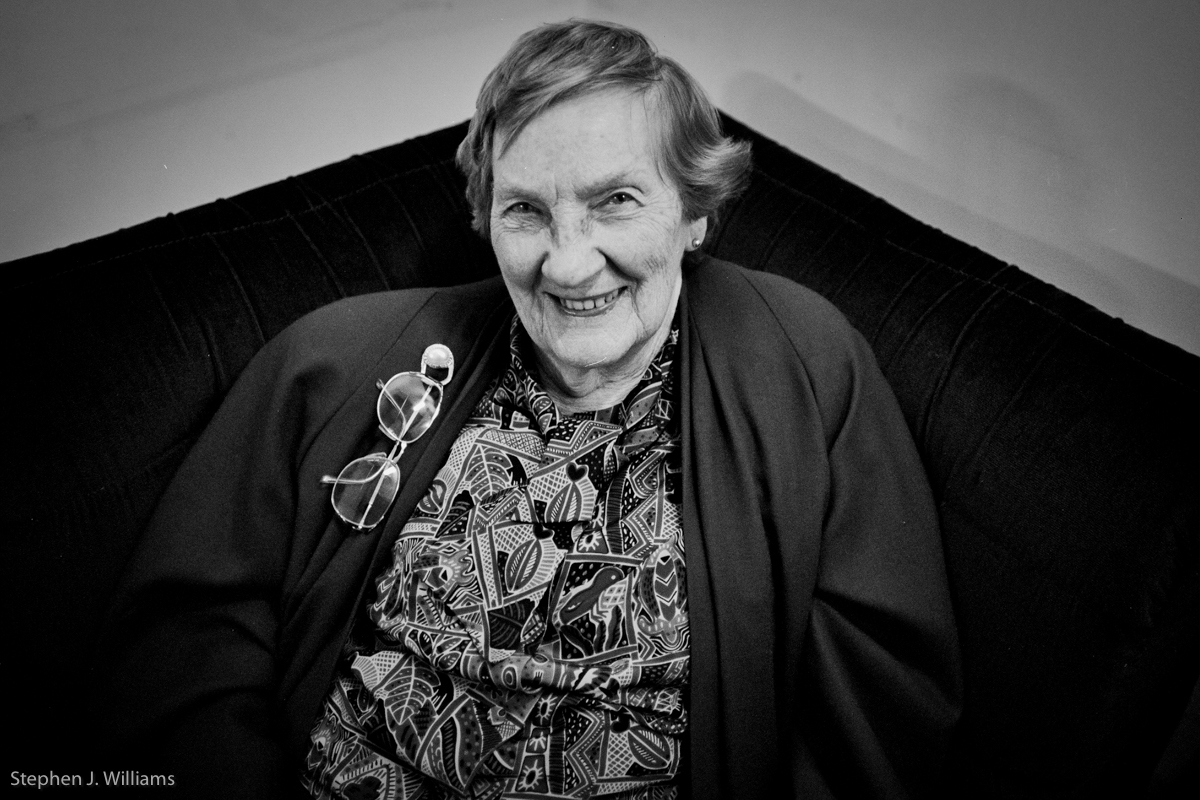
Joyce Lee, 1993. Photograph by Stephen J. Williams.
Foreword
by CHRIS WALLACE-CRABBE, to Joyce Lee’s collected poems (2003)
Hear me, lesser seasons.
It may be autumn, may be winter
but I’ll be living summer.What can poetry do for us these days? It’s not in the business of swaying the masses; indeed, as Peter Porter has ever so gracefully put it, “Poetry is one of the few arts which is not menaced by not having an audience.” Yet it somehow retains an almost popular role in bearing witness to human decency. Yes, poetry produces some of the durable vessels which are brimming with hope.
Such concepts as humanity and humanism have been cast aside in recent times like tattered banners, outmoded ensigns. Given that climate, it is a joy to encounter some book that is everywhere imbued with a humane spirit, a book that combines alert intelligence with decency and warmth. As the writer in question, the Melbourne poet Joyce Lee says about her artistic heritage, “Old now, I treasure what was given to me, perhaps in riddles”. But as we read them we find that her poems always strive to make such riddles come clear. In this she may be seen as a traditionalist, which is no bad thing.

Cover of Joyce Lee’s It is nearly dark when I come to the Indian Ocean Lee’s new, retrospective volume of poetry, gorgeously entitled It is nearly dark when I come to the Indian Ocean, pays tribute to human community and continuity. It gathers her clean, vividly substantial poems from as far back as their appearance in Sisters Poets 1, edited by Rosemary Dobson and published in 1979; from there it comes down to the present day, most of the earlier poems having been rewritten to some extent. The result, I am convinced, is a wonderfully coherent collection.
Long a professional pharmacist, Lee came to poetry in her middle years. The voice was there, and the lyrics it articulated could range from the familiar ground of ‘Wimmera child’s first waterfall’ or ‘Double wedding’, back through history and dream to the Biblical Hagar, and to Gerda, the Celtic witch whose potions prefigure those of a modern chemist’s shop.
Indeed, as her book shows, the poems torn out of history add something exotic and also bracing to Lee’s Wimmera-formed imagination. They leave dark shadows in the corners of her picturing. They remind us that even this brave new world of wheat and sheep and sprawling spaces comes out of history. What is more, not even the recovered landscape of country trains, scorching wind and cars that break down inconveniently quite fills her imagination: no, it is not all steeped in Wimmera naturalism. Lee’s dreams “encompass every shade of blue”; her yearnings reach for the sky. As she writes about the truths she learned tacitly, visually from her influential painter uncle (personally influential, that is),
The dark side is part of the whole, a secret under-knowledge, a
strengthener to get you through when your light is in some distant
sky or disappears. The process is mysterious, its gifts measureless.Yet this is the poet who says to herself, in another voice, “What you know is yours.” She is not at all naïve about solids.
In her compelling verse, the recurring strain of mystery does not entail vagueness or verbal chicanery, but has its roots in accurate knowledge. This is the basis of Joyce Lee’s persuasiveness, of her poetic strength, despite her deeply modern acknowledgement that “All I believe in is change.” Metaphysical questing rides on the shoulders of verismo.
On the evidence of what we read here, she is subject to metaphysical yearning, not least in the presence of music, which Les Murray has more skeptically dubbed, “The greatest form of nonsense verse.” Responding to that transcendent composer Messaien, she hazards that “The note pins silence/ never to resound”, while in another poem she laments that “you are left with longing/ for the voice beyond the note.”
Yet as I have suggested, her dominant imagery is rooted in the flat, pastoral Wimmera, with its bluish edge of Grampians. These poems return again and again to rock, dryness, dust, vistas of plains: to what she calls in the title of one, ‘Plain dreaming.’ Far overseas, in a prospect of Dubrovnik, she can write, “In the late afternoon, stones/ glisten like sheep on bare hills.” Also to country sounds, among them the mopoke, a horse stamping in its stable, express trains passing in the night.
The poetic vocabulary of this poetry is rich, using the whole palette, as she would be glad to say. Yet the language is not arcane, nowhere near as baroque as Peter Steele, or Anthony Hecht, or Marianne Moore. It is plumfull of colors, hard nouns and proper names: not the “long lists of proper names” which the formalist Auden thought a poet should enjoy, along with riddles and complicated stanzas. Lee is above all a realist in the homestead of poetry. Most of her capitalized names are lodged in families, active in social milieux.
These poems come over to us in clear stanzas of modestly free verse, in linguistic orchestration by way of such tasty words as triangle, peephole, hem, gimme, scrubbiness, lobster, blisters, quinine, snow gum and, in triumphant upper case, MADAGASCAR. Hers is an active world crammed with things, hues and actions—even the memories are rock-solid. They contain such vivid place/events as The casino
end of Point Lonsdale pier.
Interval at a film hot air balloon, swimming
with sharks at the aquarium,
riding a bejeweled elephant.These strengths are manifest in such poems as ‘The past walks noiselessly’ and ‘Travelling backwards’, or in such precisely physical lines as these:
Unloaded in scorching wind
I’d watched him jack the car, carefully mend the puncture,
no cursing in church clothes. Minna
didn’t mention how she’d sweated in the kitchen.Evenings round the stove, Gus and Ernest
red-faced in shiny second best, talking
thread darning and embroidery needles. I learn
to stitch neat edges, work to a pattern.
We share mystery and far places.
I go to bed held safely in a large world.Surely that is what Lee’s poems themselves do: go to the black and white bed of print “held safely in a large world.” It is also a realm that has space for humour: one need only think of such poems as ‘Car week’ and ‘Untidy legs.’ Who else could possibly have used “untidy” like that?
Once upon a day I lamented that most books, at least in Australia, were written by people who didn’t know anything about work. It is a pleasure here to see how persuasively the poet evokes teacher or preacher, drover or country housewife, even the persuasive committee man, having a damn good sense of what they actually do. As she says of such awareness, “Peasant born, I inherited/ hard work from a grandfather/ migrating with his tribe/ for betterment.”
Mostly, however, she writes in the present tense, employing that present-emphatic that plays so large a part in modern Australian poetry. Within this climate of syntax, the past recurs over and over again, shaping events and people, giving meaning to the great Where We Are Now. Lee is a poet of generations, it might be said, recalling in this the David Campbell of Deaths and Pretty Cousins: and Campbell was, of course, another poet who knew what work could be. His high Monaro has a great deal in common with her Wimmera.
Reading Lee, I am sometimes taken back to those once-influential studies by Erik Erikson on childhood, society and the life-history. She feels and records how human strength flows down like honey from generation to generation. Not only can she travel backwards in time, along the psychological railway, all the way to Murtoa station; she records her profession ironically with the reflection that “My workingplace is filled with prescription ghosts” and she recreates ‘My father’s country’, a grandmother’s kitchen or the grandfather leading a bride on each arm into the local church. Each of these chronotropes is far too strongly rendered to smack of sentimental nostalgia. As Octavio Paz once observed, “Poetry is memory become image, and image become voice.”
The newest writing in It is nearly dark makes radiantly clear that, as much as being an art of mimesis or of tribute, poetry can be an art of yearning. These late lyrics are full of ontological hunger. They yearn for truths which are too large to be named, or fully understood. Again and again the trope is light, flame, perhaps candlelight. “I must pursue an unknown brighter light,” she writes, reaching out for something beyond the Johannine logos, seeking to touch the ineffable. Of such poems it would be impertinent to say more.
In the large picture this book is like a tessellated novel, the pieces reshuffled but the characters intact—on the other hand, it seems possible that if the poems were set down in exactly the right order we would have Joyce Lee’s autobiography. Viewed, more sensibly after all, as a book of poetry, this is writing in which accuracy of perception is harmoniously balanced with generosity of spirit.
Chris Wallace-Crabbe
Melbourne, July 2002Originally published by Artist’s Proof (Stephen J. Williams) in 2003.
1 MB PDF file, opening in a new browser tab:
It is nearly dark when I come to the Indian Ocean: collected poems 1965-2003 by Joyce Lee


-
Subscribe
Subscribed
Already have a WordPress.com account? Log in now.
 Stephen J. Williams
You must be logged in to post a comment.